A chiropractic site should explain the request before a new patient books, and it should stop short of confirming it. The new-patient page should ask what hurts, how long it has hurt, and how soon they hope to be seen, and it should say that the form is a request. It should not read like a treatment plan or a confirmed adjustment.
This guide covers what the page must explain, how to ask what hurts and how soon, what makes a page sound like a plan, what the desk should see before it calls, and how to check the page against the book.
Takeaways
- Ask what hurts, how long it has hurt, and how soon they hope to be seen.
- Say the form is a request, not a confirmed adjustment.
- Keep treatment-plan language off the page.
- Let the desk confirm a real opening after it reads those answers.
- Treat how soon as a hope, not as a hold on the book.
What the Page Must Explain Before the Request
The page must explain that a new patient is asking to be seen, and that the asking is not the visit. People arrive on a chiropractic site ready to tell you what hurts. If the page never asks, they either write a novel in a comment box or write nothing, and the desk calls to start the conversation the form skipped.
Explain three things in plain language above the fields: you will be asked what hurts, how long it has hurt, and how soon you hope to be seen; sending this form does not confirm an adjustment or put you on the book; and the front desk will confirm a time if the practice can see you. That explanation is the whole teaching job of the page. It is not a lecture about spines, and it is not a plan.
Say who the form is for: a person who has not started care here. Someone who is already a patient and wants to change a visit should see a different path, or the new-patient book fills with messages that belong on today's schedule. A short line can point current patients to the desk's existing method, so they do not share the new-patient fields.
The Chiropractic page sells the practice, and this article teaches what the new-patient page must explain. The broader Healthcare page covers other doors, and a chiropractic request should not be stored as a generic clinic message with no answer about what hurts.

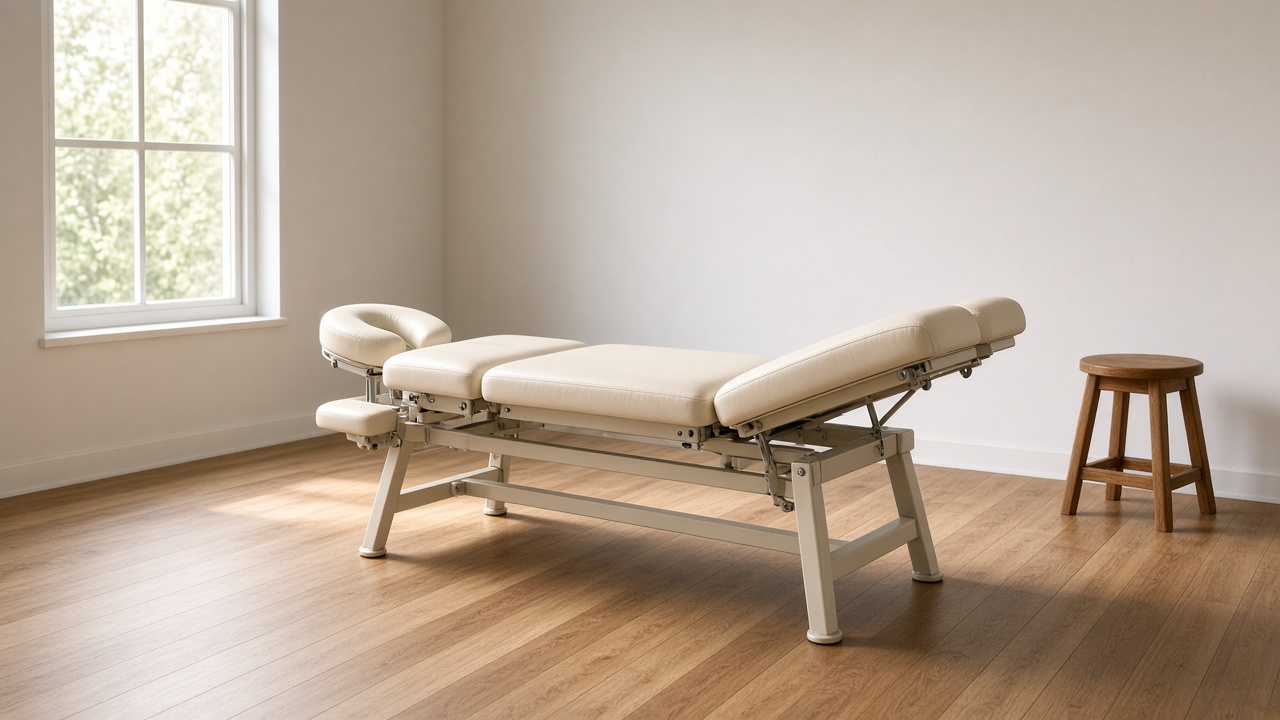
The linens prepared at the foot of a chiropractic table before a new patient arrives.
How to Ask What Hurts and How Soon
Ask what hurts in the words a person would use standing at the desk. A short set of choices can match the way you already hear it, plus a line for their own description. The point is a scheduling fact, not a diagnosis. You are not asking the website to decide what the pain means. You are asking where they say it is, so the new-patient visit is not a blind start.
Ask how long it has hurt in ranges the desk can say back: a few days, a stretch of weeks, longer than that, or not sure. A range is more useful than an exact date if the range is what you use on the phone. Do not turn the field into a medical history, since onset in ordinary language is enough for a request.
Ask how soon they hope to be seen as a hope: the next opening you have, sometime this week if the book allows, or flexible. Label it as a hope so it cannot be read as a hold. The book may not have the day they named, and the desk's job is to look, while the form's job is to say how soon matters to them.
If the person writes that they cannot wait at all, the new-patient thank-you is the wrong ending. The page should say the form is not emergency care and should use the direction the practice already gives people who cannot wait. Do not thank them for requesting an adjustment and leave an urgent-sounding note in the ordinary pile.
What Would Make the Page Sound Like a Plan
The page sounds like a plan when it tells the person what will be done, how many visits they will have, or what will change after an adjustment. That language belongs, if anywhere, in a conversation after someone has been seen. On a request form it is a claim, and it teaches the caller to expect a confirmed course of care that the book has not offered.
Read the page for plan-shaped sentences, such as "you will receive a treatment plan," "your adjustment is scheduled," "most people need a series," or "we will correct the cause." Those lines skip the request and start the visit, so take them off. Replace them with the three questions and the line that the form is a request. The desk can talk about next steps when there is a person in the book, not when there is a name in an inbox.
A menu of techniques can create the same problem if it reads like a prescription. If you list approaches, frame them as what the practice offers in general, not what this sender will receive. Better still, leave the menu off the request, because a technique list does not help the desk open the new-patient book and invites a confirmation the practice did not make.
Photos and stories create a plan by implication when the caption says what changed for someone. Do not put a result on this page. The new-patient explanation stays a request, and outcomes are not a field you get to invent to make the form feel serious.
What the Desk Should See Before It Calls
The desk should see what hurts, how long it has hurt, how soon they hope to be seen, a way to reply, and a thank-you that did not confirm the adjustment. With that note, the call is an offer or a decline. Without it, the call is the form, done late.
| What the note shows | If the page asked | If the page stayed silent | What the desk should do |
|---|---|---|---|
| What hurts | Open the new-patient book with a real reason | Call and ask the question the page skipped | Use the answer, do not diagnose from it |
| How long it has hurt | Know whether this is recent or ongoing | Discover it mid-call | Treat it as context for scheduling, not as a plan |
| How soon they hope to be seen | Look at the book with their hope in mind | Offer a random opening | Say clearly if that hope is not available |
| Confirmation | The thank-you says this is a request | The caller thinks they are booked | Confirm only a real opening |
| Urgent wording | Redirected off the ordinary form | Sitting in the new-patient pile | Do not leave it as a routine request |
The last row is easy to miss because a chiropractic new-patient page feels calm. Calm is fine, but a page that files every message as a future adjustment is not fine when the message says the person cannot wait. The redirect is a website rule, not a clinical opinion about their pain.
Show the table to the person who returns these calls and ask which column they live in today. If they live in the silent column, the page has not explained anything yet, and a longer biography of the practice will not move them into the asked column. The three questions will.
How to Check the Page Against the Book
Check the page against the book by submitting a request and seeing whether the desk could offer a time without a second interview. If they still have to ask what hurts or how soon, the page did not do the job. If the sender would hang up believing an adjustment is already on the schedule, the page did a different job from the one you wanted.
- Submit a new-patient request that names what hurts, a range for how long, and a hope for how soon.
- Read the thank-you and the auto-reply, and mark any line that sounds like a plan or a confirmed adjustment.
- Hand the note to the desk and ask what opening they would look for and what they would not promise.
- Submit a second note that says they cannot wait, and check that it does not receive a routine new-patient confirmation.
- Rewrite the line that failed, then repeat the first test before you add any new paragraph about the practice.
Step two is where friendly copy overreaches. "We will get you adjusted" can be warmth in the office and a confirmation on a screen, so if the book has not said yes, the screen should not say it. Step four keeps the ordinary form from pretending to be emergency care.
After real requests come in, listen for the two questions: what hurts, and how soon. If you still hear them on every callback, the fields are optional or unclear, so make them required in ordinary language. You will know the page has explained enough when the desk starts with the book and the caller already knows the form was only a request.
Questions
What Should the Chiropractic Page Ask Before a Request Is Sent?
What hurts, how long it has hurt, and how soon they hope to be seen, plus a line saying the form is a request. Those facts let the desk open the new-patient book without mistaking the note for a treatment plan or a confirmed adjustment.
Why Is How Soon a Scheduling Question?
Because the book can only offer what it has. How soon they hope to be seen tells the desk whether to look at the next opening or a later one. It does not confirm that the hoped-for day exists, and it does not make the visit an emergency response.
What Should the Page Refuse to Sound Like?
A treatment plan or a confirmed adjustment. The form collects a request, and the desk confirms whether a new-patient visit can be offered. A page that reads as though the plan is already written creates a call the practice has to unwind.
What Should Stay Off the New-Patient Form?
A promise about what an adjustment will change, a series of visits presented as already chosen, and any line that says the time is held. The reason they are asking belongs on the form, and the plan does not.
What Should the Desk Already Know From the Note?
What hurts, how long it has hurt, how soon they hope to be seen, and that nothing is confirmed. The call can then offer a real opening instead of being the first time those questions are asked.
Conclusion
The new-patient page should ask what hurts, how long it has hurt, and how soon they hope to be seen, and it should say the form is a request rather than a treatment plan or a confirmed adjustment. You will know what the chiropractic page must explain before a new-patient request when the callback no longer starts with those missing questions.
When you are ready to ask what hurts and how soon without confirming a visit the book does not have, Speak With Us.