
A chiropractor should stop editing the site between adjustments when the needed page is already clear and the live page still is not that page. If you know the request must ask what hurts and how soon, and must say it is not a confirmed visit, but the live page does none of that, it is time to hand it off. The hire should write that page and should not invent a treatment claim.
This guide covers when between-visit editing becomes the delay, what you already know and still owe the page, how to brief the first-visit page, what help should write, and how you know the handoff worked.
Takeaways
- Stop the between-visit edits when you already know the questions and the page still omits them.
- Hand off a first-visit page that asks what hurts and how soon.
- Require a line that the form is not a confirmed visit.
- Forbid a treatment claim in the brief.
- Test the note from the desk, not from the editor.
When Between-Visit Editing Is the Delay
Between-visit editing is the delay when you already know what the new-patient page must do but you still change a sentence in the gap before the next person is on the table. You add a phrase about care or move a photo, but you do not add what hurts, how long it has hurt, or how soon they hope to be seen. The next request arrives as a name, and you call to ask the questions you meant to put on the site.
That pattern is when chiropractic website help is the right handoff. The knowledge is yours, but the page is not yet. More edits between adjustments will keep polishing the introduction and missing the form, and the form is the work, which needs a stretch of attention the treatment day does not contain.
Look at the edits from the last several clinic days. If they are headlines or a longer story about the practice, they are not the request, which is three questions and a boundary. An owner who keeps rewriting the welcome is repairing the part a stranger reads first and skipping the part the desk needs before it calls.
The Chiropractic page sells the practice, and this article teaches when the handoff is right. The broader Healthcare page covers other doors, and this project should not replace a chiropractic first-visit form with a generic contact box.

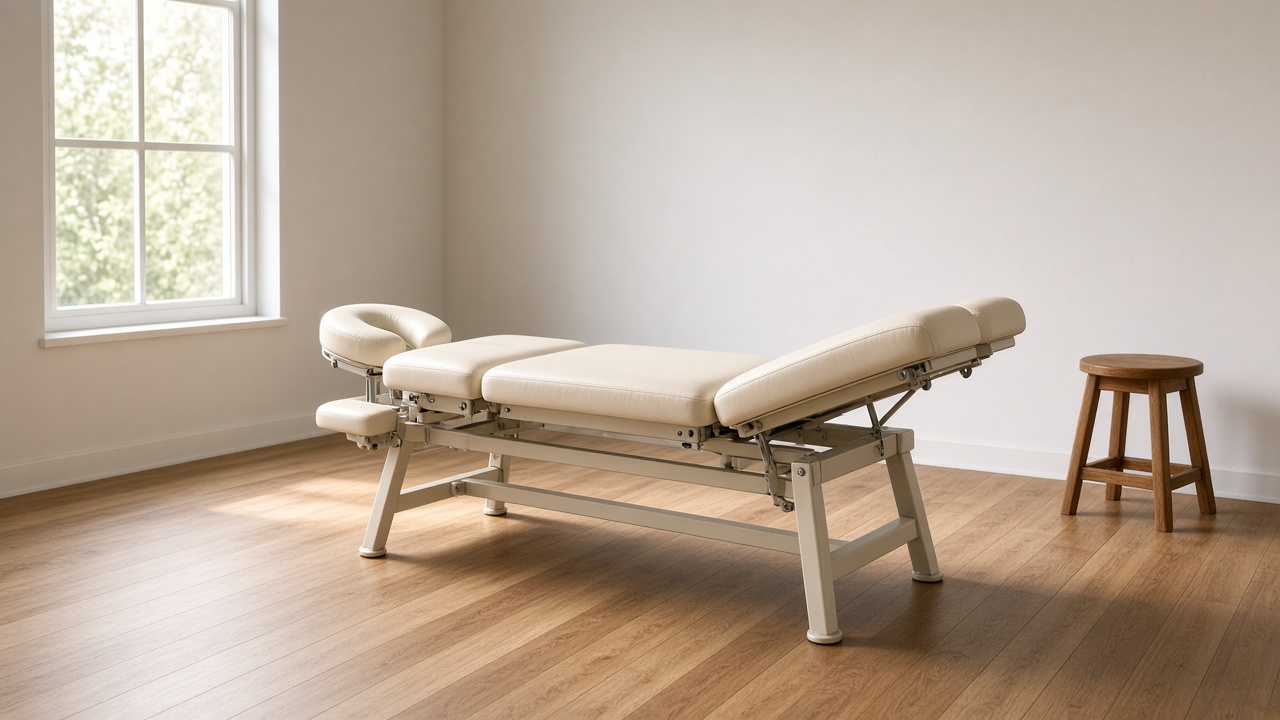
Towels stored under an empty chiropractic table between visits.
What You Already Know and Still Owe the Page
You already know the request must ask what hurts and how soon, and must say it is not a confirmed visit. That knowledge is the brief. The live page still does none of it, which is why hiring is the next step and not a sign you failed to care about the site. You were practicing, and the page stayed a brochure.
Write the questions the way you ask them when a new person calls: what hurts, how long has it hurt, how soon do you hope to be seen. Add the sentence you wish the thank-you said: "This is a request, not an adjustment on the book, and not a plan." If you would not promise a result on that call, the page must not promise it either. The hire should write that page without inventing a treatment claim you then have to walk back at the table.
You still decide what the book can offer. If you do not hold same-day visits, the page cannot imply them, and if "how soon" is only a hope, the field has to say so. Help can place the field, but it cannot look at tomorrow's book and invent openings, so leave the schedule's truth in your column of the brief.
Also decide where the note goes. The person who calls new patients should see what hurts and how soon before they dial. A mailbox you check at night, after the editing impulse returns, is the old habit, so name a destination that gets read when the desk is at the desk.
State the rule once more in the brief so it cannot be softened later: the page asks what hurts and how soon, says the form is not a confirmed visit, and does not invent what an adjustment will do. Anything added after those lines is optional only if it does not contradict them.
How to Brief the First-Visit Page
Brief the first-visit page as the questions, not as a new look. If the brief is a mood board, you will get a mood, but if the brief is the form, you will get the handoff you needed.
- Write what hurts, how long it has hurt, and how soon they hope to be seen, in the words you use between visits when you explain the call.
- Write the thank-you that says the form is a request and not a confirmed adjustment or a treatment plan.
- Cross out every sentence on the current page that sounds like a result, a series, or a held time.
- Name the inbox the desk watches, and say that an urgent-sounding note must not be thanked as a routine first visit.
- Hand the sheet over, and require that page before you review photos, headlines, or a longer story about the practice.
Step three is the part that protects you. A helpful partner will want the page to sound confident, but confidence that invents a treatment claim is the sentence you will edit again between adjustments. Cross it out in the brief so it never arrives as a draft you feel rude rejecting.
Bring one real callback, with private details removed, where you had to ask what hurts and how soon. That call is the before picture, and the after picture is a note that already answers both. If a proposal does not talk about that call, it is a different project.
What Help Should Write and What It Must Not Invent
Help should write the page you described. It must not invent a treatment claim, a confirmed adjustment, or a form that still asks only for a name.
| Piece | Help should write it | You still decide it | Must not be invented |
|---|---|---|---|
| What hurts | As a required question in ordinary words | The choices that match your calls | A diagnosis or a plan |
| How long and how soon | As ranges and a labeled hope | What the book can actually offer | A held day |
| Request boundary | In the thank-you and the auto-reply | The words you already say on the phone | A sentence that sounds like the visit happened |
| Urgent-sounding note | A redirect off the routine form | The direction you already give | A clinical rule written for the page |
| Photos and headlines | After the form works | What you will not claim | A treatment result |
The last row is how chiropractic sites pick up a claim while trying to look finished. A photo with a caption about what changed for a person is a result, so leave it out of this project. The project is the request, and the table is the whole assignment.
The person building should submit a test and show you the note the desk would see, including what hurts and how soon, plus a thank-you you would not have to undo. If the test is a screenshot of a hero image, the handoff has not started, so ask for the note again.
How You Know the Page Is No Longer Between-Visit Work
You know the page is no longer between-visit work when a new-patient note answers the questions without you opening the editor. The desk already has what hurts, how long, and how soon, the thank-you did not confirm an adjustment, and your hands stay off the site.
Initial Contact is the moment you admit the live page does none of that, even though you can state the rule. Detailed Discussion is the question list and the claims you cross out. Implementation is the page, the inbox, and a test you can read without editing. Skip a step and you will get a fresher brochure that still asks for a name, which you will recognize because you will start editing it again before the next visit.
Give the new page a run of real requests and listen for what hurts and how soon on the call. If you still ask them every time, a field is optional or the homepage form bypasses the first-visit page, so close the bypass inside the same project. A second redesign will not ask the question the first one left off.
Leave the editor closed for a run of clinic days on purpose. During those days the only new-patient facts you should see are the ones on the note, and if you feel the urge to add a sentence about what an adjustment will do, that urge is the treatment claim the brief already forbade. Write it down and leave it off the page. The handoff holds when the desk can return the call from the note alone and you are not repairing the site in the gap before the next person is seen.
Questions
When Should a Chiropractor Stop Editing Between Visits?
When you know the request must ask what hurts and how soon, and must say it is not a confirmed visit, and the live page still does none of that. More editing between adjustments will not build the form, and that is the handoff.
What Should the Hire Write?
The first-visit page that asks what hurts, how long it has hurt, and how soon they hope to be seen, and that says the form is a request. The hire should write that page without inventing a treatment claim.
What Does the Chiropractor Still Decide?
Which questions the desk already asks, what the book can actually offer, and every sentence that sounds like a plan. Help places your questions on the page, but it does not decide what an adjustment will do.
What Belongs in the Brief?
The three questions, the sentence that the form is not a confirmed adjustment, and the inbox the desk already watches. Require that page before anyone reviews photos or headlines.
How Do You Know the Handoff Worked?
A test note shows what hurts and how soon, and it does not read like a plan. Initial Contact names the gap, Detailed Discussion locks the questions, and Implementation includes a test you can read between visits without opening the editor.
Conclusion
Stop editing the site yourself when you know the request must ask what hurts and how soon, and must say it is not a confirmed visit, but the live page still does none of that. The hire should write that page without inventing a treatment claim. You will know chiropractic website help is the right handoff when those edits are no longer how the form gets built.
When you are ready to decide when that page is no longer between-visit work, Speak With Us.