

A long-distance mover should explain timing as a window it can defend, and explain what travels with the truck before anyone treats a guess as a date. Early on, say only what you already know: a long-distance shipment is not a local day, some goods stay off the truck, and a delivery day waits for the real picture. The page, the next conversation, and the load have to say the same thing, or a hopeful date becomes a promise the operation cannot keep.
This guide covers what timing you can say early, what has to wait, what travels with the truck, what does not, how to read the page against a real file, and how the long-distance page and this article split the job.
Takeaways
- Say early that timing is a window, not a day you are ready to promise.
- Hold the delivery day until the shipment, the route, and the load are real.
- Name what rides with the truck and what must stay off it.
- Read the page against a real file before you let a guess harden into a date.
What Timing You Can Say Early
Early on, you can say that a long-distance move is not booked like a local day. Building a load stands between the truck, the shipment, and the delivery, and your page should say so in plain words. You can say that you will talk about a window once you understand what is shipping and when the household can release it, and that a first-call date is a wish until those facts exist. That is already a useful explanation, because it keeps the caller from hearing silence as a yes.
You can also say what your timing words mean. A window is a range you will update. A target is a hope inside that window. A confirmed day is something you say only when the operation can stand behind it. If the page uses those words interchangeably, the household will keep the strongest one, so pick a word for the early conversation and do not let a friendlier word sneak into the form.
You can say who will speak when the window moves. If the desk updates the household and the crew does not invent a tighter day at the door, write that down. Early timing is mostly a promise about honesty, not a promise about a calendar square. Households can live with a window, but they cannot live with a window that was secretly a guarantee. Speed language without a condition is a date in disguise, and if a real inventory or a release day must exist before you discuss a window, say that condition out loud.
What Has to Wait
The delivery day has to wait. So does any promise that the truck will arrive on a named morning, that unloading will be finished by a named evening, or that a second stop along the way is already in the plan. Those facts depend on the shipment, the other freight the operation is building, access at both ends, and what the household actually releases. None of that is knowable from a short form.
A spread has to wait until you know the goods. You can explain that a spread is how you talk about timing before a day exists, but you should not publish one span as if every shipment shared it. That is a date in softer clothes.
What the household must do before you can tighten the window also has to be said, and the tightening itself waits. If they are still deciding what to ship, still packing, or still unsure when they can be out of the home, you do not have a timing conversation yet. You have a list of blockers. The page can name those blockers, and the confirmation of a day comes after they clear.
Storage, if it enters the job, changes the wait. Goods that will sit before delivery are not on the same clock as goods that go straight through. Say that the clock splits and do not let one date cover both, since a household that hears one day for a shipment and a unit will hold you to the day they liked.
What Travels With the Truck
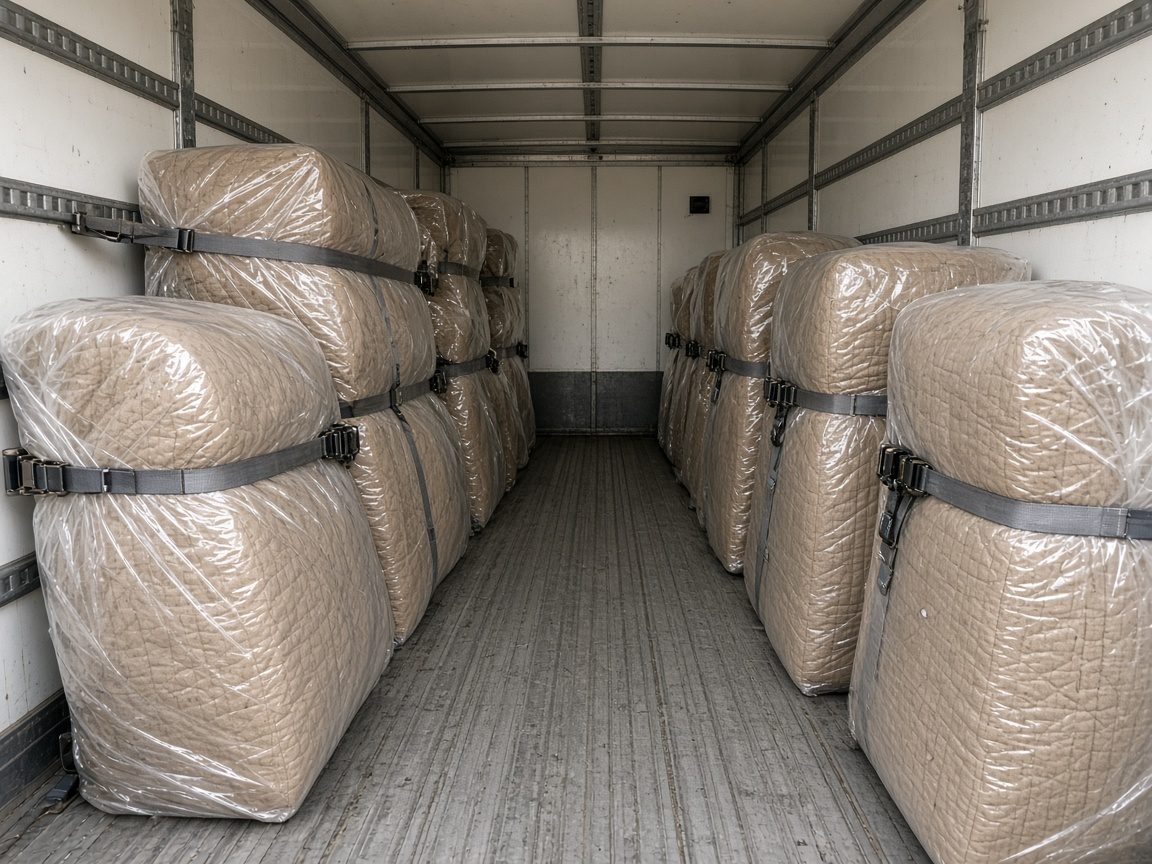
What travels is the household goods you and the customer agreed to ship, packed or prepared the way the file says, and released on the day you planned to load. The page should say that the truck carries the agreed shipment, not everything that happens to be in the house when the crew arrives. A sofa that was in the inventory travels. A shed full of surprises does not become shipment because it was on the property.
Ordinary furniture, boxed goods, and items you have already said you know how to handle travel when they are listed and ready. Say whether you wrap, whether the household packs, and what "ready" means. Ready is a condition of travel. Goods that are not ready are not a small delay. They are a change to the load, and a change to the load is a change to timing.
Papers, access instructions, and any special handling you accepted travel as part of the agreement, in the sense that the crew needs them to do the job you described. If an item needs a crate, a particular crew, or a decision you have not made, it does not travel yet. Put that item in the open questions, because the truck should not be the place where open questions get answered by default.
If you list what a normal load looks like, add that anything outside the list has to be named before load day. That one sentence keeps "we'll just take it" from becoming policy.
What Does Not
What does not travel is anything you did not agree to ship, anything unsafe or unfit for the truck, and anything the household still owns the decision about. Hazardous goods, perishables, and personal items the household should keep with them are the usual refusals. Name the categories you actually refuse, in words the crew will use at the curb. A page that says "some items cannot go" and leaves the "some" blank will lose to the customer's hope.
What does not travel yet is different from what never travels. An item you might take once it is emptied, dried, or listed is not on the truck today. Say the condition. If the condition is not met on load day, the item stays. Do not let the crew negotiate a new company in the driveway because the page was shy; the refusal should be boring and consistent.
| Item or situation | Travels with the truck | Stays off, or waits |
|---|---|---|
| Goods listed and ready, as the file describes | Yes | When they are not the goods you agreed, or they are not ready |
| An item you might take if it is prepared | Only after the condition is met | Until then, and on load day if it is still unprepared |
| Hazardous goods, perishables, and items the household should carry | No | Always, with the reason said in the same words as the page |
| A second household's goods added at the curb | No | Unless that shipment was its own agreed file |
| Goods the household may store instead of ship | Only the part you agreed to load now | The stored part, which is a different clock |
Read the table with the person who loads. If they would make an exception the page forbids, either change the page or change the habit. Exceptions that live only on the truck become the policy the next household heard from a friend, so the page has to be the strict version you want repeated.
Timing and the load are one explanation. A date offered for a shipment that includes forbidden goods is not a date. It is a guess about a different truck. Take the goods off the promise first, then talk about when the real shipment can move.
How to Read the Page Against a Real Long-Distance File
Read the page against a long-distance file you already ran, with the names removed. You are checking whether the timing words and the travel rules on the site match what the household was told and what the truck actually carried. Use an ordinary shipment.
- Mark every timing word on the page: window, target, confirmed day, or any phrase that sounds like one of those.
- Open the file and note which of those words the household heard first, and which word they repeated back later.
- List what was on the truck and what was refused or left behind, and compare that list with the page.
- Write down every moment someone tightened a window before the shipment was real.
- Rewrite the page or the script until the early word, the later word, and the load tell one story.
- Do the same with a file where timing slipped, and see whether the page had promised a certainty you did not have.
A file that required a long apology about a date points to a failed sentence. Put the missing condition on the page. If people keep asking for a day you cannot give, the page is still hinting that the day exists, so remove the hint. The next file should survive the same read without a rescue.
How the Long-Distance Page and This Article Split the Job
The Long-Distance Movers page is the offer. It is where this conversation with Triwave Consulting can start: Initial Contact, then Detailed Discussion, then Implementation. This article teaches the decision those steps assume, which is that you explain timing and what travels before a guess is allowed to harden. The page on the site is the offer, and this piece is how you decide what that page is allowed to say.
Moving & Storage is the wider door, for work that is not this shipment. A local booking, a unit, or a haul-away should not be answered with long-distance timing words, and a long-distance file should not be answered with a local day's confidence. Keep the explanations apart so a caller can tell which clock they are on.
Check the agreement first. The early words, the facts you are waiting on, and the load the crew will accept have to match. When they do, a later window is a real update. When they do not, every update sounds like a broken promise, because the first sentence was already a date you did not mean.
Questions
Can You Give a Delivery Day on the First Call?
Not if the shipment is still a sketch. The first call can explain that a day waits on the goods, the release, and the load you can actually build. Giving a day to be helpful trains the household to ignore every later condition. If they will not continue without a day, say you cannot give one yet, because that refusal is the honest next step.
What If the Household Wants the Window in Writing Early?
Put in writing the word you mean and the facts that must be true before it tightens. A written window is fine when it is labeled as a window and tied to the shipment you have described. A written line that reads like a promise, sent because they asked firmly, is still a promise. Match the note to the page, and do not let the note be braver than the operation.
Should the Page List Everything That Cannot Travel?
List the categories you refuse and the conditions that hold an item back. You do not need a catalog of every object, but you do need enough that a household cannot claim they were never told. Then use the same list at the curb. A list that only lives on the site while the crew improvises is not a policy. It is decoration.
Who Updates the Household When Timing Shifts?
Name one role and write it on the page in plain language. The household should not hear a tighter day from the crew and a wider window from the desk. When the window moves, that role says what changed and what is still true. If nobody owns the update, the first person who wants to be kind will invent one, and kindness will sound like a new date.
Does Storage Change What You Can Say About Timing?
Yes. Goods that will sit are not on the delivery clock of goods that ship straight through. Say which part is shipping now and which part is waiting, and do not cover both with one day. If storage is a separate offer, give it a separate next step, since a single date stretched over a shipment and a unit is two promises wearing one sentence.
Conclusion
Explain long-distance timing as a window you can defend, and explain what travels before a guess becomes a date. The page, the conversation, and the load have to agree. When they do, an update is just an update. When they do not, the household is holding a promise you never had the facts to make.
When you want the timing words and the load rules on the page to match the shipment you actually run, Speak With Us.