A general dentistry site should explain the first visit, name which office it is, and make clear that the form is a request. The page should say what the first visit is for, which office it belongs to, and that nothing is confirmed until the desk offers a time. A new patient who thinks they are already on the book will call angry, and the page can prevent that call.
This guide covers what the first visit has to explain, which office the new patient is asking for, how to keep the form a request, which words confirm a time you do not hold, and what the angry call means for the page.
Takeaways
- Say what the first visit is for, in scheduling words, before you ask for a day.
- Name the office the visit belongs to, especially if more than one book exists.
- Tell the person the form is a request and that a time appears only after the desk checks the book.
- Move pain and procedure questions off this page so the first visit stays a first visit.
- Read every thank-you line as if you were the person who thinks they are already scheduled.
What the First Visit Has to Explain
The first visit has to explain itself as a first visit. A general dentistry page that says "welcome, new patients" and then shows a calendar skips the part the desk needs and the part the person needs. Say what the block is for: a first exam and the start of a record at this practice, for someone who is not already on your book. Say roughly how long that block is on your schedule, the way the desk would say it on the phone. You are describing the appointment, not the treatment.
Say what the visit is not. It is not a same-day pain visit, and it is not a consult about implants or a cosmetic change. Those are other doors. If someone hurts now, the page should point them to the emergency path instead of letting them finish a new-patient request and wait. If they want a longer procedure conversation, point them there too. Leaving those people on this form turns the first-visit book into a sorting tray.
Say what happens after they submit. The desk looks at the book for the office they chose and offers a time that is actually open. Nothing is held when they press the button. That sentence belongs above the form, not in small type after a cheerful headline, because people read the headline and remember the word "booked." They do not remember a footnote.
Put the explanation in the order a new patient asks it: What is this visit? Which office? What do I need to have ready? When will I know the time? "Ready," for this page, means a way to reach them and a range of days. A full health history can follow once the visit has a real slot, since asking for the packet first teaches them that the form is the appointment.
The General Dentistry page sells the visit, and this article is about what that page must explain before anyone is on the book. Other visits live on the Dental page and should not be folded into this first-visit form.
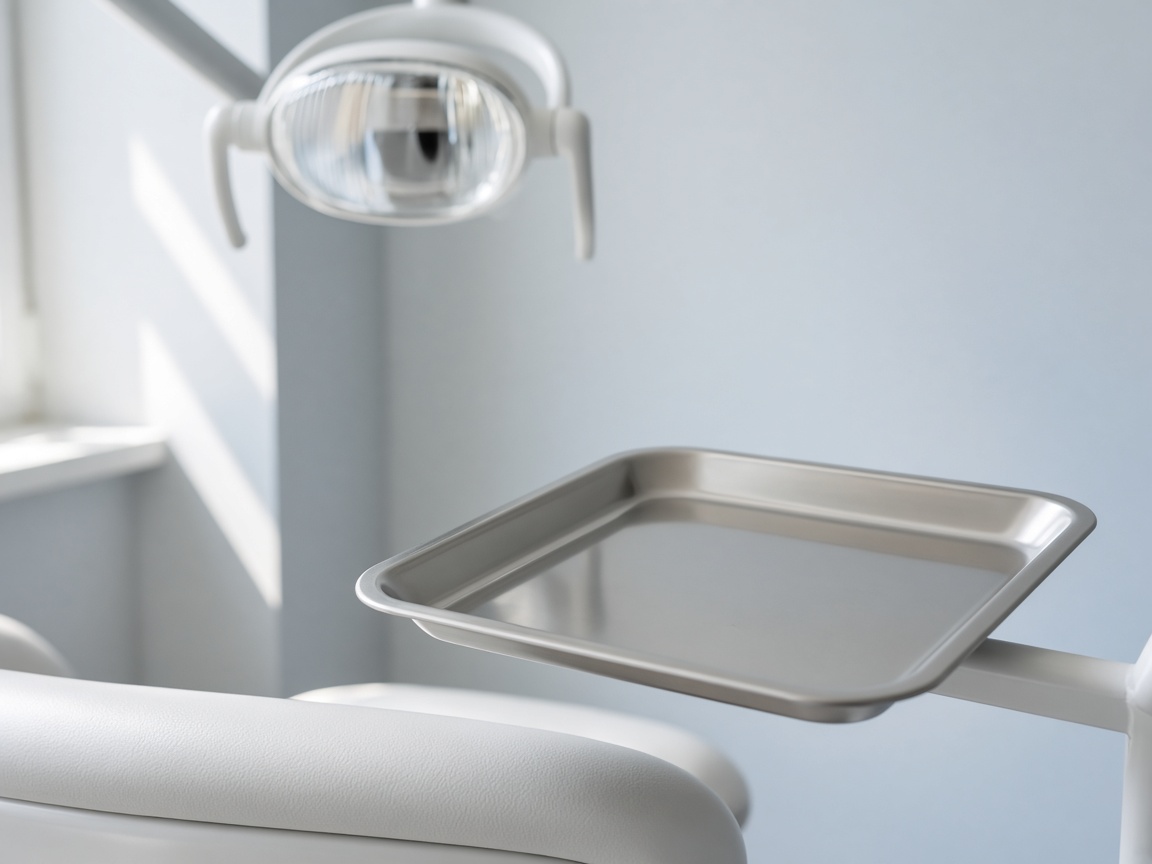
A blank stainless tray extends over the arm of a white dental chair, with the light above.
Which Office the New Patient Is Asking For
Which office matters as soon as you have more than one book, and it still matters when you have one. The page should name the office the way the schedule names it, so the desk does not translate a nickname into a column. If the person can be seen in more than one place, the form asks them to choose. If only one office takes new patients, say that, and do not offer the others as if they were open.
Do not make the person guess from a photo or a map pin. The choice is a scheduling fact, so write the office names you already use on the book and no others. A request that arrives without an office lands in a pile the desk has to split by calling around, and that call is the page failing at a question it could have asked in one field.
Match the offer to the book at that office. If one location has new-patient time and another does not, the form should not pretend they are the same. A person who picks the full book needs a request that says so, and a reply that does not invent a chair there. Sending every submission to a central inbox is fine only if that inbox can see which office was chosen before anyone calls back.
Keep pain and consults from inheriting this office question by accident. An emergency request is about the same-day window, which may be a different chair than the new-patient block, and a procedure consult may be with a different provider. If those visits use this page, the office field will look answered while the visit is still wrong. Get them onto their own doors, then let this page be only the first visit.
How to Keep the Form a Request
Keep the form a request by removing every cue that a time has been accepted.
- Read the page aloud and circle any line that says booked, confirmed, reserved, or your visit is set.
- Replace the circled lines with a request sentence: the desk will offer a time the book holds at the office you chose.
- Ask for the office, a range of days, and a way to reply, and do not show a clock time the schedule has not released.
- Point pain and procedure questions to their own pages before this form can be submitted for those needs.
- Submit a test and read the note and the reply. Both should say request, office, and first visit, and neither should name a held time.
Step one is usually a surprise. The form may be careful while the button says "book now" and the thank-you says "see you then." The button and the reply are part of the page, so change them with the paragraph, because a person remembers the button.
Step three is where software pushes back. A widget that displays open slots is a confirmation machine if those slots are not the book the desk actually uses. If the widget and the schedule disagree, take the widget off until they are the same source. A range of days looks less modern but tells the truth: the desk offers the time, and the page does not.
Step five is the check you repeat when someone edits the page later. A seasonal banner, a new photo, or a rewritten welcome can restore a confirming sentence without touching the form, so read the reply after every edit. If it sounds like the visit exists, it is wrong, even if the form fields are still correct.
Which Words Confirm a Time You Do Not Hold
The words that earn you the angry call are the ones that sound like a hold. The desk can be polite in person and still be contradicted by a line the page showed first.
| What the person reads | What they believe | What the book actually did | What the page should say instead |
|---|---|---|---|
| Book now | The click finishes the appointment | Nothing, until the desk looks | Request a first visit |
| You are scheduled | A time is held at that office | A note arrived | We have your request and will offer an open time |
| Choose your time on the calendar | The slot they tapped is theirs | The widget may not match the book | Tell us which days can work |
| See you soon | Travel is the next step | No one has checked the chair | Wait for the desk to confirm a time |
| New patients welcome any day | Every office has room | One book may be full | Name the office and let the desk check it |
Walk a real submission down the left column before you publish a change. If any cell in the belief column is stronger than a request, rewrite the line. Do this with the person who answers the angry calls, because they already know which sentence they have to undo. That sentence is the edit, and it is not a training problem.
The right column is dull on purpose, since dull keeps the first visit on the book you have. A warmer line is allowed only if it cannot be read as a hold. "We look forward to meeting you" is fine when the next sentence says the time is not set. "We look forward to seeing you Tuesday" is not fine unless Tuesday is on the book and someone at the desk put it there.
What the Angry Call Means for the Page
The angry call has a script: I booked online, I took off work, and nobody has me down. That script means the page confirmed, or strongly implied, a time the schedule does not have. Apologize once, offer a real opening, and then fix the line they saw. A second apology next week means the line is still up.
Sort those calls by office. If one location draws all of them, that book is the one the site is over-offering. Either the page lists it as open when the column is full, or the form never asked and the reply guessed. Both are page problems. The schedule is allowed to be full, but the site is not allowed to speak as if it were empty.
Listen also for a different anger that is not about a held time. Someone in pain used the new-patient page and waited days, which is the missing emergency door and not a rude confirmation. A person who wanted a procedure conversation got a first-exam block and feels dismissed, which is the missing consult door. Fix the path, and do not answer either problem by confirming more first visits faster.
Once the wording is honest, the page is right when new patients call to accept or decline a time the desk offered, not to insist a time already exists. The office on the note matches a column the desk can see, and the reply they quote is a request. You do not need a new slogan for that. You need the first visit, the office, and the unconfirmed request to stay visible the next time someone edits the welcome.
Questions
What Should the General Dentistry Page Say the First Visit Is?
A first exam and the start of a record for someone new to the practice, at a length the desk already uses. It should also say what it is not: not a same-day pain visit, and not a procedure consult. Treatment decisions stay off this page.
Why Does the Office Have to Be on the Form?
Because the book is per office. A request without that choice makes the desk call around, and a reply that guesses can confirm the wrong column. Name the offices the way the schedule names them, and do not offer a book that is not taking first visits.
How Should the Page Say the Time Is Not Held?
In the button, above the form, and in the reply: request a first visit, and the desk will offer a time the book holds. Avoid "booked," "confirmed," and "see you then," and take off any calendar widget that does not match the schedule.
What Should Happen to Pain or a Consult on This Page?
They should leave it. Point pain to the emergency path and a procedure question to the consult path before the new-patient form is submitted. This page is the first visit only, and mixing the others is how the short block gets the wrong person.
What Does the Angry New-Patient Call Mean?
It means they believe a time was held and the book does not have them. Quote the line they saw, replace it with a request, and check that office's page for the same wording. The schedule may be full, but the site has to stop speaking as if a chair were saved.
Conclusion
A general dentistry page has to say what the first visit is for, which office it is, and that the form is a request rather than a confirmation. A new patient who thinks they are already on the book will call angry, and that sentence is preventable. You will know the page is right when the desk offers a real time and the person is not calling to defend one the site invented.
When you are ready to explain the first visit and which office it is, without confirming a time the book does not have, Speak With Us.