
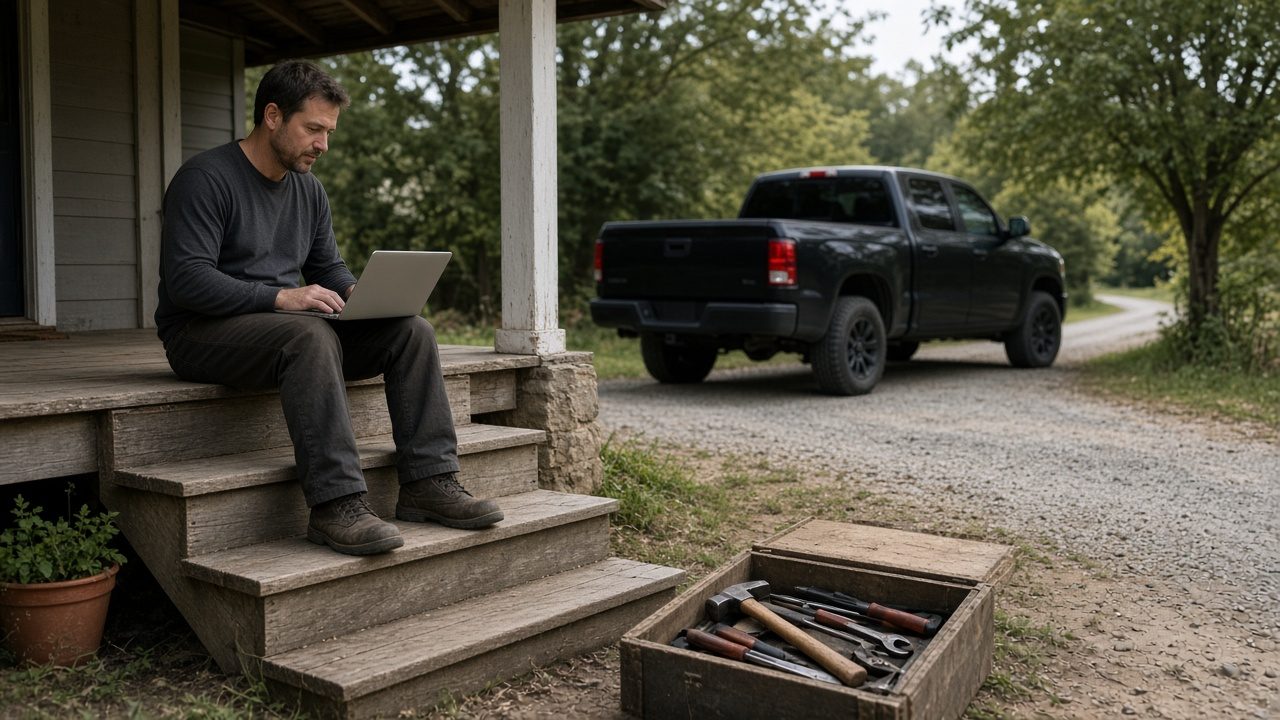
Hire help for the website and the follow-up when the calls you meant to return are still waiting after the truck is parked, and the site is sending more of those calls into the same pile. The page, the next step, and the real work have to agree before a helper can be useful. Triwave Consulting looks at that agreement first, then at whether you can keep it from the driver's seat.
This guide covers the job that falls off the truck, what to put in front of a helper, questions to ask before you hire, the work you should not hand away, how the first month of help runs, and what you still answer yourself.
Takeaways
- Hire when missed replies and an unclear page are the same problem, and you cannot fix both between jobs.
- Put the real job list, a week of requests, and the reply you wish you had sent in front of anyone you hire.
- Keep the promises, the pricing, and the decision about which jobs you want.
- Judge the first month by whether the page and the follow-up now say the same thing.
The Job That Falls Off the Truck
The job that falls off the truck is the reply. You see the missed call, you mean to return it at the next stop, and the next stop runs long. By the time the truck is parked, the request is old, the caller has moved on, or you are writing estimates when you meant to be done. The website keeps adding to that pile if it invites work you do not do, or if it never says when a person will answer.
The day is on the property, and the inquiry is not. A lawn route, a tree crew, and a washing crew all feel that split. Lawn Care, Tree Services, and Pressure Washing each have a visit that fills the hours, and none of those visits includes sitting down to sort a form that arrived at midday. If you are the person who both runs the crew and answers the inquiry, one of those jobs will slip.
Notice the shape of the slip before you hire. Are people asking for jobs you do, and simply reaching you too late? Or are they asking for jobs the site invented, so every reply starts with a correction? Those are different problems. A helper can return a clear request, but a helper cannot repair a week of requests that were the wrong job unless the page changes too. Hire for the pair: the site that describes the work, and the follow-up that happens when you are on a job.
A single missed call is not the signal. The signal is a repeating gap: requests sit, the form promises a speed you do not keep, and you cannot tell which messages still need a person. That gap is the job to hand over, after you have shown what a good reply looks like.
What to Put in Front of a Helper
Put the work in front of a helper before you put the login in front of them. They need the jobs you actually schedule, in the words the crew uses. They need a recent stretch of real requests, with your notes on which ones you wanted and which ones you would decline. They need the reply you wish had gone out, written once, so they are not guessing your voice from a brochure.
Include the path a request takes: who sees the form, who may call back, and what they are allowed to offer as a next step, whether that is a time window for an estimate, a question about access, or a statement that you do not do that job. Include the hours you are on properties and the hours you can talk. A helper who thinks you answer all day will build a follow-up you will not live up to.
Bring the page as it is, not as you hope it will be. Mark the lines that are true and the lines that pull the wrong jobs. A useful helper will start there, while a poor fit will offer to promote the page before anyone reads it against the route. Lead Generation only helps after that reading, because more inquiries aimed at a confused page make the pile on the truck larger.
Write down what done looks like. Every request for a job you sell gets a reply that names the next step, and every other request gets a short, true no. If you cannot write those replies, you are not ready to hand the job over. You are ready for a conversation that writes them with you.
Questions Before You Hire
Ask whether the helper will protect the agreement between the page, the reply, and the work. A busier phone with the same missed follow-up is a larger version of the problem you already have.
Use the table in the first conversation. Listen for the fit, and listen for the answer that skips your route.
| Question to ask | A fit sounds like this | Walk away when you hear this |
|---|---|---|
| What will you change first | The lines on the site that disagree with the jobs you do | A push to promote the site before those lines are fixed |
| What do you need from me | The job list, a week of requests, and the reply I want sent | Only a login and room to experiment |
| Who speaks to the customer | A named person, using words I have approved | Whoever is free, in whatever words they like |
| What may they promise | The next step I already keep, such as a call or a visit | A result I have not agreed to, or a job I do not sell |
| When does the work begin | After the jobs and the reply are written down | The moment I say yes, before the offer is clear |
The Home & Property Maintenance page is the offer if you want a pair of hands on this. This article covers the decision to hire. If the answers stay vague, you have a pitch, so wait until someone can say, in your words, what happens to a request that arrives while you are on a property.
Work You Should Not Hand Away
Keep the decisions that define the company: which jobs you sell, which jobs you decline, what a visit includes, and what the crew will not do. The price of a job, and whether you will take it, stay with you. A helper can gather facts and draft a reply, but a helper should not invent an offer on a live call because the caller was persistent.
Keep the relationship with people already on the route when the issue is the work itself. A complaint about a mow, a wash, or a tree visit needs the person who knows what the crew did. You can ask a helper to notice the message and put it in front of you the same day, but you should not ask them to explain the work as if they had been on the property.
Keep the choice of what the homepage leads with. That choice is the offer. A helper can show you that the page and the calls disagree, and you decide which sentence becomes the lead. If you hand that away, the site will drift toward whatever is easiest to promote, and the truck will collect jobs you did not mean to sell.
Also keep the final look at anything that speaks in your name before it becomes the habit. The first replies, the new form, and the revised page need your yes. After those are stable, a helper can repeat them. Handing away the first version is how a stranger's menu replaces yours, and the work you keep is short. It is the part only you can mean.
How the First Month of Help Runs
The first month should prove the agreement, not expand the offer. Start with the page and the reply you already decided. Measure the month by whether requests for real jobs get a true next step, and whether requests for other work get a true no. Leave new promotions for later, after that pattern holds.
Run the month in this order.
- Spend the first conversations on the job list, the requests, and the reply you want sent.
- Change the page so it names only the work you will schedule, and point the form at those jobs.
- Have the helper draft replies for a few real requests, and edit those drafts until they sound like you.
- Let the helper send the approved kind of reply while you are on the job, and review a sample when the truck is parked.
- At the end of the month, compare the requests with the page and with what the crews actually did.
Stop if the fourth step produces replies you would not have sent. That means the words are not stable yet, so go back to editing drafts. Speed is the wrong prize in this month, and a fast reply that offers the wrong visit creates a job you then have to unwind in the driveway.
The order of the work with Triwave Consulting matches this shape. Initial Contact is you describing the missed follow-up and showing the page. The Detailed Discussion settles what the helper may say and what stays with you. Implementation is the page change and the reply habit. If a vendor wants to skip to promotion in week one, they are skipping the job you hired them to do.
What You Still Answer
You still answer the questions that commit the company. Will you take this job? What does this visit include? What will you charge? When can a specific crew be there? A helper can prepare those questions so you can answer them in one sitting instead of between stops, but the answer itself stays yours, because the caller is hiring your crew, not the person who tidies the inbox.
You still answer when a request is almost a fit. The property is the kind you like, and one detail sits outside the usual visit. A helper should flag it, not smooth it over. Your yes or no is what keeps the route honest, and if every almost-fit becomes a yes, the page and the week drift apart again, and the helper has quietly rebuilt the menu you removed.
You still answer your own customers when the topic is the work on their property. The helper's role is to make sure you see that message while it still matters. A same-day handoff is a success, whereas a reply that guesses what the crew did is a new problem.
At the end of the month, you should be able to say what changed. The page matches the jobs. The follow-up happens while you are out. You still make the offers. If those three are true, the hire was aimed at the right job. If the phone is simply louder and you are still sorting it at night, the help has not started yet.
Questions
Can a Helper Reply Before the Site Is Clear?
Only with a script that tells the truth the site does not, and only for a short gap. Callers compare the reply with the page. Change the sentences that cause the wrong requests, then let the helper repeat the reply that matches.
What May a Helper Promise?
A helper may promise the next step you already keep. That might be a returned call, a few questions, or a visit to look at the property. They may not promise a job you decline, a date you have not checked, or an outcome for the property. If the promise would need your judgment, it waits for you.
Do You Need a New Website First?
You need the page and the follow-up to say the same thing as the work. Sometimes that is a new page. Sometimes it is a corrected list, a clearer form, and a reply someone sends while you are out. A rebuild that keeps the old menu spends the month on the wrong job.
Who Handles Messages That Arrive on the Job?
Decide the handoff before you hire. A helper can log the message, send the approved first reply, and put anything about finished work in front of you the same day. You handle the commitment and the complaint. Write that split down, because an unwritten split becomes whoever grabs the phone, which is the habit you are trying to leave.
How Do You Know the Help Is Working?
Look at the requests beside the page and beside the crews' week. Real jobs should get the next step you named, and other jobs should get a clear no. You should still be the person who prices and who accepts a job. If those checks hold, the help is aimed correctly, and a busier inbox alone does not answer the question.
Conclusion
Hire when the reply keeps falling off the truck and the site keeps feeding it. The page, the next step, and the work have to agree, and a helper is there to protect that agreement while you are on the job. You still decide the offer.
When the website and the follow-up need a pair of hands, Speak With Us.