A plumbing website should give a burst-pipe call, a remodel, and an after-hours emergency three different doors before any of them share an inbox. A plumbing site fails when a burst-pipe caller and a remodel lead fill out the same short form. The emergency path needs the leak's location in the house, whether water is still running, and a callback number. The remodel path needs the room and the timing. Those are not the same job.
Takeaways
- Collect the leak's location, whether water is still running, and a callback on the burst-pipe path.
- Collect the room and the timing on the remodel path, and keep that note out of the night queue.
- Give after-hours calls their own door so a dripping ceiling is not filed beside a bathroom idea.
- Put each form in the inbox of the person who will act, the on-call plumber or the estimator.
- Use the homepage to point at the doors, not to host one form for every plumbing job.
What a Burst-Pipe Page Has to Collect
A burst-pipe page has to collect where the water is, whether it is still running, and how to reach someone who can open the door. Those three facts decide the truck. A sentence that says you handle leaks does not. The caller already knows they have a leak. You need the location in the house: kitchen, bath, ceiling, slab, water heater, or a main they can point at. You need clean water versus sewage. You need to know if anyone found the shutoff.
Whether water is still running is the urgency. Running water, a ceiling that is actively dripping, or sewage coming up a drain is a different visit from a stain that dried yesterday. Ask it as a choice. Still running. Stopped, but the house is wet. Sewage. Not sure. The on-call plumber can move on not sure. They cannot move on a blank.
The callback number has to be one that will be answered while the water is a problem, plus the name of the person at the house. A main office line for a property manager is useless if that desk is empty. Ask for the unit or the gate in the same field as the address. A plumber standing outside a locked building, with the location of the leak still unknown, is a page that collected a name and called it an emergency.
Do not teach the caller a repair. You can say where a main shutoff often is in plain language only if your techs want that said, and you should not turn the page into steps they must finish before you will come. The page's job is the facts. The visit's job is the pipe. The Plumbing page sells the work. This article teaches which facts belong on which door. Other trades are on the Home Services page and need their own questions.
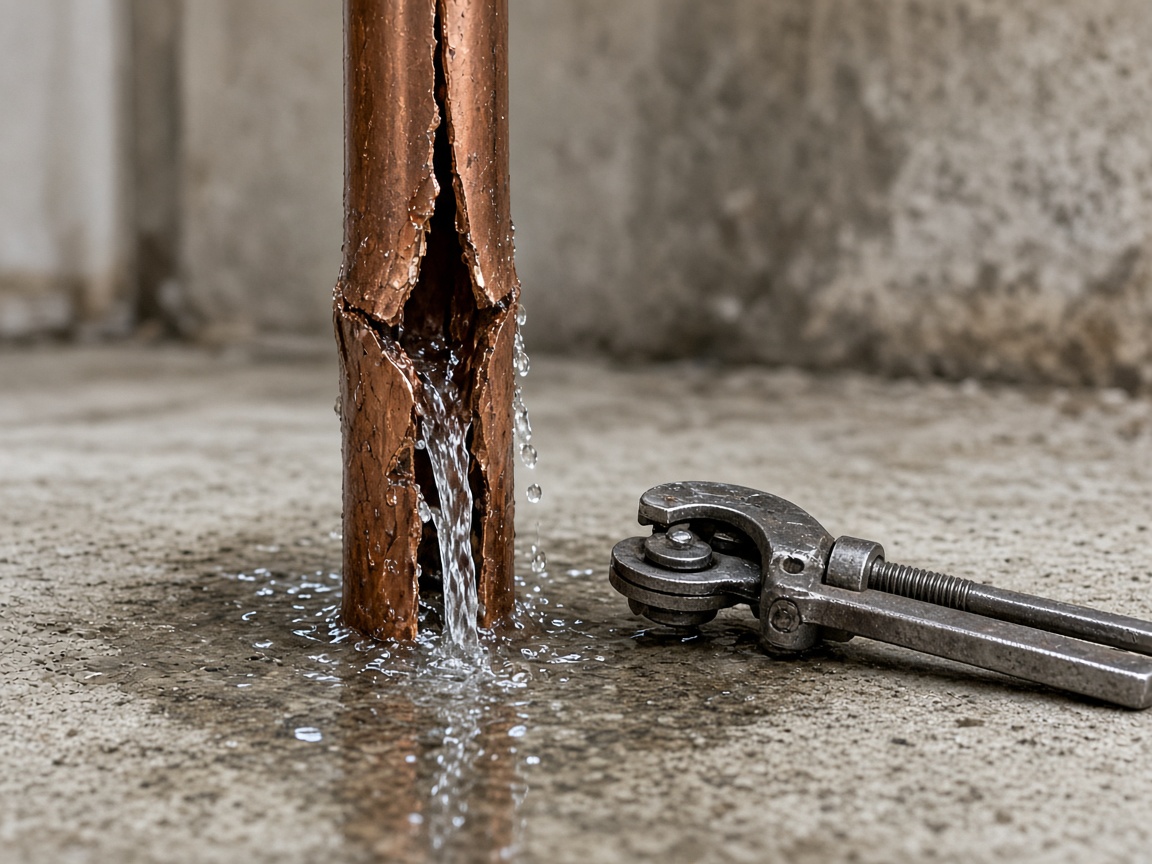
Water runs from a long crack in a copper pipe onto wet concrete beside a pipe cutter.
A close view of a split pipe and standing water, the damage a plumbing page should prepare a homeowner to recognize.
What the Remodel Page Is For
The remodel page is for a room someone wants changed, on a timeline that is not tonight. A bathroom, a kitchen, a laundry move, a fixture they want replaced, a water heater they are planning to swap while it still works. The note needs the room, what they want done, and when they hope to start. It does not need a shutoff question dressed up as urgency.
Ask whether any water is leaking right now, and send a yes to the burst-pipe page before you collect remodel details. People start remodel thoughts because something small has been dripping. If you file that as a remodel, the estimator books a walkthrough while water keeps moving. The escape hatch is the difference between a sales visit and a mitigation visit.
Timing on this page is a range the household can offer, not a demand for a truck. This month, next month, still choosing fixtures. Those answers let the office schedule. They should not page the on-call plumber. A remodel form that includes as soon as possible as the first choice will be filled that way by everyone, and your night list will fill with bathrooms.
Photos can help a remodel and can mislead a leak. A picture of a faucet the homeowner dislikes is not a burst. A picture of a bulging ceiling is not a design consult. If you allow uploads, label them by door. Do not let one upload box on a shared form stand in for the location question. The estimator needs the room and the goal. The plumber on call needs to know if the ceiling is failing tonight.
Keep replacement of a working fixture, a sewer-line conversation that is not backing up today, and a repipe someone is pricing on this path or on a sibling estimate path. They are scheduled work. The moment sewage is in the tub or a supply line is open, the job changes doors. Say that on the remodel page so the visitor can move themselves.
How to Give After-Hours Its Own Door
After-hours needs its own door because the person who answers is different and the facts are thinner on purpose. The night door is the burst, the backup, the water heater that is flooding, and the ceiling that is coming down. It is not a shorter remodel form. It is not the homepage with a red label.
Build it in this order.
- List the night calls from a recent month and group them by what the plumber found, not by what the ad said.
- Turn that list into choices: supply leak, drain backup, sewage, water heater leaking, ceiling dripping, something else.
- Add whether water is still running, whether the shutoff was found, the location in the house, a callback for tonight, and the address.
- Remove room-design, fixture-style, and project-timing fields from this form so a remodel cannot wear a night label.
- Deliver the form to the on-call plumber's thread, submit a test after closing, and confirm they can read every field without calling the shop.
Step two keeps the form honest. Something else should demand a line of detail, or it becomes the bucket you were trying to empty. Step four is where owners cheat because they want one form for the whole company. One form is why yesterday's emergency is buried under a kitchen idea. The night door can link to the remodel page for people who are not in a failure. It should not host that page's questions.
The voicemail for the night line has to ask the same choices, in the same order. A greeting that requests a name and a number produces a message the plumber cannot roll on. When you change the form, change the greeting the same day. Drift between them is how the phone and the site become two companies.
How Leak, Remodel, and Night Calls Differ
A leak during the day, a remodel, and a night call can involve the same house and still be three jobs. The site should show that before the inbox does.
| Door | Facts it collects | Where the note goes | What it refuses |
|---|---|---|---|
| Burst or active leak | Location, still running or not, shutoff, clean water or sewage, callback, address | On-call plumber if water is moving or sewage is present | Fixture style, project month |
| Remodel or planned swap | Room, what should change, timing, whether anything is leaking now | Estimator or office | A night roll for a design idea |
| After-hours failure | The night choices, still running, who can open the door, address | The plumber on call, after closing | A remodel hiding in a short box |
| Stopped leak, house already wet | Location, when it stopped, callback | Office first, night only if damage is spreading | A shrug filed as urgent |
| Working fixture to replace | Which fixture, room, timing | Office schedule | An emergency subject line |
The fourth row is the judgment call your people already make. A dried stain under a sink can wait for daylight. Water still crossing a ceiling cannot. The form should capture enough that the plumber on call can apply your rule, not enough to make every worried homeowner look like a burst. The fifth row keeps the day book full of real work without paging anyone at night.
If a submission can sit in two rows, the doors are overlapping. Tighten the choices until a person can land in one. Overlap is how the office and the on-call plumber both call the same house, or how neither does, because each thought the other owned it.
What One Inbox Does to the Three Jobs
One inbox turns the three jobs into a sorting chore for whoever opens the mail in the morning, or for a plumber trying to eat between calls. The burst waits behind a paragraph about tile. The remodel gets a panicked callback that scares off a patient buyer. The night message is a name with no location, so the plumber drives blind or declines a job they would have taken.
Split the destinations even if you are the only person in the company. You can be the on-call plumber and the estimator and still benefit from two labels. A subject that says night leak is a different next action from a subject that says bathroom remodel, even when both reach your phone. The label is the door. Without it you reread every note as if it might be a flood.
Check a week of the current inbox and tag each note leak, remodel, or unclear. Unclear is the form's fault if you already know the three doors. Do not add a fourth door called other and pour the unclear notes into it. Other becomes the new single inbox. Force the choice, and let something else require a sentence.
When the doors are live, listen to the callback. On a burst you should be confirming the shutoff and the address. On a remodel you should be talking about the room and the timing. If you are still asking which of those conversations this is, the note arrived from the old form, or from a homepage box you left in the footer. Remove that box. A footer form shared by every page will put the three jobs back in one pile the same day you launch the doors.
The plumbing site is ready for a burst-pipe call when the location, the running water, and the callback are on the note before anyone rolls, and the remodel note never pretends to be that call.
Questions
What Must a Burst-Pipe Page Collect?
The leak's location in the house, whether water is still running, whether the shutoff was found, clean water or sewage, a callback that will be answered, and the address. A page that only says you fix leaks does not collect those facts.
What Belongs on the Remodel Page Instead?
The room, what the homeowner wants changed, and the timing. Ask if water is leaking right now, and move a yes to the burst-pipe page. A remodel note should reach the estimator, not the on-call plumber.
Why Does After-Hours Need Its Own Door?
The night plumber needs a short set of failure choices and a way in, not a design question. A homepage with a red label still collects whatever the shared form collects. The night door removes project fields and lands in the on-call thread.
What Happens If Leak and Remodel Share One Inbox?
The burst waits behind a tile paragraph, and the remodel gets an emergency callback it did not need. Tag a week of notes. Unclear means the form is still one door. Split the subject and the destination even if you are the only person who sees both.
Which Requests Should Never Use the Night Form?
Remodels, fixture swaps on working equipment, and repipes someone is pricing. Those need the room and the timing. The night form is for water that is moving, sewage, a leaking water heater, or a ceiling that is failing now.
Conclusion
A plumbing site fails when a burst-pipe caller and a remodel lead fill out the same short form. The emergency path needs the location, whether water is still running, and a callback. The remodel path needs the room and the timing. Give the after-hours call its own door, and you will know which facts belong where before the phone rings.
When you are ready to give the leak, the remodel, and the after-hours call different doors, Speak With Us.