An electrician should not advertise a dangerous failure and a planned upgrade into the same page. Ads send strangers to whatever the site already does. If the page cannot tell a burning smell from a remodel, the ad buys more of that mix. Fix the two doors first, and then an ad has somewhere honest to land.
This guide explains what each door has to do, a test for whether the site is ready, and what to do with an advertising offer that is sitting in your inbox.
Takeaways
- Send strangers only to a page that already sorts a burning smell from a planned upgrade.
- Fix the stop-using-it door and the scheduled-upgrade door before you accept an ad offer.
- Read the landing page as the ad. If it has one form, the ad has one form.
- Turn an offer down while the inbox still needs a callback to learn which visit it is.
- Start an ad when a test stranger can land on the right door and produce the right note.
Where an Ad Sends a Stranger
An ad sends a stranger to a URL, and that URL does whatever it already does. It does not inherit the careful sentence you told the ad seller. If the URL is the homepage, with one form for every electrical job, the stranger becomes another mixed note. If it is a stop-using-it page that asks where the smell or the spark is, the stranger becomes a failure note. The ad did not decide. The page did.
Strangers are less patient than people who already know you, and they will tap the first button that sounds like their problem. A button that says "get a quote" on a page about burning smells teaches them to ask for a quote while something is sparking. A button that says "emergency" on a page about panel upgrades teaches them to mark a remodel as urgent. Advertising then multiplies the confusion faster than your phone ever did.
Read the page you would paste into the offer, first as a homeowner with a hot smell and then as a homeowner planning a kitchen. If both would submit the same fields, the ad is early. Electrical work makes this sharper than most home services, because one of the two visits is a stop-using-it call and the other is a date on the calendar. Mixing them is not a paperwork issue: it means the wrong person shows up, or the right person shows up late.
The Electrical page sells the work, and this article teaches when ads are early. The selling page is not automatically a landing page, and if it still mixes the visits, it is the wrong destination. The Home Services page covers other trades, and an electrical ad should not drop a burning smell into a shared contractor form beside a leak or a roof.

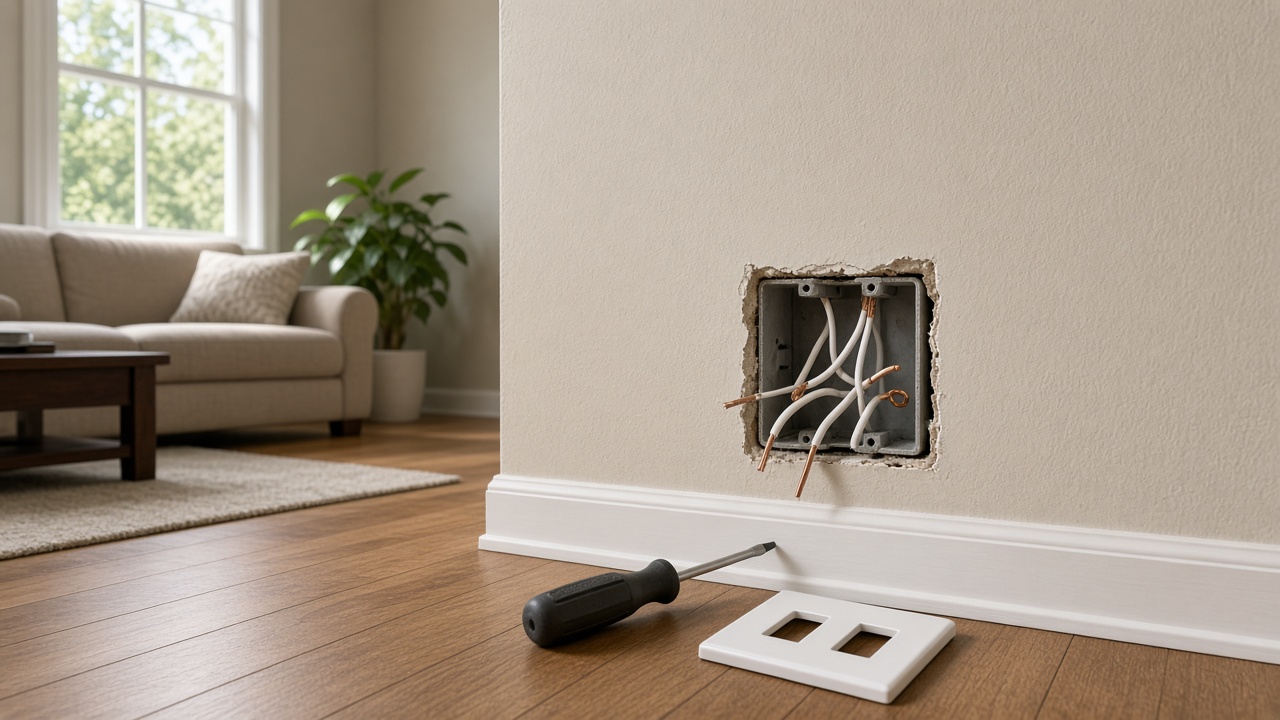
Ordinary electrical materials and hand tools, the kind of job-ready gear an electrician would show before a website is finished.
What the Two Doors Must Do Before You Spend
Before you spend, the two doors must already ask different questions and land in different places. The failure door asks where the burning smell, spark, hot panel, or dead rooms are, whether the household has stopped using the affected part, a callback number, and the address. It should also say plainly that visible smoke or fire is a call to emergency services first, not a web form. The upgrade door asks about scope, which rooms, whether power is currently safe, panel access, and timing. A "no" on safe power sends the visitor from the upgrade door to the failure door.
Both doors need a destination. Failure notes should reach the electrician who answers that kind of call, and upgrade notes should reach the office or estimator. If you advertise before those destinations exist, you will buy a pile and sort it by phone, which is the job the ad was supposed to make easier.
Say on each door what you will not do. The failure page will not design a lighting plan, and the upgrade page will not treat a sparking outlet as a weekday preference. An ad for panel upgrades should land on the upgrade door, not a general electrical page that also shouts about emergencies. An ad for urgent help, if you run one at all, should land on the failure door and should match the calls you actually take. Advertising a night response you do not offer is a promise problem, not a media problem.
Check the phone view, since strangers from an ad are on a phone. A door that turns into a tiny essay box will be skipped, and they will use whatever leftover homepage form you forgot to remove. That leftover form is an ad destination whether you named it or not, so remove it before the first campaign runs.
How to Tell That the Site Is Ready
The site is ready when a stranger who has never called you can pick the right door and produce a note your electrician trusts. Readiness is a test, not a feeling that the homepage looks finished. Run it in this order:
- Write the two ads you were offered as a single sentence each: the failure they imply, and the upgrade they imply.
- Open the URL you would use for each sentence, on a phone, and confirm it is the matching door rather than the homepage.
- Submit a burning-smell test and a panel-upgrade test, and confirm they arrive in different threads with different fields.
- Have someone who does not work the phones read each note and say which visit it is, without calling you.
- Only then tell the seller which URL to use, and refuse a single URL for both sentences.
Step one often reveals that the offer is one blob: "electrical leads, homeowners in your area, people who need an electrician." That blob has no door, so split the offer or decline it. Step five is the line. One URL for both sentences recreates the mix inside the ad account even after the site has doors. And if step four fails, the fields are still too soft. "Something else" and a comment box will not survive a stranger in a hurry, so tighten the choices until a non-electrician can name the visit.
What an Early Ad Buys and What a Ready Page Receives
An early ad buys more of the current mix, while a ready page receives a note that already knows the visit. The difference is visible in your inbox, not in the ad dashboard.
| Situation | Where the stranger lands | What the note contains | What your staff do next |
|---|---|---|---|
| Ad before any split | Homepage, one form | A name and a vague electrical need | A discovery call, then a guess |
| Failure ad, failure door | Stop-using-it page | Smell or spark, location, stopped or not, callback, address | Confirm and roll, or schedule the real response you offer |
| Upgrade ad, upgrade door | Scheduled project page | Scope, rooms, timing, power currently safe | Book the visit, no night page |
| Upgrade ad, homepage form | The old mix | Whichever fields the footer still asks | Sort by hand, including false urgencies |
| Failure mentioned on an upgrade door | Escape hatch to the failure form | The smell, then the failure fields | On-call path, not an estimate |
The fourth row is the common leak. People build doors, leave the original form in the footer, and point the ad at the homepage because it is familiar, so the ad ignores the new doors. Point each ad at its own door and delete the shared form. The fifth row keeps a remodel ad from swallowing a dangerous house: the escape hatch has to be on the upgrade page before that ad runs, not after the first bad note.
Ignore vanity numbers the seller quotes. A week of submissions that still need a discovery call means the ad is early, even if the seller is pleased. Turn it off, fix the door, and only then consider it again.
What to Do With the Offer in Your Inbox
The offer in your inbox can wait. Reply with the two URLs if the tests passed, or say you will send URLs when the doors are done. A discount for starting this week is pressure, not evidence that the site is ready, and starting early only buys the mix at a pace you then have to staff.
If you already turned an ad on, pause it until step four passes. Pausing is how you stop purchasing unsorted calls. Look at the notes the ad created and tag each one failure, upgrade, or unclear. "Unclear" is the page's fault. Do not buy a second offer to dilute the first. Fix the landing doors, then decide whether you want strangers again.
Keep the ad sentence and the page sentence in the same words. If the ad says "panel upgrade," the page should say panel upgrade and ask about scope and timing. If the ad says "sparking outlet," the page should say sparking and ask them to stop using it. A clever mismatch, where the ad promises one visit and the page interviews for another, is how you get angry callbacks. Match them, or do not run the ad.
Questions
Should an Electrician Advertise Before the Website Can Sort Visits?
No. Ads send strangers to whatever the site already does. If the page cannot tell a burning smell from a remodel, the ad buys more of that mix, so fix the two doors first.
What Must Be True Before an Electrical Ad Runs?
You need a failure door and an upgrade door, with different fields and different inboxes, and a test stranger who produces a note someone else can name. If the homepage form is still shared, remove it so the ad cannot fall into it.
Where Should a Panel-Upgrade Ad Land?
On the scheduled upgrade page, which asks about scope, timing, and whether power is currently safe. It should not land on a general electrical page that treats every note as urgent. An unsafe answer should send the visitor to the failure door.
What Should You Do With an Offer That Expires This Week?
Let it expire, or reply that you will send two URLs when the tests pass. A deadline on the offer does not make the site ready, and an early start only purchases the current confusion faster.
How Do You Know the Site Is Ready to Receive Ads?
Someone who does not answer your phones can read a test note and say whether it is a stop-using-it call or a planned upgrade, and each ad points at its own door. Until both are true, the offer waits.
Conclusion
Ads send strangers to whatever the site already does. If the page cannot tell a burning smell from a remodel, the ad buys more of that mix. Fix the two doors first, so an ad has somewhere honest to land, and you will be able to tell both when electrical ads are early and when the site is ready to receive them.
When you are ready to decide whether ads should wait until the page can sort a dangerous failure from a planned upgrade, Speak With Us.