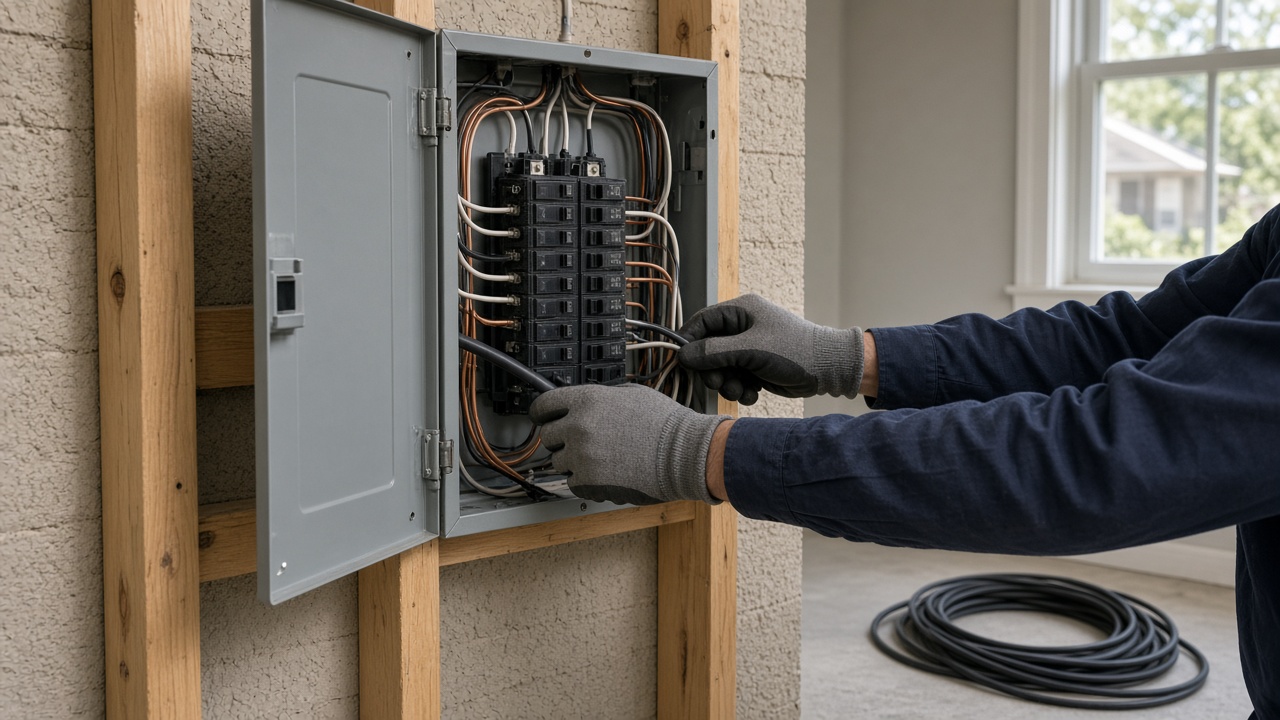
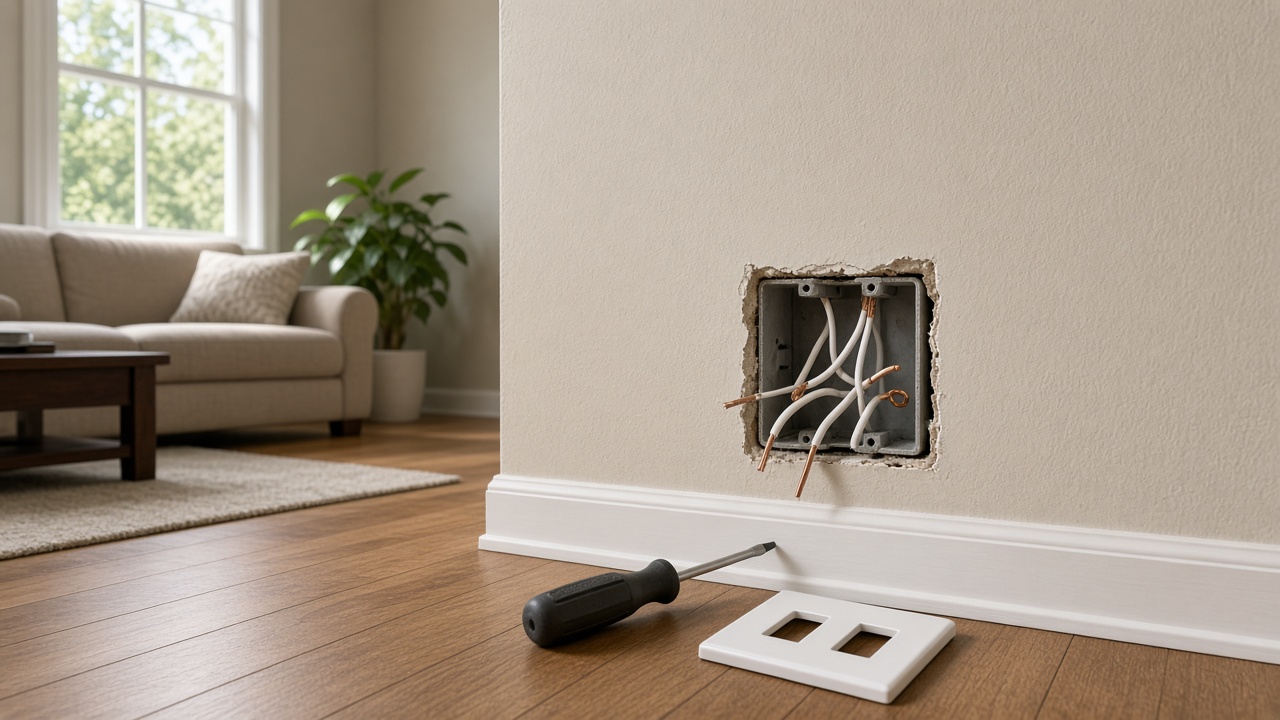
An electrician should describe bookable work so a dangerous failure and a planned upgrade can never look like the same request. Your page should say which failures are a stop-using-it call and which upgrades are a scheduled visit. If both share one form, the person who answers cannot tell a burning smell from a panel upgrade until the callback. The words on your site act as the dispatch note, whether you meant them to or not.
If anyone sees fire or heavy smoke, the page should also say plainly to call emergency services first and the electrician second.
This guide covers which failures are a stop-using-it call, which upgrades are a scheduled visit, how to describe the work a homeowner can book, how the two requests should look on the form, and what the person who answers needs before the callback.
Takeaways
- Call a burning smell, a sparking device, a hot panel, or a partial loss of power a stop-using-it failure.
- Call a panel upgrade, a lighting plan, a charger install, and a remodel a scheduled visit with a date.
- Give the two requests different forms so the callback is not the first sort.
- Describe only work a homeowner can actually book, in the words your electricians use on the phone.
- Send the dangerous note to the person on call and the upgrade note to the office.
Which Failures Are a Stop-Using-It Call
A stop-using-it call is a failure the household should not keep using while they wait for a convenient day. On the page, name the ones you actually roll for: a burning smell at a panel, an outlet, or a switch; a device that is sparking; a panel the caller says is hot, without inviting them to touch it again; a partial loss of power that took out a set of rooms; a breaker that will not stay on when the circuits it feeds matter tonight.
Partial power needs a sharper description than "the whole house is weird." Ask which rooms went dead, whether anyone touched the panel, and whether a smell appeared at the same time. A lighting wish in a room that still has power does not belong in this paragraph. If you blur the two, the on-call electrician packs for a failure and arrives to a fixture conversation.
Say "stop using the affected device or the affected part of the house" in one plain line, and say you ask so the person on call knows the condition. Do not write a repair sequence. You are not teaching a homeowner to open a panel. You are separating this visit from a project. If your company does not roll for a particular failure after hours, do not describe it as a stop-using-it call, and describe only the calls you take.
Ask where it is: kitchen, bedroom, panel, outdoor outlet, garage, or a single appliance that smells when it runs. Ask whether they have stopped using it. Ask for a callback number that will be answered and the address. Those fields describe the work as much as the headline does, and a headline that says "electrical emergency" over a box that says "tell us more" describes nothing an electrician can pack for.
The Electrical page sells the work, and this article is about describing it so the dangerous call and the planned upgrade never match. The selling page can list what you do, but the failure page has to say which of those things cannot wait. Other trades live on the Home Services page and should not share this form, since a no-heat call and a roof leak are not a burning smell.
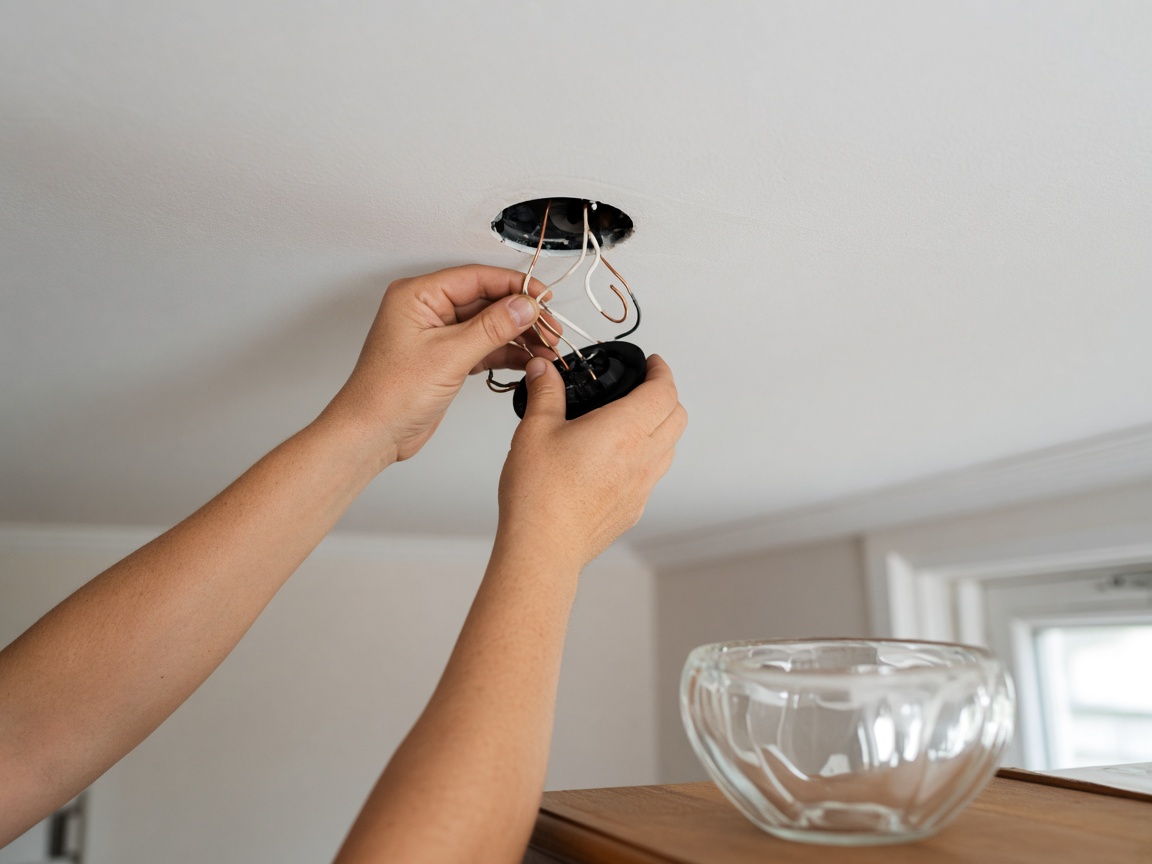
Hands hold a ceiling fixture and its wires beneath an open ceiling box.
Which Upgrades Are a Scheduled Visit
A scheduled visit is work a homeowner can book because nothing is currently unsafe, or because the unsafe item has already been taken out of use and the rest is a project. Panel upgrades, added circuits, lighting plans, a charger install, a fan, a kitchen remodel's devices, a generator conversation: these need a date, access to the panel, and a clear scope. They do not need a night page unless your own rule says a particular upgrade is also a failure, which is rare.
Ask what they want done, in which rooms, whether the power is currently safe to live with, and what timing they have in mind. The safety question is the escape hatch. If they report a burning smell or sparking, move them to the stop-using-it form before you ask about fixture styles, because a lighting plan filed on top of an active smell is how an estimator walks into a dangerous panel.
Describe the upgrade as a visit with a start date, not as an emergency in polite wording. Homeowners use "upgrade" for both a panel that tripped once and a panel they want replaced before a remodel, and your page can split those. Tripping, hot, or smelling belongs on the failure door. Planning a larger service, a remodel, or a new circuit belongs on the schedule door. If you use the same adjective, "reliable" or "modern," on both pages, you glued them back together.
Keep the schedule page free of siren language. A calm description books a better visit. The person who wants a charger next month should not feel pushed onto the night form, and the person with a sparking outlet should not feel invited to pick a preferred weekday and wait.
How to Describe the Work a Homeowner Can Book
Describe bookable work as visits, not as a catalog of parts. A homeowner can book a failure response or a scheduled project. They cannot book a vague sense that the wiring is old, so if you do not offer a visit, do not name it.
Use this order so the words match the phone.
- List the stop-using-it calls from a recent month in the words callers used, then the words the electrician wrote on the job.
- List the scheduled upgrades and remodels from that month, and remove any that were actually failures mislabeled.
- Write one sentence for each real visit: what it is, what you need to know first, and who sees the note.
- Put caller words and shop words side by side on that visit's page, once, so the note does not need a translator.
- Delete any service name you cannot attach to a sentence in step three, even if it looks impressive in a menu.
Step four is the description itself. Callers say the outlet sparked, a room went dead, the panel smells hot, they want a charger, they are remodeling the kitchen. Electricians say the device, the circuit, the panel, the scope. The page can hold both vocabularies. A page that only says "quality electrical service" holds neither, and the person who answers learns the visit on the callback.
Step five protects you from a menu copied from a template. If you do not install chargers, do not describe charger installs. If you do not take night calls for lighting changes, do not put lighting on the failure page. Bookable means your office can put it on a board and your electrician can show up for that specific thing.
How the Two Requests Should Look on the Form
The two requests should look different before anyone reads the prose, because the fields are the description your inbox actually believes.
| Request | What the page calls it | Fields | Who sees it first |
|---|---|---|---|
| Burning smell or sparking | Stop using it, then call | Where, still in use or not, callback, address | On-call electrician |
| Partial power loss or a breaker that will not hold | Failure, may be a night call | Which rooms, panel involved or not, callback, address | On-call electrician |
| Panel upgrade or added circuits | Scheduled project | Scope, panel access, timing, power currently safe or not | Office or estimator |
| Lighting, fan, or remodel devices | Scheduled project | Rooms, what should change, timing | Office |
| Charger or similar new circuit | Scheduled install | Where it should go, panel access, timing | Office, unless a smell is also reported |
The last column is the test of your words. If every row says "whoever is free," the description failed. Dangerous rows go to the person who answers after hours, if you offer that, or to the first electrician of the morning with a clear flag if you do not. Scheduled rows can wait. A "power currently safe" field on the project form is what kicks a burning smell out of the estimate queue.
Do not add a third form called "other" with a comment box and call the description complete, because "other" becomes the shared form again. A "something else" option on the failure page can exist if it requires a sentence and still reaches the on-call person. A project the homeowner cannot name yet belongs on the schedule page as a conversation, with timing, and not as an emergency.
What the Person Who Answers Needs Before the Callback
Before the callback, the person who answers needs to know which row the note is in. A burning smell is a confirmation call: where is it, did they stop using it, is it safe to wait for the arrival you actually offer, and what is the address. A panel upgrade is a scheduling call about scope, access, and timing. If the person opening the note has to ask which of those it is, the page described both jobs as "electrical" and stopped.
Listen for misfiles over a week. An estimate request that mentions sparking should move to the failure path the same day, and the project form should grow a harder escape hatch. A failure form used to ask about a kitchen remodel should move to the office, and the failure choices should get narrower. The words caused the misfile, so change the words and not your staff's patience.
Keep the two pages pointing at each other. The failure page points to scheduled work for houses that are safe and want a project. The scheduled page points to the failure page when something smells hot or is sparking. That cross link is part of the description, because it tells a homeowner they picked the wrong visit before you spend a call correcting them.
You have described the work well when a stranger can tell a stop-using-it call from a planned upgrade without calling, and your own staff can tell them apart without calling either. Until then the site is a single electrical bucket, and every callback starts from zero.
Questions
Which Electrical Failures Should the Page Treat as Stop-Using-It?
A burning smell at a panel, outlet, or switch, a sparking device, a hot panel as the caller describes it, a partial loss of power, and a breaker that will not stay on when the circuits matter tonight. List only the failures you actually roll for, and tell anyone who sees fire or heavy smoke to call emergency services first.
Which Jobs Are Scheduled Upgrades Instead?
Panel upgrades, added circuits, lighting plans, charger installs, fans, and remodel devices, when the power is safe to live with. They need scope, access, and timing, and they should not sit in the night queue.
What Should Happen If an Upgrade Form Mentions a Burning Smell?
The person should leave that form for the stop-using-it page before you collect fixture choices. An estimator should not be the first one to hear about sparking, so the escape hatch is part of the description.
Why Is a Single Electrical Form Not Enough?
The person who answers cannot tell a burning smell from a panel upgrade until the callback. One form makes both requests look like a message, while two forms make the visit visible in the fields.
What Should You Delete From the Service Menu?
Any name you cannot attach to a real visit, a first question, and a person who sees the note. A template list of services describes a company you might not be. Bookable work is work you can put on the board.
Conclusion
An electrical page should say which failures are a stop-using-it call and which upgrades are a scheduled visit. If both share one form, the person who answers cannot tell a burning smell from a panel upgrade until the callback. Describe the work a homeowner can book as those two visits, and the dangerous call and the planned upgrade will stop looking the same.
When you are ready to separate a dangerous failure from a planned upgrade in the words on the site, Speak With Us.