Handle an after-hours home service call by collecting the same four facts on the message, the short form, and the on-call notepad before any crew rolls: what failed, how urgent it is, how to reach the caller, and where the crew is going. A page that only says you are available does not collect them. The page that should is the trade door that asks those facts, because a furnace, a supply line, and an open roof are not one job.
This guide covers what the call has to capture, why each trade needs its own door, how to match the form to the person on call, and what to do when a fact is missing. If anyone on site is in immediate danger, such as fire, smoke, or a gas smell, that is a call to emergency services before it is a call to your company.
Takeaways
- Keep the truck parked until you know what failed, how urgent it is, how to reach the caller, and where the crew is going.
- Give HVAC, plumbing, and roofing their own night doors so one vague note cannot stand in for three trucks.
- Make the short form ask the same four facts, in the same order, as the person who answers the phone.
- Deliver that form to the inbox the on-call person watches after the office closes.
- Leave tune-ups, remodels, and planned replacements on daytime pages.
What the After-Hours Call Has to Capture
The call has to capture what failed, how urgent it is, how to reach the caller, and where the crew is going. If one fact is blank, you have a ping, not a job, and the crew should stay put until it is filled.
What failed is the object on the truck: the furnace that will not heat, equipment that will not cool, water crossing a ceiling, sewage in a tub, a roof open to weather, or water still moving after a supply line lets go. "The house needs someone tonight" does not name an object, and nobody on call can load a truck from it.
Urgency is a condition of the building. Water still moving, a living space open to weather, a house without heat or cooling where someone cannot wait for morning, and a hot smell at a panel or an air handler are all conditions. A homeowner frustrated about a project they have been planning is a different condition, even if they call after supper.
The callback is a number a person will answer tonight, plus whether that person is at the house. A spouse, a property manager, or a neighbor with the key belongs on the note if they can open the door. The destination is the address plus the access note for the dark: unit, gate, door, parking, lockbox. An area is not a destination.
If the same person calls and also submits the form, keep one note so two trucks do not chase one failure. The Home Services page sells the work, while this article teaches the decision. The selling page can say you take night calls, but it is not the place that asks what broke.
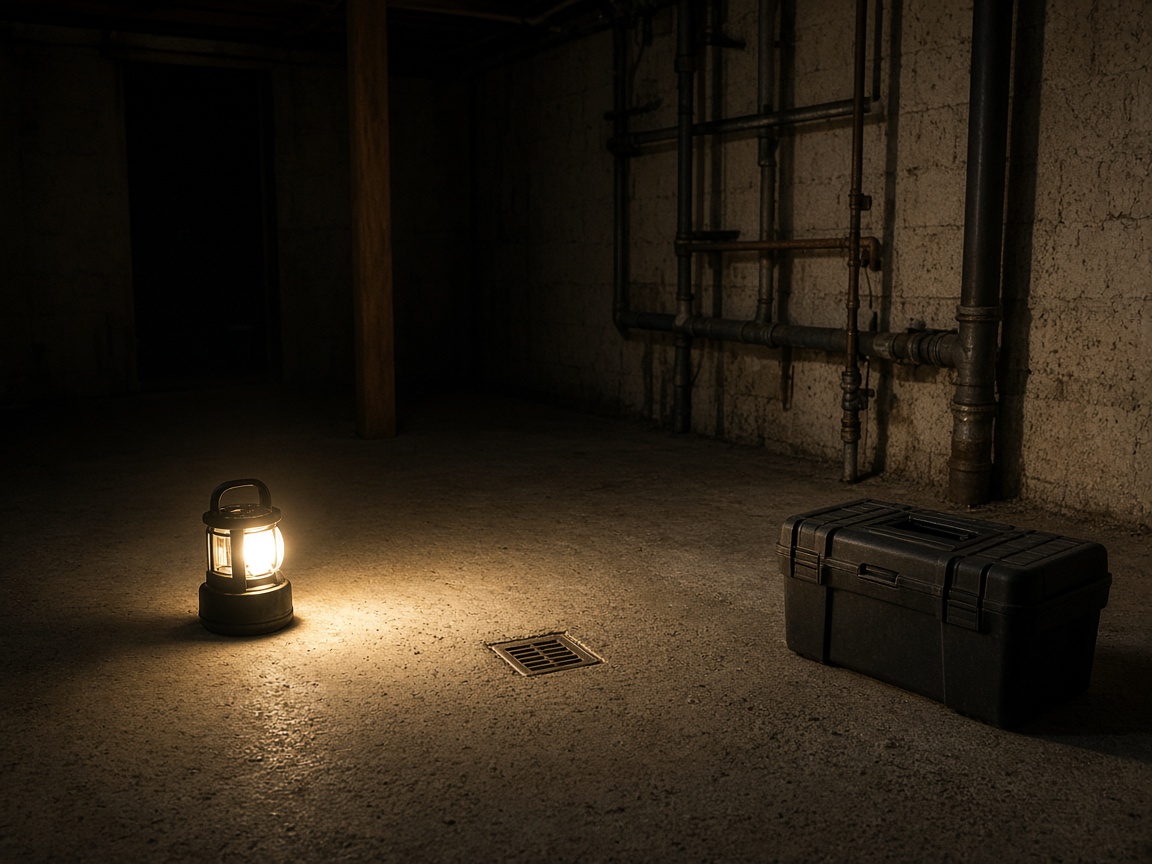
A night basement scene: the kind of after-hours call a home service company has to be ready to answer.
Why HVAC, Plumbing, and Roofing Need Different Doors
Each trade needs its own after-hours door because the failure, the test for urgency, and the truck are different. One shared emergency button forces the office to sort them later, which is how a no-heat call waits behind a remodel note and a roof leak gets handed to a plumber.
The HVAC door is about equipment that conditions the house. Ask whether there is heat, whether there is cooling, whether the indoor unit is running, whether the thermostat is dark, and whether anyone smells something hot at the equipment. A maintenance visit or a filter someone remembered at dinner is not this door. The on-call tech rolls for lost conditioning or equipment that smells wrong.
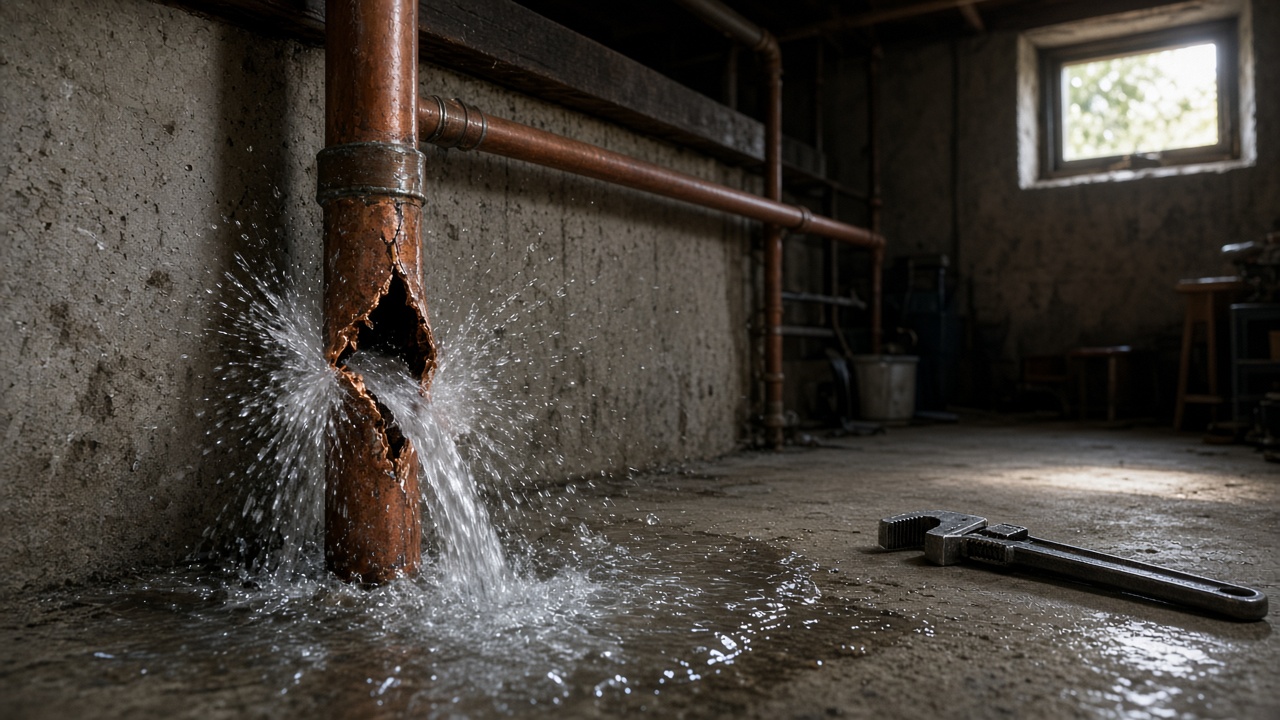
The plumbing door is water in the wrong place, or a drain that has made the house unusable. Ask whether water is still running, whether anyone found the shutoff, whether the water is clean or sewage, and which room is wet. A bathroom someone wants redesigned is not this door. The person on call needs to know whether a ceiling is actively dripping before a truck moves.
The roofing door is the shell of the house. Ask whether water is entering, whether the roof is open, whether debris is on it, and whether anyone is under the leak. A replacement discussed for a later season is not this door, and one shared form makes a storm opening and a planned replacement look like the same visit.
Electrical work gets its own door too, if you offer it: a hot smell at a panel, a sparking device, or lost power. Water still spreading is a dry-out, which is a different visit from the rebuild after materials are dry. If a night note could still be a furnace, a supply line, or an open roof, nobody asked which thing broke.
How to Match the Form to the Person on Call
Match the short form to the person on call by collecting the four facts in the same order, one trade at a time. The form is that conversation with the caller typing, not a thinner version of the phone call.
- Sit with the person who takes the night phone and write the four facts the way they already ask, once for each trade you roll.
- Put the trade choice first, then the failure, the urgency condition, the callback, and the destination, in those words.
- Deliver the form to the inbox or text thread that person watches after closing, and speak the same four prompts on the voicemail.
- Submit one test for each door while the office is empty, and confirm the on-call person can act without calling the shop.
- Remove tune-ups, remodels, and planned replacements from that form so a daytime job cannot wear a night label.
Trade comes first because it picks the truck, and one open box for a general story recreates the vague call. Make urgency a tap the caller can hit: no heat or a hot smell for HVAC, water still running or sewage for plumbing, water indoors or an opening for roofing. If everyone hits the first choice, the wording is too soft.
The callback asks which number will be answered tonight, and the destination asks for the address plus any unit, gate, or parking note. Reject a destination that is not an address. Change the voicemail the same day as the form, or the greeting will keep training people to leave a name and skip the failure. On a text line, the first reply should ask for any of the four facts the opening message left out.
Which Page Is Allowed to Collect the Call
The page allowed to collect the after-hours call is the trade door that asks the four facts. A homepage banner, a shared contact form, and a maintenance page do not know which truck to send, so they should not pretend to dispatch one.
| Request | What the page asks | Who sees it tonight | What stays off this page |
|---|---|---|---|
| HVAC failure | Heat, cooling, dead equipment, or a hot smell at the unit | The on-call HVAC tech | A tune-up or a maintenance signup |
| Plumbing failure | Water still running, shutoff, clean water or sewage, which room | The on-call plumber | A remodel or a later fixture swap |
| Roof failure | Water indoors, an opening, debris, what is under the leak | The on-call roof crew | A replacement already being planned |
| Active dry-out | Water still spreading, the kind of property, who is on site | The restoration coordinator on call | A rebuild after the structure is dry |
| Work that can wait | The room or system, and the timing the homeowner has in mind | The office inbox in the morning | A night roll |
A last-row request does not belong on the night form. People remember projects at midnight, so point them to the morning path.
Keep the form on its own door. A shared footer cannot ask different questions for a no-heat visit and a roof visit, and one form under several headlines is still one inbox. Label the button with the job, such as sending the note to the on-call tech. A quote request is the wrong job while water is still running.
The Home Services page can point each person to a door, but it should not host the night form. A company with one trade still keeps the emergency page as its own form and leaves the homepage alone.
What to Do With a Message That Is Missing a Fact
A message missing any of the four facts is not ready for a crew, so recover the fact before anyone rolls. Do not fill the gap from the caller's tone.
If the failure is missing, ask which trade and which object failed before you name a tech. "Something wrong in the house" might be a furnace, a supply line, or an open roof, which are different parts on the truck, and the wrong trade on the road leaves the real failure sitting there.
If urgency is missing, ask about the condition. Is water still moving? Is the house open to weather? Is there heat? Is there a hot smell? Write the answer in the form's words, so morning staff can see why the truck went or waited.
If the callback rings a closed desk, ask for a number that will be answered and for the name of the person who can open the door. If you reach voicemail, name the fact you still need.
If the destination is missing, you have nowhere to send the truck, so get the address and any unit or gate note first. That question also lets the on-call person spot a place you do not cover, without promising a visit you will not make.
Across several nights, notice which field people skip, and change the form and the greeting together. Advice to the night person, while the form still produces half a job, leaves the hole in the path. By morning you should see three piles: rolls that happened, calls waiting on a fact, and requests that were never night work. Two failures from one caller are two notes. A storm can open a roof and cut power to the air handler, and one story is how a roof crew gets asked to diagnose a furnace.
Questions
Which Four Facts Have to Match on the Message and the Form?
What failed, how urgent it is, how to reach the caller, and where the crew is going. The voicemail, the short form, and the person on call all have to collect those four in words the tech can act on. A page that only says you are available does not collect them.
Why Should HVAC, Plumbing, and Roofing Not Share One After-Hours Door?
They fail differently and they send different trucks. HVAC night work is lost heat or cooling, dead equipment, or a hot smell at the unit. Plumbing night work is running water, a shutoff, sewage, or a wet room. Roofing night work is water coming inside, an opening, or debris on the roof. One door hides which job the crew is walking into.
Where Should the Short Form Send an After-Hours Request?
To the person on call for that trade, in the inbox or text thread they watch after the office closes. It should not wait in a general mailbox until morning. A test you send while the office is empty should be readable without a second call to the shop.
What Should Happen If a Fact Is Missing?
Recover it before a crew rolls. Ask which failure it is, what condition the house is in, which number will be answered tonight, and the address the truck should use. Do not guess the blank from the caller's tone.
Which Requests Should Stay Off the After-Hours Page?
Tune-ups, maintenance signups, remodels, fixture swaps, and replacements the homeowner has been planning. Those belong on their own pages and in the morning inbox. The after-hours page is for a failure that needs a crew now.
Conclusion
An after-hours call is ready for a crew only when the message, the form, and the person on call share what failed, how urgent it is, how to reach the caller, and where the crew is going. HVAC, plumbing, and roofing each need a door that asks for its own failure, and the page allowed to collect the call is that door. You now know what the call has to capture and which page is allowed to collect it.
When you are ready to decide what the after-hours call and the short form must capture before a crew rolls, Speak With Us.