A cosmetic dentist should wait to advertise until the consult page is a request rather than a promise. An ad sends people to the sentence already on the page. If that sentence implies a finished smile, the ad buys the wrong expectation, so make the page a consult request first. Then an ad has an honest landing.
This guide covers what an ad will repeat, when the consult page is clear enough, how to read the landing before you advertise, which expectations an ad should not buy, and when advertising is early.
Takeaways
- Read the page as the ad. People will, and the sentence they remember is the one you are buying traffic for.
- Hold spend until the next step is a consult and the page does not predict appearance.
- Send clicks to that consult request, not to a homepage or a gallery with no boundary.
- Treat a confirming button or a transformation line as a reason to pause, not as a detail to fix later.
- Advertise when a stranger can repeat the next step and cannot quote a result.
What the Ad Will Repeat
The ad will repeat the page, even when the ad copy is careful. People tap, land, and read the headline in front of them. If that headline implies a finished smile, the careful sentence in the ad is gone, and you paid to put them in front of the stronger claim. Arguing later that the ad itself was modest does not help the consult, because they did not come to discuss your media plan. They came for what the page seemed to offer.
Look at the landing you would use today before you look at any offer from an ad seller. Say the first sentence aloud. If it could be quoted as how this person's smile will look, the landing is not ready. If it says the next step is a consult, what the consult is for, and what the site will not decide, you have something an ad can point at. Most cosmetic pages fail the out-loud test in the headline and pass it only in a footnote nobody reaches.
The form matters as much as the headline. An ad that promises a conversation and a form that says "book your new smile" split the message at the moment of request, and the form wins, because it is the last thing they touch. Make the button a consult request and the reply a request. If either one predicts a look or confirms a time the book does not hold, the ad is buying that prediction.
Gallery pages are a common accidental landing. A row of photographs with no sentence about what a consult is will be read as a menu of results, so do not send traffic there and hope the pictures explain themselves. If photographs stay, the page beside them has to say they are not a prediction for the person reading, and if you will not say that, the photographs should not be the landing.

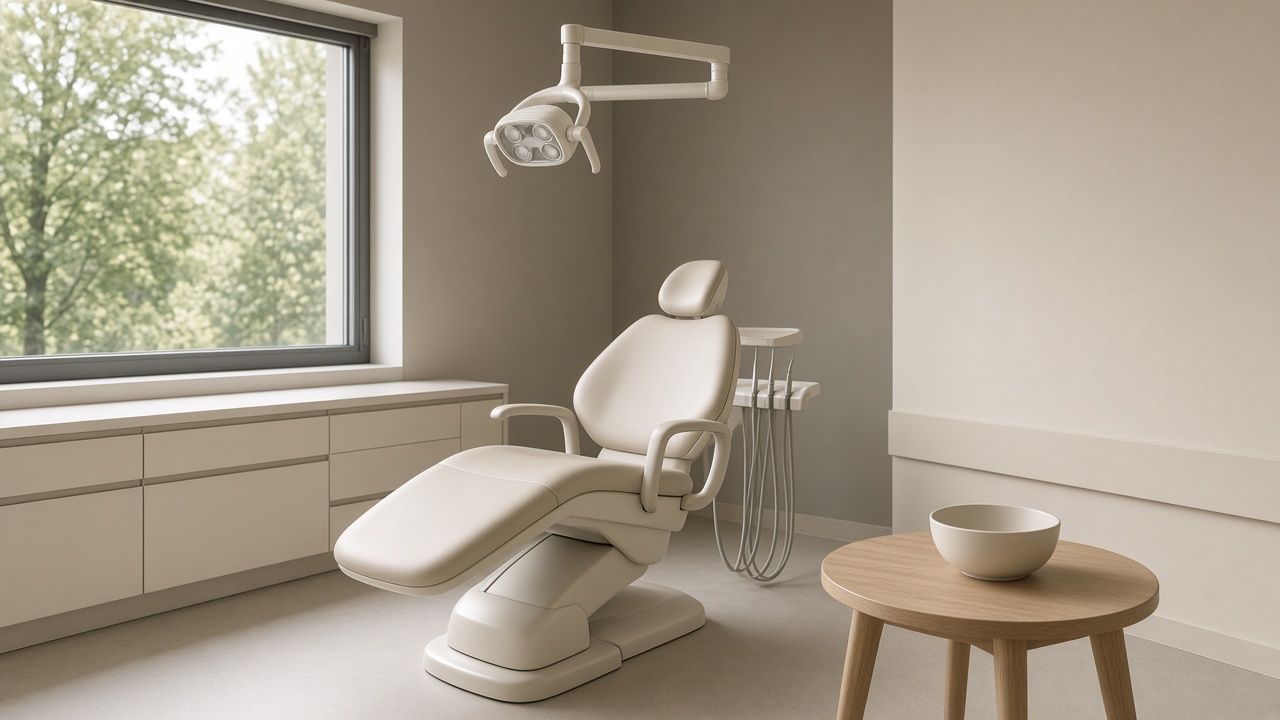
Window light falls on a linen consult chair next to the arm of a white dental chair.
When the Consult Page Is Clear Enough
The consult page is clear enough when a person who has never called you can answer four questions without guessing. What is the next step? What is the consult for? What will the website not decide? What should I tell you so the conversation is about my request? The answers are a consult, a talk about what they want to change, no appearance and no start date, and a short note in their own words. If any answer is missing, the page is not a landing yet.
Clear enough also means the book can absorb the visit. The form asks for a consult-length block, not a cleaning day, and it asks whether another dentist is involved. It does not pretend to be a same-day pain path or a first exam if those are different doors. An ad that fills the wrong block is not a creative problem. It is a page that invited the wrong visit, so fix the invitation before you widen it.
The Cosmetic Dentistry page sells the consult, and this article teaches when advertising should wait for that page to become a request. Other bookings, including a new patient and a person in pain, belong on the Dental page and should not be where an appearance-focused ad sends people.
You do not need a perfect essay. You need a page you would be willing to read aloud to someone who is disappointed. If you would be embarrassed to read the headline in the consult room, do not pay to multiply it. Embarrassment is a useful test, and it shows up before the angry call does.
How to Read the Landing Before You Advertise
Read the landing as if the spend started this morning and the first consult is this week.
- Open the exact page the ad would use, on a phone, and read only what shows before any scroll.
- Write down the promise a stranger would repeat. If it mentions how a smile will look, stop, because the page is early.
- Find the consult request: what the visit is for, what it will not decide, and what the person is asked to share.
- Submit a test. Check the note the desk receives and the reply the person receives, and both should say consult request, not result.
- Only then consider an ad, and only to that page, with copy that does not outclaim the landing.
Step two is the whole decision in one line. Owners skip it because the rest of the page is careful, but the first screen is the ad's partner, and a soft paragraph lower down will not rescue a headline that says the smile is finished. Change the headline and then do the step again.
Step five has a second half people ignore. The ad copy can reintroduce the prediction even after the page is clean. If the ad says "new smile" and the page says "consult," you have moved the false promise into the tap. Write the ad in the page's words: request a consult to talk about what you want to change. If that sentence feels too quiet to buy, the quiet is the point, since volume around a louder claim is how the wrong expectation scales.
Keep pain and first-exam language out of this ad. People in pain need the phone path, not a consult campaign, and new patients need the first-visit explanation. An ad aimed at appearance that lands on a generic appointment form recreates the mix. One campaign, one door: the consult.
Which Expectations an Ad Should Not Buy
An ad buys an expectation whether you meant to sell one or not. These are the expectations that make the consult start with a correction, so if the landing creates them, do not fund them.
| Expectation the person may form | Where it usually comes from | What the consult then has to undo | What to allow instead |
|---|---|---|---|
| My smile will look like the picture | A headline or a gallery with no boundary | The idea that a result was shown | Photographs are not a prediction, or no landing on them |
| The change is already chosen | Design, transformation, or new smile | A plan that was never made | The next step is a conversation |
| I am already booked | Book now, or you are scheduled | A time the book does not hold | A request the desk will answer |
| This is a same-day change | Speed language next to appearance | A consult treated like pain relief | Same-day pain on its own page, not this ad |
| The form will match a photo I upload | An upload field framed as the goal | A matching service you did not offer | A note about what they want to change |
Read your draft ad and your landing against the left column, and treat any yes as a pause. The middle column tells you which asset to edit, the ad or the page or both. Editing only the ad while the page keeps the line is how the expectation survives the click, because people trust the site they are standing on.
The last row is easy to miss because it feels helpful. Letting someone show you what they hope for can be part of a consult, but on an ad landing, an upload framed as "bring your dream smile" is a prediction with extra steps. Ask what they want to change in words, and leave matching out of the request.
When the Advertising Is Early
Advertising is early when the page still implies a result, when the form still confirms a time, or when you are the only one who knows the line and the landing does not show it. It is also early when the consult book cannot tell this request from a cleaning, since buying names into that book fills a block of the wrong length and starts the visit with disappointment.
Early does not mean the practice is unready to talk with people. It means the website is unready to introduce the talk. You can keep taking consults from patients you already see and from callers who hear the boundary from the desk, and you can fix the page in the meantime. Those are different from paying to send strangers to a sentence you would not say in the room.
A seller who wants to launch before the page is edited is asking you to use the current sentence as the offer. Ask them to read the headline back to you. If they improve it in conversation and the page stays the same, the improvement is not what you would be buying, so wait until the page matches the improved sentence. Then the spend has an honest landing.
After you do advertise, read the first requests as a test of the page, not as a verdict on the channel. If people ask for the smile in the picture, the landing still predicts, so pause and remove the line. If people ask for a consult and say what they want to change, the page is holding and the ad is a way to reach more of the right conversation. You can tell the difference in a handful of notes.
Questions
Should Cosmetic Ads Run Before the Consult Page Is a Request?
No. An ad sends people to the sentence on the page. If that sentence implies a finished smile, or confirms a time, the ad buys the wrong expectation. Make the page a consult request first, and then there is an honest place to send them.
What Should the Landing Say in the First Screen?
That the next step is a consult, what the consult is for, and what the website will not decide, including appearance. The button should request the consult. A gallery or a transformation headline in that first screen means the landing is early.
Where Should the Ad Send People?
To the consult page that already asks what they want to change and does not predict a look. Not to the homepage, a photo grid without a boundary, or a new-patient or pain form. One campaign should use one door.
What If the Ad Copy Is Careful and the Page Is Not?
The page wins, because people remember where they land. Careful ad copy does not cancel a headline that predicts a smile. Change the page, retest the form and the reply, and only then match the ad to that quieter sentence.
How Do You Know the Ads Are No Longer Early?
When a stranger can say the next step is a consult and cannot quote a result, and the notes ask for that conversation rather than a pictured smile. If the first requests quote a look, pause, because the landing is still the offer and it is the wrong one.
Conclusion
An ad sends people to the sentence already on the cosmetic page. If that sentence implies a finished smile, the ad buys the wrong expectation. Make the page a consult request first, with no prediction of appearance, and then an ad has an honest landing. You can tell advertising is early whenever you would not read the headline aloud in the consult.
When you are ready to decide whether ads should wait until the consult page is a request, not a promise, Speak With Us.