
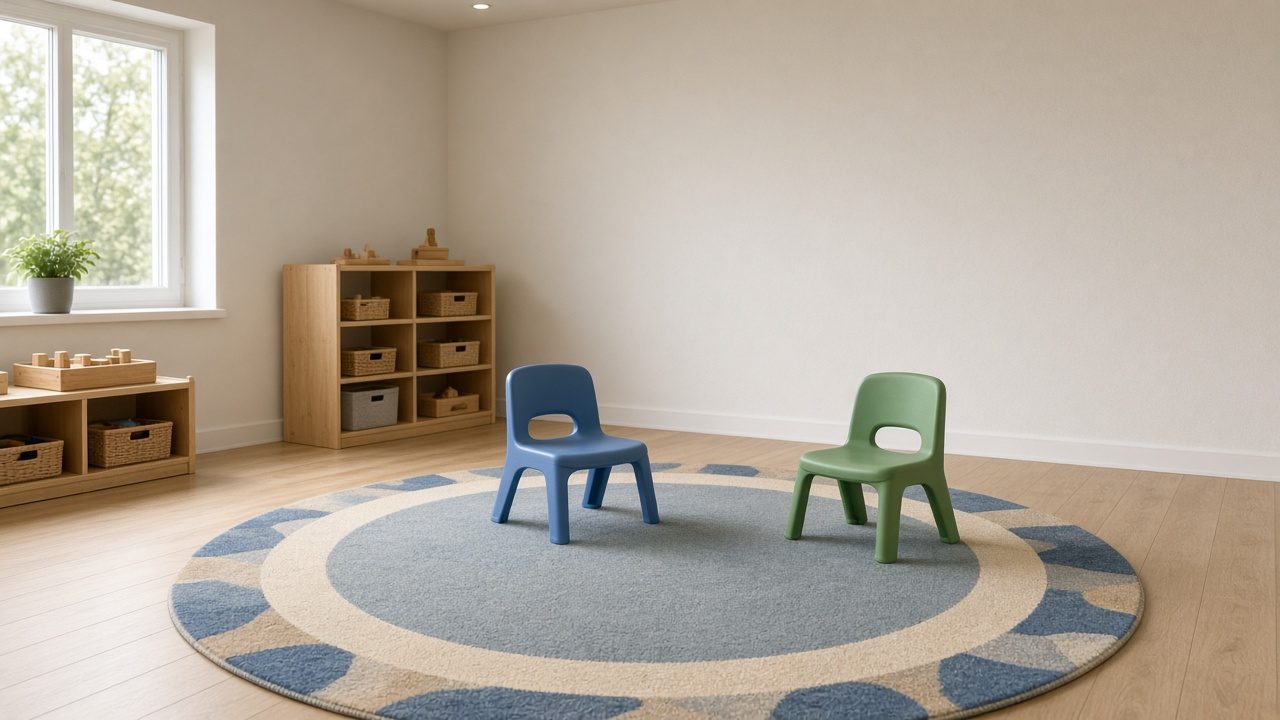
Before you hire help to fill openings, ask whether that help will talk only about seats you can offer. A list of interested families is not a room with space. The page, the introduction, and the rooms you enroll have to name the same openings, or you will meet parents you cannot seat.
This guide covers the openings you actually have, what a helper must know about your rooms, the questions to ask about a full room, the families you cannot seat, how to bound the help, and what you still enroll yourself.
Takeaways
- Name the rooms that can take a child before anyone goes looking for families.
- Teach the helper the difference between an open seat and a full room.
- Agree on what they say when a family needs a room you do not have.
- Keep enrollment with you, and bound the help until the introductions match real seats.
The Openings You Actually Have
The openings you have are seats in named rooms, on the days those rooms run. Write them the way you would explain them to a parent at the door: which age, which days, and what the day requires. If you cannot write that without a vague "it depends" that really means yes, you do not have an opening clear enough to advertise.
Leave closed rooms off the list, even if you like the idea of a future spot. A helper will treat a future spot as a present one, because their work is to find families. Interest in a full room is not an opening. It is a conversation you may have later, without promising a seat, so say that distinction in the note you hand over, or it will be lost on the first call.
Match the list to the Childcare & Daycare page. If the page sounds broadly open and the list is narrow, fix the page before the helper repeats it, because you are about to multiply whatever the page says. A wide sentence and a narrow seat produce parents who feel misled when they arrive, and the helper did not invent that feeling. The mismatch did.
Count the list by the rooms you could enroll in this week without moving another child. Hope does not count, and a room that is almost open is closed until it is open. Hand the helper the closed truth, since they can work with a short honest list but not with a mood.
What a Helper Must Know About Rooms
A helper must know how your rooms differ, not just that you are a daycare: the ages, the shape of each day, and which rooms are enrolling. They should be able to say those facts the way the page says them. If two rooms share a building and not a rhythm, the helper has to keep them apart, because blending them fills the wrong room's inquiry list.
| What they are told | An opening sounds like | A full room sounds like | What they may offer |
|---|---|---|---|
| The age names you use | A child in a group you are enrolling | A child outside those groups | A tour only for the open group |
| The days that room runs | Care on days you already staff | Days you do not run | No custom day |
| The seat itself | Room for a child now | Interest in a room that is full | A later conversation, with no seat promised |
| The next step | A visit to see that room | A request you cannot host | Nothing that sounds like enrollment |
They must also know what a tour is. A tour of an open room is a look, not a guarantee, and a helper who says the tour means the seat is theirs has enrolled the child by accident. Teach the sentence: "You may come see the room, and enrollment is a separate decision." Ask them to repeat it until they stop adding a promise at the end.
Senior & Family Services includes care that is not a classroom. If a family's need is not daycare, the helper should not stretch a room to cover it, and they need a plain way to say this is the wrong setting. You are not asking them to place every family. You are asking them to recognize your rooms.
Questions About a Full Room
Ask what they will say when the room a family wants is full. You should hear a sentence that names the limit and does not invent a seat. Offering a waiting list is a dangerous kindness if that list cannot become a seat, because a list is a promise of memory and parents hear it as a promise of a place. If you do not have a real next seat, do not let the helper build a queue.
Ask whether they know which rooms are full without calling you in a panic every time. They should have the list and treat it as current only until you change it. A full room described as "maybe" will be offered as a yes, and "maybe" is your word for a conversation you join, not a word they should use to keep a parent warm.
Ask what they do with a parent who insists. The right path is the same sentence again, plus a way to see a room only if seeing it will not be mistaken for a seat. Some families still want to understand the place for later, which can be a tour you choose to give, but not a tour the helper books by calling it an opening.
Ask how a full room is reported back to you. If their report celebrates every interested family the same way, your refusals will look like failure and they will push you to squeeze. Agree that a clear no on a full room is a finished task, because the task was to protect the seat you do not have.
Families You Cannot Seat
You cannot seat a child outside the ages you run, a schedule you do not staff, or a room that is full. Write those patterns down as requests, not as kinds of families. The helper is matching a request to a room, not ranking parents, and a family you like and cannot seat is still a family you cannot seat.
Share the patterns in the words the page and the phone already use. A private rule that contradicts the website will collapse at the first inquiry, so if the page welcomes an age the rooms do not have, change the page. The helper should never be more honest than the site, and the site should never be more open than the rooms.
Do not ask the helper to talk a family into a different room that is also wrong for the child. A nearby age is not a creative solution. It is a mismatch you will feel in the classroom. If another open room truly fits, they may say so and still leave enrollment to you, and if nothing fits, the sentence is a no.
Review the patterns when a room opens or closes. Yesterday's full room may be today's opening, and yesterday's opening may be gone. Until you update the list, the helper should keep the old limit, since a stale yes is how you promise two children the same seat.
How You Would Bound the Help
Bound the help so you can see every introduction against a real seat. An unbounded search will produce families faster than you can tell the truth, and the truth will arrive late, in the lobby.
- Hand them the rooms that are open, the days those rooms run, and the sentence for a full room.
- Agree they may offer a tour of an open room and may not offer enrollment, a seat, or a start date.
- Begin with only as many introductions as you can answer while the rooms still run.
- Compare each introduction to the open list before anyone is told they are enrolling.
- Stop the introductions if families keep arriving for full rooms or ages you do not have.
- Widen only after the requests match seats, and update the written list before you widen.
During the bound, you enroll and the helper introduces. If they move a family forward to keep the work looking busy, the bound has failed and the introductions pause. Slowness here is the cost of not promising a chair you do not have.
What You Still Enroll
You still enroll the child, in a room that has a seat, after a tour and a conversation that used the same facts as the page. The helper does not enroll, and a warm introduction is not a signature. If the room filled between the introduction and your decision, the answer becomes no, and you say so, rather than borrowing space from a different age to honor a helper's momentum.
You also enroll the wording. When parents arrive confused, the confusion is a line on the page or a line the helper added, so change the line. Do not keep a fuzzy opening because it brings more tours, since tours for seats you cannot offer teach parents not to trust the next true yes. The childcare page is the offer, and this article is the decision about help: what they may say about openings, and what you still enroll yourself.
Triwave Consulting looks at that agreement before anyone is asked to go find families. The order of work is initial contact, then a detailed discussion, then implementation. Contact puts the open rooms next to the pitch, the discussion sets the list, the full-room sentence, and the bound, and implementation is the helper speaking only from that list while you enroll only where a seat exists.
Questions
Should a Helper Advertise Rooms That Are Full?
No. They may say a room exists and is not enrolling, if you want that said at all, but they should not describe it as an opening, a likely opening, or a list that leads to a seat. Full means they offer the sentence you approved and stop.
Can They Promise a Family the Next Seat?
No. The next seat is yours to offer when it exists, to the family you choose to enroll. A promise made in advance turns one opening into a quarrel. The helper can say you will talk if a seat becomes real, but cannot assign that future seat, even to a family that has waited politely.
What Should They Know Before They Mention a Room?
The age name, the days that room runs, whether a seat is open, and that a tour is not enrollment. If any of those are missing, they do not mention the room, because a partial description is how a parent hears yes. Give them the whole line or give them silence until you update it.
How Do You Handle a Parent Who Wants a Different Schedule?
The helper repeats the day that room keeps and does not invent a flex. If the family needs something you do not staff, the answer is no. You can choose to talk with them yourself, but the helper should not schedule that talk as if a custom day were an opening.
When Is It Time to Widen the Help?
When the introductions you accept are children you can seat in the rooms you named, and the refusals happen before a seat is promised. If you are apologizing in the lobby, it is not time to widen. Pause, correct the list, and start again from the rooms, since more activity will not create a chair.
Conclusion
Ask whether help will fill seats you actually have, and do not hire past a full room. The page, the introduction, and the enrollment have to name the same openings. That agreement is the decision, the childcare page is the offer, and you still enroll.
When help to fill daycare openings should talk only about seats you can offer, Speak With Us.