
An estate planning practice should get website help when the two meetings are clear in the office and the form is not. If you can tell a planning conversation from a probate conversation, and the form still asks one set of questions for both, the work is making the form follow the page. It is not a claim about how simple the documents will be.
This guide covers when the office is clear and the form is not, how the form has to follow each page, what one question set does to both meetings, what the project should not promise, and how to know the doors are aligned.
Takeaways
- Hire when the office already distinguishes the two meetings and the form does not.
- Make the form follow the planning page and the probate page.
- Ask different questions on each door.
- Leave claims about simple documents out of the project.
- Accept the work only when a test note matches the meeting you would prepare.
When the Office Is Clear and the Form Is Not
The office is clear and the form is not when everyone inside can say which meeting is which, and the website still cannot. In the room, a planning conversation starts with who the documents are for and whether anything has been signed. A probate conversation starts with whether a death has occurred and whether a court file exists. On the site, one form asks for a name and a message about an estate. The clarity you already have stops at the door, and help is warranted at that doorway.
You do not need help to discover the two meetings. You need help making the form follow them. If you are still unsure which meetings you offer, decide that first, in the office, and then hire. A builder asked to clarify the practice will guess, and the guess will be a single estate page with warmer adjectives. Your two meetings deserve two question sets. That is the assignment, and you are ready for it when you can recite both sets without looking.
The Estate Planning page sells the work, and this article is about when website help is warranted and what it should not promise. The Legal Services page covers the rest of the firm. This project aligns the estate doors with intake, and it should not fold them into a generic lawyer form to save a step, because the step it saves is the wrong one. The step to spend is the split.
Look at the last notes that arrived from the site. If you cannot tell planning from probate without calling, the form is the project. If you can tell, and the only issue is appearance, wait. Alignment is about the questions, and a handsome single form is still one set of questions.

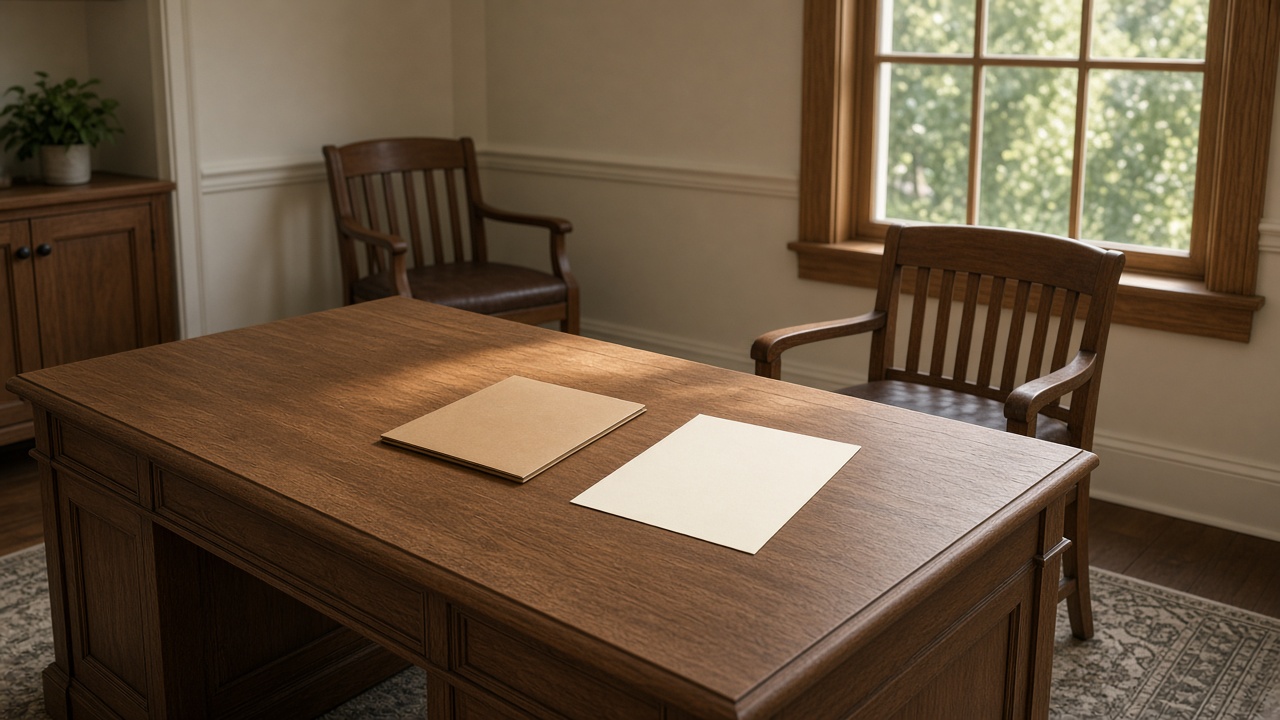
The corner of a closed tan folder meets an unmarked pen on oak grain.
How the Form Has to Follow Each Page
The form has to follow the page a visitor is on. The planning page's form asks who the documents are for and whether anything has been signed. The probate page's form asks whether a death has occurred and whether a court file exists. Each form repeats the page's name and books that meeting. A visitor who landed on the wrong page sees a link to the right one before they submit. That is the form following the page, instead of the page decorating a form that never changed.
Build it in this order.
- Write the two meetings as you run them, with the questions you already ask in the first minutes.
- Attach those questions to the matching page, and delete any question that belongs only to the other meeting.
- Add who is coming and how to respond, and do not add the documents or the court file as uploads on the marketing form.
- Point each submission at a calendar label with the meeting's name, and retire the shared estate form.
- Submit one planning test and one probate test, and prepare each hour from the note alone.
Triwave Consulting's process, Initial Contact, Detailed Discussion, and Implementation, fits this project. Initial Contact is you stating the two meetings. Detailed Discussion is checking that no question leaked onto the wrong form and that nobody added a promise about simplicity. Implementation is the tests. If a proposal leads with a new look for a single estate experience, it has not heard the assignment, so repeat the two meetings and ask which form follows which page.
Step three matters because alignment can overshoot. A form that demands the will or the court papers before a meeting is set has followed the file room and not the page. The page's job is the sort and the booking. Copies can move through your ordinary file channel after you agree to meet, and you should say that boundary out loud so helpful thoroughness does not turn intake into a document drop.
What One Question Set Does to Both Meetings
One question set makes both meetings start as the same appointment, and you learn the type in the room. Planning families answer probate-shaped small talk, or probate families are asked about a signing. The questions you meant for one door get asked of everyone, and the questions you needed for the other door get skipped until you realize which hour this is. One set feels tidy to build and sloppy to sit in.
| Door | Questions that belong | Questions that do not | What the note must show | Meeting you prepare |
|---|---|---|---|---|
| Planning page | Who the documents are for, whether anything is signed | Whether a court file exists | A planning conversation, new or already signed | Documents, not a probate |
| Probate page | Whether a death has occurred, whether a court file exists | Whether they want to start a will today | A probate conversation | The file, or the absence of one |
| Shared estate form | A name and a message | The split | An hour you must classify | A generic estate block |
| Cross-link | A way to the other door | A dead end | The visitor moved before booking | The meeting they actually needed |
| Upload demand | None, at this stage | The documents or the pleadings | A booking, not a file room | The conversation first |
The third row is your current form if it serves both pages or neither, and it is the row the hire removes. The fourth row is how alignment stays kind: people choose the wrong word, and the form should help them switch instead of punishing the click with the wrong questions. The fifth row is the overshoot to refuse. You can be aligned and still be too hungry for paper, because alignment means the right questions, not all the paper.
Walk the table with the person who prepares the meetings and ask which row matches a web booking from last week. If they say the shared row, they have described the project better than a mood board would. Give that description to the person you hire, and ask them to make the first two rows true and the third row impossible.
What the Project Should Not Promise
The project should not promise that the documents will be simple, that a probate will be short, or that a meeting is a signing. Those are guesses about files you have not read. Alignment does not require them, and a family can understand the door without being told the work will be easy. "Easy" is how mismatched expectations begin, and then the right meeting spends its opening on a correction.
Review every sentence that is not a question. Keep the ones that name the meeting and describe a conversation, and remove the ones that predict effort, outcome, or speed. If a sentence could sit on either page unchanged and still sound like a sales line, it is probably not doing the sort. The sort sounds specific: planning talks about documents and signatures, and probate talks about a death and a court file.
You still decide the meetings. Help should not add a third estate product because two looked sparse. Sparse and accurate is the practice. A third door, such as a review of documents that is truly its own hour, is your decision, made in the office, and it then gets its own questions. It should not arrive as a surprise in a draft, so send surprise doors back.
The same rule covers legal instruction. The form should not teach a family how to write a will or how to open a court file. You hired alignment of intake, not a primer. If a draft explains the law to fill space under the fields, delete the explanation, because the fields are the content that matters and explanation belongs in the meeting, with the family in front of you.
How to Know the Doors Are Aligned
The doors are aligned when you can prepare the meeting from the test note and never ask which meeting it is. A planning test names who the documents are for and whether anything has been signed. A probate test says whether a death has occurred and whether a court file exists. The calendar uses those names, and the shared form does not submit. That is the finish line.
Run the tests the way a family would, and use the cross-link on purpose. You should land on the other form with the other questions, not on a thank-you for the wrong door. If the thank-you arrives anyway, the link is decorative, and decorative links are how the shared experience survives inside a two-page design. Make the link the real path.
After real bookings begin, ask the person who prepares the hour what they still have to learn by phone before they can prepare. Each leftover question is either a missing field or a field on the wrong door, so add it or move it. Do not collect a new essay box to catch the leftovers, since an essay box is the shared form returning under another label.
When the office changes a first-minute question, change the form that same week. Alignment decays when the room moves and the site does not. The person you hired should be able to make that change from a short note, and you should not have to re-enter the editor to keep two doors honest. The ongoing work is the same work: the form follows the page, and the page follows the two meetings you actually hold.
Questions
When Is Estate Planning Website Help Warranted?
When the planning meeting and the probate meeting are clear in the office and the form still asks one set of questions for both. You can already describe each hour, and the site cannot. That gap is the project.
What Does It Mean for the Form to Follow the Page?
The planning form asks who the documents are for and whether anything has been signed. The probate form asks whether a death has occurred and whether a court file exists. Each books its own meeting, and the shared estate form is retired.
What Should the Project Refuse to Promise?
That the documents will be simple, that the meeting is a signing, or that a probate will be quick. Alignment is the right questions on the right page. A claim about ease is a guess about a file you have not read.
Should the Form Collect the Documents?
Not on the marketing page. The form sorts and books. Copies can move through your ordinary file channel after you agree to meet, and a demand for uploads before the meeting confuses intake with the file room.
How Do You Accept the Alignment?
With two test notes, each preparable without asking which meeting it is, and a shared form that will not send. If you still classify the hour in the room, one question set is still in the way.
Conclusion
Hire help when the two meetings are clear in the office and the form still asks one set of questions for both. The work is making the form follow the page. It is not a claim about how simple the documents will be. You now know when estate planning website help is warranted, and what it should not promise.
When you are ready to decide when aligning those two doors with the form is a project, Speak With Us.