
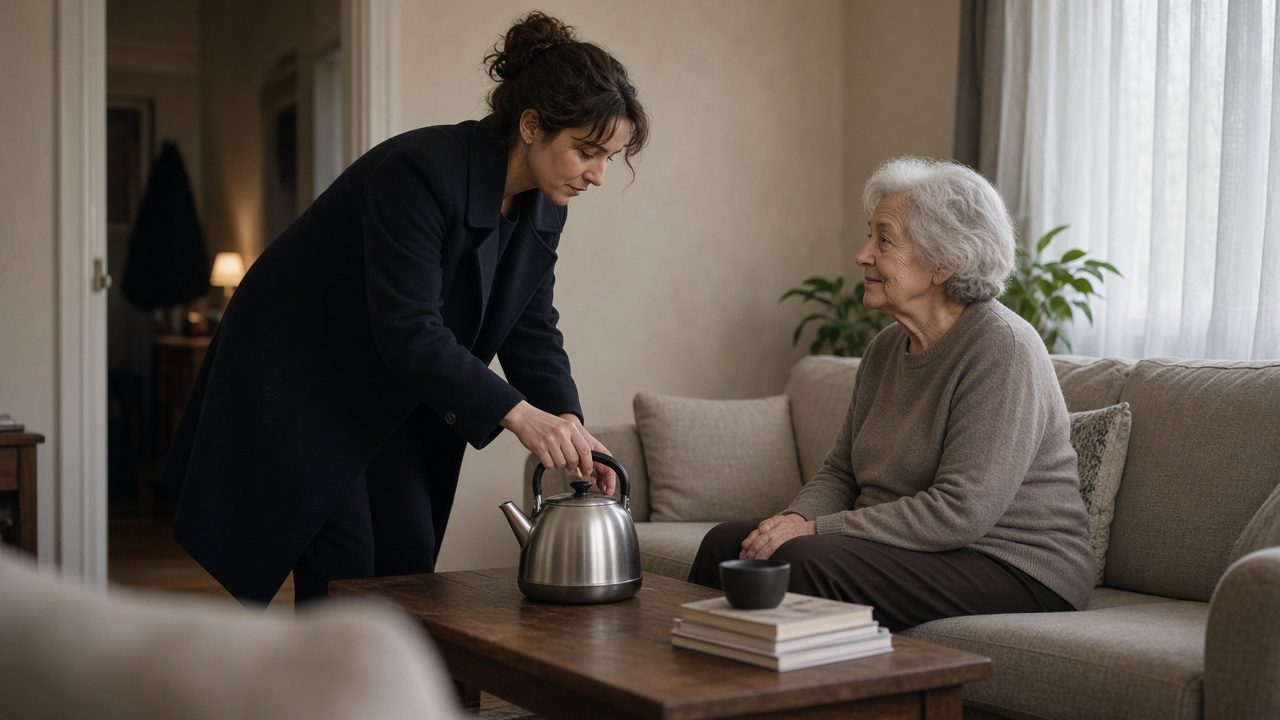
A home care agency should market the arrangement it can staff on an ordinary week, and explain that one first. Hourly help asks a family to plan around visits that start and end. A live-in arrangement asks them to share the home with someone who stays. The page, the inquiry, and the visits you already cover have to name the same arrangement before either one is promoted.
This guide covers what hourly help asks a family to understand, what a live-in arrangement asks, when each should lead, what breaks when you advertise an arrangement you cannot staff, and how to choose from the visits you already cover.
Takeaways
- Lead with hourly help when the roster is built of visits that start and end.
- Lead with a live-in arrangement only when you can place someone who stays, and cover the time they are away.
- Do not let the form offer a choice the schedule will have to refuse.
- Choose the lead from the visits you already cover, not from the arrangement that sounds more complete.
What Hourly Help Is Asking a Family to Understand
Hourly help asks a family to picture a visit with a beginning and an end, not a person who remains in the home. The page has to make that shape obvious. A relative who reads "help at home" may imagine someone there whenever the day feels hard. If what you sell is a block of time, say that the caregiver arrives, does the agreed tasks, and leaves.
The family also needs to understand the gaps. Between visits, the household is on its own, or another part of their plan has to cover those hours. Say whether you can place more than one visit in a day, and say it only if the schedule really can. A page that hints at a full day made of visits, when you can only offer one block, teaches the wrong picture.
The page can name the blocks you offer, such as morning or afternoon. It should not lock a start time, a caregiver, or a task list the call has not heard. If the phone stretches a block into an all-day presence to avoid a no, the page and the visit have already split.
Hourly help fits a family that wants defined tasks and can live with the gaps. It is the wrong description when they need someone through the night and you call that a long visit. Write the difference before the form asks them to choose.
What a Live-In Arrangement Is Asking
A live-in arrangement asks a family to share the home. Someone sleeps there, keeps a few personal things there, and is part of the household rhythm in a way a visiting caregiver is not. The page should say that plainly. A soft phrase about round-the-clock comfort hides the thing the family is actually agreeing to: another person living in the house.
It also asks them to understand presence and rest as you truly schedule them. Do not write that someone is available every minute if the stay includes rest, meals, or time away. Describe the pattern you already explain in conversation: when the caregiver is there for the agreed tasks, when they are off, and who covers if they are out. Employment rules around that pattern belong with the people who handle employment, and the page only has to match the pattern the family will meet.
Say what the home is asked to provide, in words you already use. A private place to sleep, a way to prepare food, and a clear sense of shared rooms belong on the page when they are part of the stay. If you do not require them, do not imply that you do. The inquiry should confirm the same conditions, and the placement should not add a new one.
A live-in offer also asks the agency to have a backup. Illness, time off, and a caregiver who leaves have to be a plan, not a scramble you describe as rare. If you cannot say who comes when the live-in caregiver is away, you are not ready to market the arrangement. The page can say that backup is discussed, but it should not promise a seamless handoff you have never staffed.
When Hourly Should Lead
Hourly help should lead when most of the work you can repeat is a visit that starts and ends. The homepage, the first paragraph of the offer, and the form should all open on that visit. Families who need a live-in stay can still be told, in a later section, that you talk about it when you can staff it, but they should not meet it as if it were the default.
Lead with hourly help when the people who answer the phone are confident turning down a stay they cannot place. A lead that mentions both arrangements in the same breath invites the harder request first. Put the visit you can start this week in the headline and the button, and put the other arrangement where a reader finds it after they understand the visit.
Hourly should also lead when your inquiry is built for scheduling blocks. If the form asks for days, time of day, and tasks, it is an hourly form, and pointing that form at a live-in headline makes the family answer the wrong questions. Either change the form or change the lead, because the next step has to fit the offer above it.
Check the choice against inquiries that became visits. If they were blocks of the day, and the live-in requests were the ones you could not start, hourly help should lead. If you have been starting stays and calling them long visits, rewrite the lead before you promote it.
When Live-In Should Lead
A live-in arrangement should lead when you can place someone who stays and you can say what happens when that person is away. The homepage should then talk about sharing the home, the rhythm of the stay, and the next step for families who are ready for that. Hourly visits can sit on their own page or farther down, so they do not dilute the stay.
Live-in should lead when the families you are prepared to talk with already need more than a block of the day. If your real conversations are about nights, mornings in the house, and a caregiver who returns to the same room, an hourly headline sends those families away or forces the phone to correct the site. Correction on the phone means the page was the wrong offer.
The lead has to include the limits. A live-in headline without a sentence on rest, backup, and what the home provides will draw families who expect an uninterrupted presence, and you will then spend the first call undoing the page. Put those limits in the same screen as the offer, so a family who is not ready to share the home can tell that before they inquire.
Use live-in as the lead only for the page that is about that arrangement. If you also run visiting care, give visiting care its own clear door, because one homepage that shouts both is a homepage that chooses neither. Home Care is where the offer a family can accept should live, and the lead on that page should be the arrangement you can start, not a menu of everything you have ever been asked to do.
What Breaks If You Advertise an Arrangement You Cannot Staff
Advertising an arrangement you cannot staff breaks the next step. The family inquires for a stay and you offer a visit, or they inquire for a morning block and you have no caregiver free. The page did not fail because the writing was plain. It failed because it described work the roster does not do, and every later fix to the wording is wasted if the offer stays larger than the staff.
A family that rearranged the house for someone to move in will hear a refusal as carelessness, even when the refusal is honest. A family that planned a short visit will feel misled if a caregiver arrives expecting to stay. Triwave Consulting looks for that disagreement before talking about promotion.
| What the page implied | What the family does next | What the roster can actually start | What to change |
|---|---|---|---|
| Someone can move in | They ask for a live-in stay | Visits that start and end | Lead with the visit and move the stay to a conversation |
| Help comes in blocks | They ask for a morning or afternoon | Only a stay, if you have one open | Lead with the stay and say visits are not the offer |
| Either arrangement is ready | They pick the harder one | Only one is staffed | Offer the staffed one on the form |
| Backup is automatic | They assume the stay never gaps | You scramble when someone is away | Describe backup as a plan you discuss, or do not mention it |
People on the phone then start improvising, stretching a visit into a long day or promising a stay you cannot fill. Pull the unstaffed arrangement off the lead, off the form, and out of the sentences the phone may say. Talk about it when a real opening exists, and do not collect inquiries for it in the meantime.
How to Choose From the Visits You Already Cover
Choose from the work you have already done, not from the arrangement you wish you could advertise. A recent stretch of real visits is enough evidence. You are looking for the pattern you can repeat, not for a story about demand.
- Write down the arrangements you actually started recently, in the words the families were given.
- Next to each, note whether you could start the same arrangement again without a new hire.
- Mark any request you turned into a different arrangement on the phone.
- Read the homepage lead and the form, and circle every arrangement they offer that step two cannot repeat.
- Make the repeatable arrangement the lead, and remove the others from the form until you can staff them.
- Read the new lead aloud as the scheduler, and keep it only if they would not have to apologize for it on the next call.
If you can repeat both, give each its own explanation and choose the homepage lead on purpose. Senior & Family Services is the wider set of household offers, while this choice stays inside home care: a visit that ends, or a stay in the home. The order of work is Initial Contact, then Detailed Discussion, then Implementation. Contact lays real visits next to the lead. The discussion picks the arrangement the scheduler can keep. Implementation puts that arrangement on the page and the form until the roster changes.
Questions
Can the Site Explain Both Arrangements?
Yes, if you can staff both and each explanation stands on its own. The homepage should still lead with one, so a family knows what to ask for first, and the second can sit farther down with its own limits. A blended paragraph makes each arrangement sound like the other.
What If a Family Asks for the Arrangement You Do Not Lead With?
Answer from what you can start. If you cannot staff the request, say so and offer the arrangement you can, or say that you cannot help. Do not hold the inquiry and hope the roster catches up, because the call should confirm the page, not correct it.
Should the Form List a Live-In Choice?
Only when a live-in start is something you can offer. A checkbox teaches that the choice is open. If the stay depends on a rare opening, leave it off the form and invite a conversation, so the confirmation is not the moment a family learns the box was a wish.
How Should the Page Talk About Rest in a Live-In Stay?
Use the same words you already say to families about when the caregiver is on the agreed tasks and when they are not. Do not promise uninterrupted presence if that is not the stay, and do not turn the page into employment rules. Describe the pattern the household will live with, and let the inquiry confirm that the home can support it.
Who Should Change the Lead When the Roster Changes?
The person who knows which arrangements you can start, together with the person who answers inquiries. A lead left up after that caregiver is gone is an offer you no longer have, so review it when the roster changes, before the next family reads it.
Conclusion
Market hourly help or a live-in arrangement according to the visits you can staff, and let that one lead. The page, the inquiry, and the work in the home have to name the same arrangement. That agreement is the decision, and the home care page is where the offer belongs once you have chosen.
When the home care page should lead with the arrangement you can actually staff, Speak With Us.