An implant practice should get help with the page and the consult form when it knows the consult is a longer conversation and the form still asks for a preferred cleaning day. The help should rebuild that request. It should not promise an outcome or a timeline.
This guide covers when the form still looks like a cleaning, what to decide before anyone rebuilds it, how to rebuild the consult request, what the new form has to collect, and what the rebuild must not promise.
Takeaways
- Hire when the consult is already a longer visit and the form still behaves like a cleaning request.
- Rebuild the fields around what they want to replace, what has been tried, and whether another dentist is involved.
- Turn cleanings and same-day pain off this form as part of the same project.
- Reject any draft that predicts an outcome, a look, or a timeline.
- Accept the work when a test consult and a test cleaning land on different books without a phone sort.
When the Form Still Looks Like a Cleaning
The form still looks like a cleaning when the implant headline sits on a hygiene request: a preferred day, a standard visit, and maybe a note that says "implants." The coordinator opens it and cannot tell whether to hold a short block or a long one, so they call. The person thought they booked a start, or a checkup, or a consult, depending on which sentence they noticed. You already know the consult is a longer conversation, but the website has not been told.
You will see the mismatch in the book. Consults squeezed into cleaning slots run long and start with an apology. Cleaning patients who used the implant page take a block you needed for a real consult. Pain notes sit in the same pile because the form was the only form. The front desk edits a label between patients and the template puts the cleaning fields back. That loop is past a counter fix, because the request has to be rebuilt.
Do not hire for a new photo of a tooth and the same fields, since a photo will not screen. If you are still unsure the consult should be longer than a cleaning, decide that before the project. Help that is told to make implants easier to book will make the cleaning form easier to find, and you want the opposite for the wrong visit, and a clearer door for the right one.
The Dental Implants page sells the consult, and this article is about when the page and the consult form are a project. Cleanings and emergencies stay on the Dental page. Rebuilding this request includes pointing to those doors, but it does not include absorbing them.

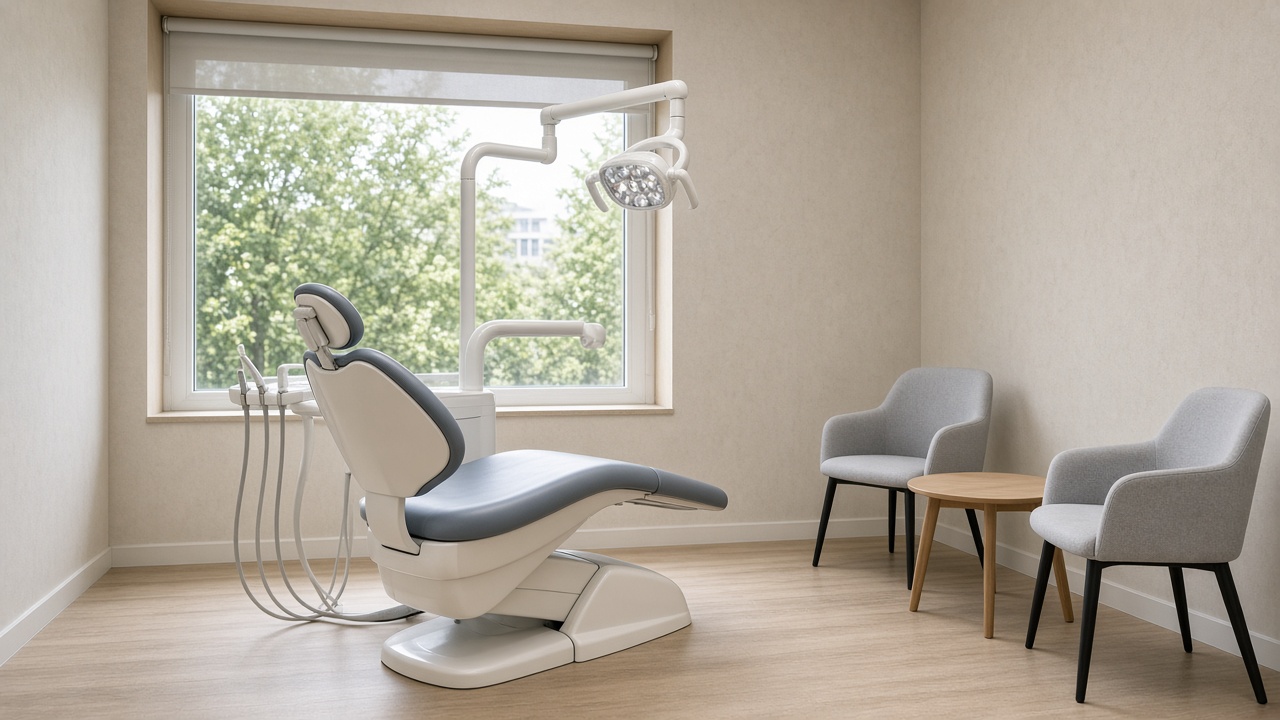
Two empty gray chairs fill the foreground, with a dental chair and light soft behind them.
What to Decide Before Anyone Rebuilds It
Decide what the consult is for, in one paragraph the scheduler accepts. It is a longer conversation about replacing a tooth, meant to decide whether this is the right conversation to continue, using what the person wants to replace, what has already been tried, and whether another dentist is involved. It is not a cleaning, and it is not a same-day start. The page will not predict an outcome, a look, or a timeline, and the desk offers a time the book holds. If that paragraph is still being negotiated, the form will come back negotiated into mush.
Decide the turn-aways. A person who wants a cleaning is sent to the hygiene or new-patient request before this form submits, and a person in pain is sent to the phone-first emergency path. Write the sentences. A project that only restyles the implant form and leaves those people able to finish it has rebuilt the label and kept the mix, so the turn-away is part of the request.
Decide the destination. Consult requests go to the consult book, with a subject that says consult, and they do not go to the hygiene inbox. A shared mailbox is acceptable only if the note cannot be mistaken for a cleaning, because if the watcher must open it to learn the length, you are back to sorting. Name the role that offers the time, and say they are not the ones who should edit the website between patients.
Say the refusals in the brief, not as a vibe: no outcome, no timeline, no preferred cleaning day, and no thank-you that says treatment has started. A builder rewarded for a warmer page will add those unless you listed them as failures, so list them. The rebuild is done when the request matches the longer decision, not when it sounds more confident than the old form.
How to Rebuild the Consult Request
Rebuild the request as a screening form, then test it against a cleaning on purpose.
- Remove cleaning fields, including preferred cleaning day, hygiene length, and any reply that mentions a checkup.
- Add what they want to replace, what has already been tried, and whether another dentist is involved.
- State on the page that this is a consult, longer than a cleaning, not a same-day start, and not an outcome.
- Send cleanings and pain to their own doors, and send a consult test to the consult book.
- Try to submit a cleaning on the implant form. If you can, the rebuild is not finished.
Step two should stay short. You are not collecting a clinical workup. You are learning whether the longer block is the right next step. A records demand before a request will be offered scares off the conversation and still does not screen, so ask the three facts and let the coordinator ask for records after a real time exists.
Step five is the test owners skip because it feels backwards. The backwards test is the point. The old form's success was that anyone could submit, while the new form's success is that a cleaning cannot. Do the same with a sentence like "I want to start today." The page should not answer with a start. It should remain a consult request, and if the reply offers a start date, send it back.
Retire the old form the day the tests pass, including homepage buttons that still post a generic appointment into the hygiene book. One leftover path will collect the cleanings you just turned away and the consults you just defined, in one pile. Tell the desk the old inbox should go quiet, and if it does not, hunt the button.
What the New Form Has to Collect
The new form has to collect a consult the book can place, and it has to be obvious when a note is not that consult. Read a submission as the scheduler will.
| Piece | Consult form after the rebuild | Cleaning form it must not copy | Why the split matters |
|---|---|---|---|
| First line | Implant consult request | Cleaning or checkup | The length is visible before the call |
| The ask | What they want to replace | Preferred cleaning day | The topic matches the longer decision |
| The story | What has been tried, another dentist or not | Insurance essay or a blank comment | The room does not open on a sort |
| The time | A range for a consult block, request only | A held hygiene slot | The book is not promised early |
| The reply | Consult requested, no outcome, no timeline | You are booked for a cleaning | The person quotes the right visit |
Bring a week of notes to this table after launch. Anything that fits the middle column came through a path you missed, so close it. Do not add a manual step where the desk retypes cleaning requests into the right book, because that step is the old job and the form was rebuilt so they could stop.
The reply row is where a timeline returns. People add a friendly estimate because silence about time feels rude, but a false start date is ruder. The consult can discuss timing with the person there. The reply can say someone will offer a consult opening, but it cannot say when treatment would finish, how it will look, or that the plan is set. If the draft needs a number to feel complete, the draft is wrong, since completeness here is the screening fields, not a clock.
What the Rebuild Must Not Promise
The rebuild must not promise an outcome: not a tooth that looks a certain way, not a function you describe as settled, and not a story of someone else's result offered as this person's future. The form asks what they want to replace, and it does not answer. Photographs, if they stay, need a line that they are not a prediction, or they stay off this page. A builder who calls a predicted look "more concrete" has failed the brief.
It must not promise a timeline. No duration, no "soon," and no same-day start dressed up as convenience. Same-day pain has a different door and still does not promise a chair. An implant consult is slower by nature of the decision, and the page should say it is not a start. Adding speed to compete with a lead vendor copies the vendor's worst sentence onto the site you control, and you rebuilt the form to stop that.
It must not promise a full book of consults by making the form easier for the wrong person. Easier for everyone is the cleaning problem, whereas easier for the right conversation means a few required answers and a turn-away for the rest. If a review says the form is too strict because fewer people finish it, ask who is bouncing. Cleanings and same-day pain should bounce, and consults that can say what they want to replace should finish. Those are different counts, and only one of them belongs on this book.
When the tests pass, stop polishing. Further warmth is how outcomes sneak back. The desk offers real consult times and the page screens, and you look again only when the consult itself changes, for example if another dentist's involvement becomes something you no longer need to ask. Until then the form is done. It does not look like a cleaning, and it does not sound like a result.
Questions
When Is the Implant Form a Project Rather Than an Edit?
When you already know the consult is a longer conversation and the form still asks for a preferred cleaning day, or still confirms a short visit. Changing a headline on that form will not change the book. The request has to be rebuilt, and that is more than a counter edit.
What Should the Rebuilt Form Ask?
What they want to replace, what has already been tried, whether another dentist is involved, and a range of days for a consult-length block. It should say the form is a request, and it should not ask for a cleaning day or offer a same-day start.
How Do You Test That Cleanings Were Turned Away?
Try to submit one. The page should send that person to the hygiene or new-patient path before an implant consult is created. Do the same with a pain note and the emergency path, and if either completes as a consult, the rebuild is not done.
What Must Help Refuse to Add?
An outcome, a look, a timeline, and a reply that says treatment has started. Also a shorter, friendlier form that lets everyone through. Screening is the job, and a prettier cleaning request is a failure even if it mentions implants in the title.
What Does the Desk Stop Doing Afterward?
They stop translating cleaning fields into consults and stop apologizing for a start the page implied. They still offer real openings on the consult book, and the next edit is a change in that visit, not a warmer sentence about results.
Conclusion
Get help when the implant consult is a longer conversation and the form still looks like a cleaning request. The help should rebuild that request, and it should not promise an outcome or a timeline. You will know the project worked when a consult test and a cleaning test land on different books, and the reply cannot be quoted as a result or a start date.
When you are ready to decide when the page and the consult form are a project, Speak With Us.