
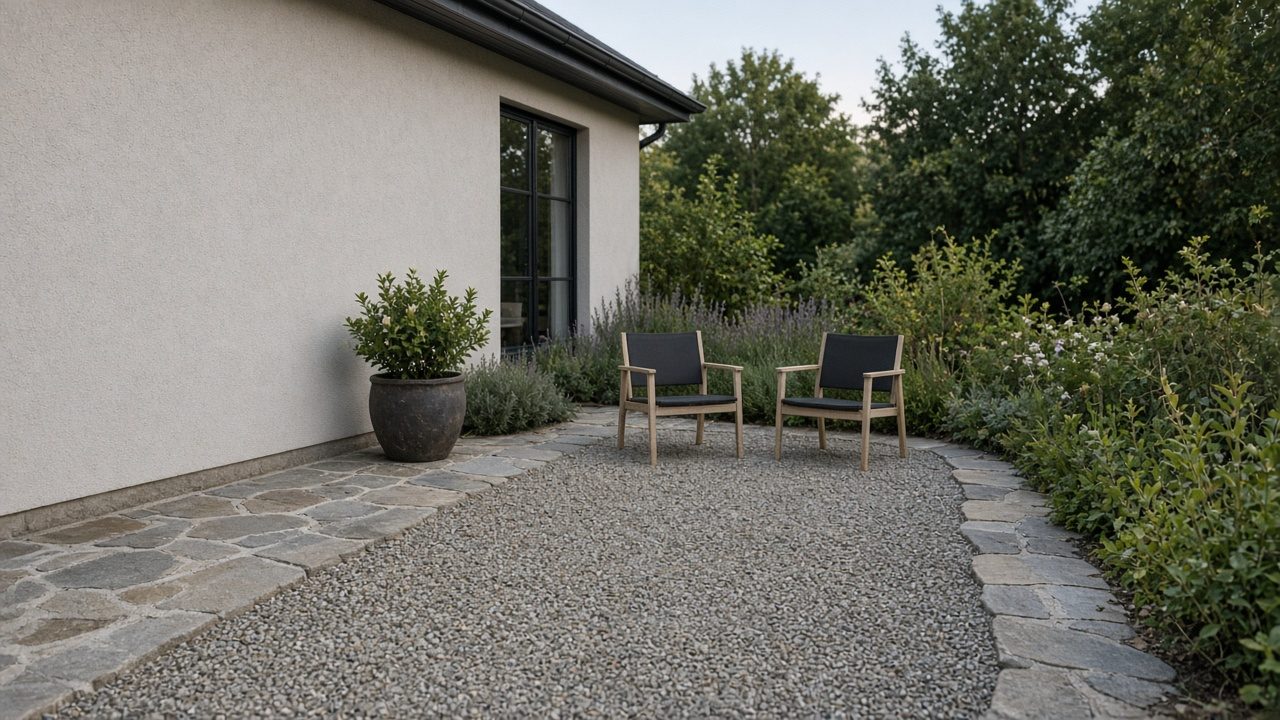
A landscaper should describe a project by naming the kind of work, the limits of that job, and the next step for a homeowner who wants the same thing. The photo can show the finished look. The sentences beside it have to say what the crew did and what a caller is asking for. Before any promotion, the landscaping page, the call or form, and the work you will actually do have to agree.
This guide covers what a photo is allowed to imply, how to describe the work in words, what the call has to confirm, which projects to keep off the site, how to review a single project page, and how the landscaping page and this article split the job.
Takeaways
- Let a project photo show the finished look of one job, and let the sentences name the work.
- Write the scope in plain words: what was included, what was left out, and who should call.
- Use the call to confirm that the caller wants that same job on a property you will take.
- Keep a project off the site when you would hesitate to accept the same request again.
What the Photo Is Allowed to Imply
A project photo may imply the scale of that job, the materials a visitor can see, and the finished look on the day you took it. It recruits the wrong call when a visitor treats every object in the frame as a service you sell.
Walk through one photo you are proud of. Name what the crew installed or reshaped, then name what was already there: a walk, a fence, a patio, a lawn another company keeps, a tree you did not plant. If you design and install plantings, the bed is the claim. The patio in the corner stays scenery unless your crew built it.
A spring photo of fresh mulch and new shrubs shows a planting at planting time. If weekly care is a separate offer, the caption should send that request to its own door. A crew in the frame shows the task underway that day, so name that task. Otherwise a visitor will assume lighting, drainage, and a full redesign came with the bed.
| What is in the frame | What a visitor may infer | What you still have to say |
|---|---|---|
| A finished planting bed | You can install a bed of this kind | Whether design was part of the job, and what was planted |
| A wide view of the yard | The job covered a property about this size | Which parts of the yard were in the scope |
| A path, patio, or fence | Those features were present that day | Whether your crew built them |
| A crew at work | People did this job | The task they were doing, and the tasks outside that visit |
If the last column is hard to fill, hold the photo until the sentence exists. A strong frame with an empty last column is how the wrong homeowner ends up asking for a job the picture only happened to contain.
How to Describe the Work in Words
Describe the work in words a homeowner can repeat. Name the kind of project, the pieces that were in it, the pieces that were out of it, and the sort of property it suited. A paragraph that only admires the result leaves the caller free to imagine a different job.
Start with the kind. Front-yard planting and bed rebuild is a kind. Outdoor transformation is a mood. The kind should match a line you would put on an estimate, and if you would never write it on an estimate, it makes a weak title for the project.
Then say what was in the job, in ordinary tasks: soil work, new beds, shrubs, mulch, a short run of edging. Give a plant-by-plant list only when the plants are the reason a similar homeowner would call. A lush bed captioned "we refreshed the garden" can mean a short weeding visit or a full install, and the page should pick one.
Say what was left out in the same calm tone. The lawn stayed on its current schedule. Irrigation was already in place. The patio stayed as it was. Homeowners relax when a boundary saves them from the wrong ask, and they get stuck when they learn the boundary only after someone has driven out.
Close with who the job is for. Someone who wants a designed planting with a finished day is a different caller from someone who wants a person each week. Speak to the first on this page, and use one sentence to point the other toward their own door. If a newer crew member would know what to load for a similar job, the words are enough.
What the Call Has to Confirm
The call has to confirm three things: the caller wants the kind of work the page named, the property fits the way you take that work, and they are using the next step you offered. Other details can wait for a visit, but these three keep a mismatched request off the board.
Ask them to describe the job in their own words first. If they want the look in a certain photo, ask which part they want repeated: the bed, the whole front, the patio, or the weekly neatness. Their answer shows whether the page did its work. If they want a part you marked as scenery, the page needs a clearer sentence, and the caller needs a straight reply about what you take.
Confirm access, the rough size of the area, and whether this is a new install or care of something already growing. A courtyard and a wide slope can share a photo style and still be different work, so say so before anyone blocks a day.
If the page invites a design conversation and they expected a crew this week, the page and the path disagree. Explain the step you run: a conversation, a visit if the job fits, then a written scope. One odd call can stand alone. The same mismatch again means the photo or the words are recruiting the wrong request.
Projects You Should Not Put on the Site
Leave a project off the site when you would decline the same request tomorrow. The page is a standing invitation. A favor, a job you would scope differently if you could do it over, and a job that depended on a condition you will not meet again should all come down.
Leave off work that belongs to a different offer. A tight lawn and a clean edge can sit inside a planting photo, but if the thing a caller would buy from that image is weekly mowing, the image is serving the mowing offer from a project page. Put mowing with the mowing offer, and keep this page for the project.
Leave off the bed you tried once, the material you will not specify again, and any photo you cannot describe from memory. A forgotten scope is hard to defend when the phone rings, while a shorter gallery of jobs you can explain brings clearer calls.
Leave off any frame that has to carry a promise about speed or a look that holds in every season. You can say what this job included, but you learn the next yard only when you see it. If you would add a long qualification out loud before showing the page, put that qualification in the caption or hold the photo.
A Review of One Project Page
Review one project page at a time, as if you had never walked that yard. You want a yes or a no: this page recruits the job you want, or it needs work before anyone else sees it. Fix or remove it before you add another photo.
- Read only the first sentence and write the job you would accept if that sentence is true.
- Look at the photo and list every visible element your crew did not install, build, or maintain.
- Read the rest of the description and mark any claim the first sentence did not make.
- Read the next step, call or form, and say whether it asks for the job in your first note.
- Compare the page with the last similar job you finished and note any task the page adds or drops.
- Keep the page if you would schedule that job again, and rewrite it if you would hesitate.
People remember the first sentence and repeat it when they call. If it could fit several trades, replace it with the kind of work and the main pieces. On the photo, note the path, the lawn, the lighting, and the fence. If your crew does not own an element, put a short boundary in the caption.
A designed-install page that ends by inviting a weekly visit is two offers sharing a button. Match the button to the sentence, or give the two offers two paths. Then check the page against the job you would sell now, and wait to add another project until this one passes.
How the Landscaping Page and This Article Split the Job
The Landscaping page is the offer. A homeowner who already wants that work uses it to take the next step. This article is the decision that comes first: how a single project should be described so the right homeowner calls. Publishing the page leaves that decision unfinished if the photos, the words, and the call still point at different jobs.
Home & Property Maintenance is the wider group this trade sits in. A visitor looking for weekly turf work needs another door, and that door is Lawn Care. Sending them there helps when a photo could be misread. Trouble starts when the project page tries to absorb the lawn offer with a weekly promise at the bottom.
Triwave Consulting looks at the agreement before promotion. The page, the next step, and the work the company does have to say the same thing. The order after that agreement is Initial Contact, then Detailed Discussion, then Implementation. Initial Contact is you describing the projects you want and the calls that arrived instead. The Detailed Discussion rewrites one project page until the photo, the scope, and the button match. Implementation puts that version on the site and keeps those words when the phone rings.
Bring one real project page to that first conversation, plus a note from a call that asked for something the photo only hinted at. Those two pieces show the gap. The description and the work need to be the same job.
Questions
Should the Caption Name the Scope?
Yes. The caption is the shortest place to say what the crew did and what the photo only happened to include. A homeowner skims the image, then the line under it. If that line names the kind of work, the right caller can continue and the wrong caller can stop. A caption that only says the yard looks finished leaves both of them guessing.
What If the Caller Wants a Smaller Version of the Photo?
Treat that as a scope question and answer it on the call. A smaller bed can still be the same kind of work if you are willing to do it, so say what stays the same: design, install, and a finished day. If smaller means a quick tidy of plants you did not install, point them to the offer that fits and keep this page aimed at the work in the photo.
Can a Gallery Replace a Written Scope?
A gallery can show range, but each project still needs a scope. A row of attractive yards with no sentences draws people who like the pictures and disagree about the job. Give each project its own kind of work, its own limits, and its own next step, so a visitor can accept one invitation or pass by.
Should the Next Step Be a Call or a Form?
Use the path that confirms the kind of work before a crew is promised. A short call does that well, because the caller can point at a photo and you can ask which part they want. A form works when it asks for the kind of project, the area, and what they think is included. A form that only collects a name and a dream-yard note still leaves you needing the call.
What If Your Favorite Photo Is of Work You No Longer Do?
Retire it, or rewrite the page so it matches the work you sell now. Callers will ask for the photo, and the visit will go to explaining the gap. Keep images you can stand behind this season.
Conclusion
Describe each project so a homeowner can tell what you did and what they would be asking for. The photo may show the finished look. The words, the call, and the work have to name the same job before you promote the page. When those three agree, the right caller can recognize the work.
When you want a landscaping project page and the inquiry path to describe the same work, Speak With Us.