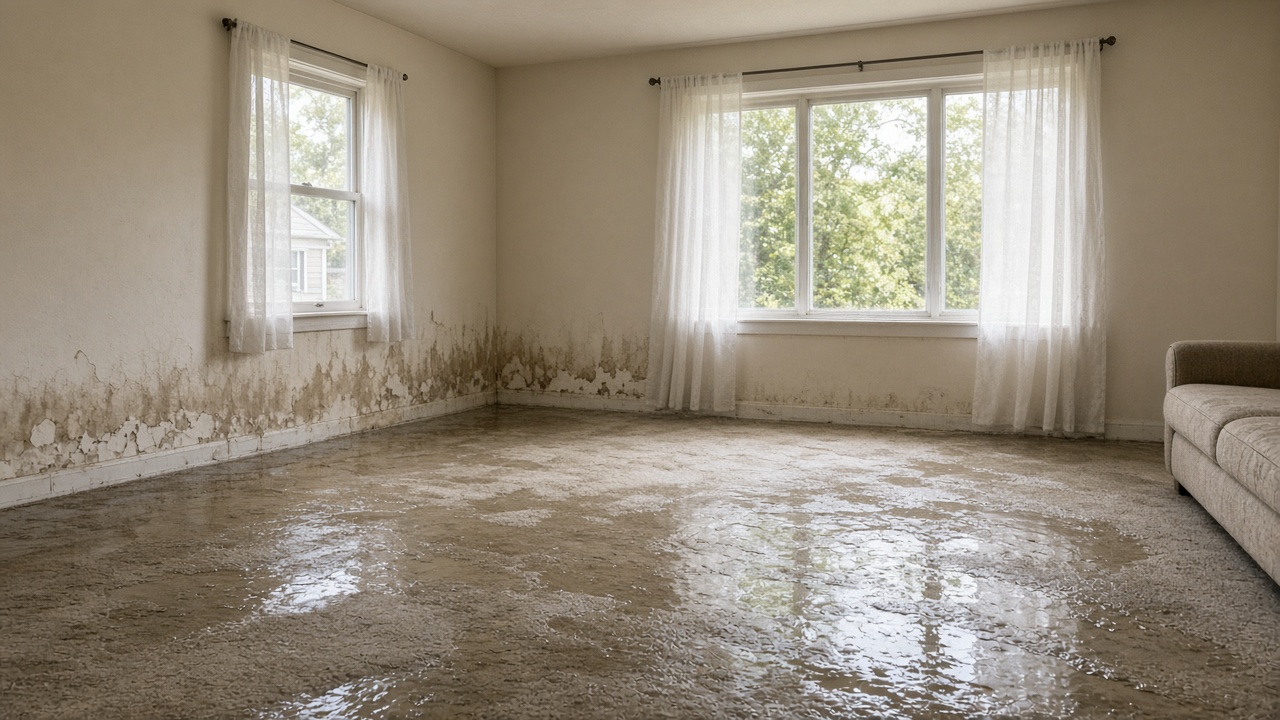
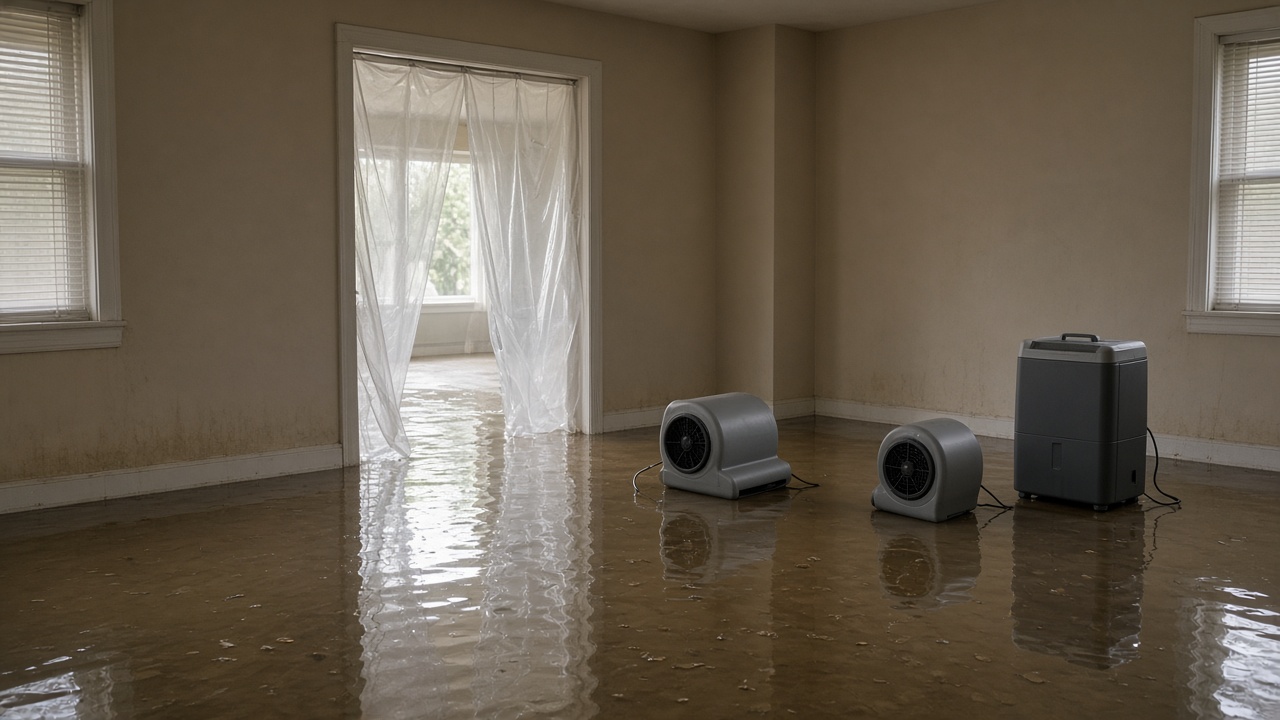
A restoration company should keep insurance referrals and still decide whether the site can take a direct dry-out. An insurance referral arrives with a file number and a delay. A direct call arrives with water that may still be moving. Relying only on referrals means the site never learns to take the second kind of job. Publishing an emergency page does not replace the carrier relationship. It gives the direct caller a true door.
Takeaways
- Keep the carrier relationship, and do not treat it as a substitute for a direct door.
- Expect a referral to arrive with a file number and a delay, not with water you can see from the form.
- Expect a direct call to need an answer about water that may still be moving.
- Publish an emergency page so the direct caller has a true door, without pretending it replaces referrals.
- Give rebuild work its own path so a file about later scope is not staffed like an active loss.
What an Insurance Referral Arrives With
An insurance referral arrives with a file number, a contact, and a delay between the moment the building got wet and the moment you are allowed to go. The delay is the nature of the path. Someone else opened the file. Someone else may control when you start. Your coordinator needs the file number, the property, the caller the carrier named, and whatever scope note came with the assignment. You do not need the website to pretend this package is a homeowner shouting that water is spreading right now.
The referral can still be urgent, and it can still be a later scope. Read the note that came with the file. Active water and a dry building with a rebuild assignment are different crews. If your office treats every file number as an emergency roll, you will send a dry-out crew to a job that is already in the put-back stage. If you treat every file as paperwork for tomorrow, you will miss the referral that says water is still moving. The file is a package. It is not one visit type.
Keep this path in the language of the relationship you actually have. Do not publish a page that claims a carrier prefers you, owes you work, or will pay a certain way. The relationship is operated in the office, on the terms you already know. The website's job for this path is narrow: a place a referred caller can confirm a file number and a way to reach the person on site, if you even want them typing. Many shops take referrals by phone and email only. That is allowed. It is not the same decision as having no door for a homeowner who was never given a file.
The Water & Mold Restoration page sells the work. This article teaches how referrals and a direct door fit together. The selling page can mention both. It should not collapse them into one request. The Home Services page is the wider trade door. A roof opening or a burst pipe may cause the water, and those trades are not this referral file.
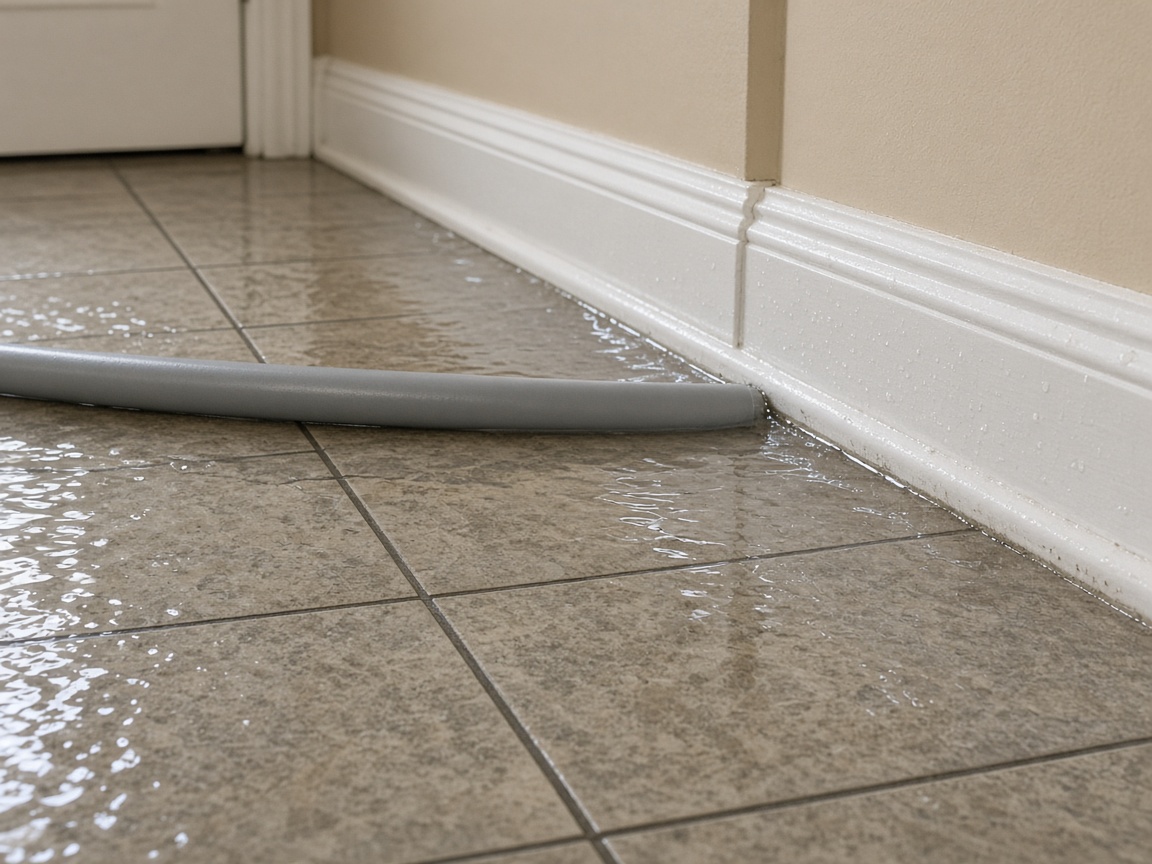
A gray hose lies in shallow water pooled against a tile floor and baseboard.
Water sitting at the baseboard, the loss a restoration company has to explain on its own page instead of waiting for an insurance referral.
What a Direct Dry-Out Call Arrives With
A direct call arrives with water that may still be moving and with no file number at all. The caller is the household, a property manager, or a neighbor who was asked to phone. They need a door that asks whether water is still spreading, what kind of property it is, and how to reach someone on site. They do not need to be told to wait for a file before you will hear the condition. If you only know how to start work from a referral, say that plainly, and do not imply a direct door you will not staff.
The direct door is how the site learns the second kind of job. Every question you wish the referral had asked, and that the carrier path will never ask the same way, belongs here. Still spreading or not. House, unit, or shop. Who is standing there. Where it is wet. Sewage or not, if they can tell. Those answers are the intake the referral skipped because a different process created the file. Copying the referral form onto the public site, with a required file number, tells the direct caller they are in the wrong place. They will leave, or they will invent a number, and you will roll on fiction.
Explain the wait you actually use. If a direct dry-out can start when your crew is free, say you will confirm the condition and the address. If you only mobilize direct work in some cases, say the limit without a story about speed you do not offer. The true door is honest. A door that looks like an emergency and answers like a referral desk trains people to stop trusting the page. You can be a referral-heavy company and still tell the truth on the screen.
How to Keep the Carrier Path and Add a True Door
Keep both paths. Adding a direct door does not cancel the carrier relationship, and relying on referrals does not build the direct door by accident. You are choosing whether the site knows how to take a job that did not start as a file.
Do it in this order.
- Write how a referral enters today: who receives the file number, what they read first, and which jobs are active water versus later scope.
- Write how a direct caller enters today, including the ones you turn away or scramble to understand.
- Build a referral confirmation that asks for the file number and the on-site contact, and that does not ask the public emergency questions first.
- Build a direct emergency page that asks spreading, property type, and who is on site, and that does not require a file number.
- Point each path at its own queue, then place one test file and one test direct call and confirm they do not land on top of each other.
Step three keeps the carrier path clean. A homeowner with a file should not be pushed through a marketing form that forgets the number. Step four is the true door. Step five is how you know the site learned the second job. If the direct test sits in the referral queue with a blank file, the door is decorative. If the referral test is missing its number because the form was the public one, you have endangered the relationship to look modern.
Initial Contact for this decision is you admitting which path you actually run. Detailed Discussion is the two intakes. Implementation is the queues and the tests. A single form with an optional file number fails both tests at once. Optional is how the direct caller skips it and the referred caller forgets it.
How the Two Jobs Differ on the Site
The referral and the direct call differ in what starts the clock and what the page is allowed to ask. The site should show that without insulting either caller.
| Piece | Insurance referral | Direct dry-out | A single public form |
|---|---|---|---|
| What arrives first | A file number and a delay | Water that may still be moving | Whichever the caller types |
| Required identifier | The file number | A person on site and a callback | A name, often |
| Spreading now | Read it from the assignment, then confirm | Ask it before anyone rolls | Often missing |
| What the page must not do | Claim you are owed the work | Pretend a file is required | Force both jobs through one script |
| Queue | Coordinator who handles files | On-call crew for active water | One list, sorted by luck |
The fourth row is the policy in miniature. Referrals stay a relationship you operate, not a badge on the homepage. Direct work stays a true door, not a funnel into a file you do not have. The single form fails both rows because it wants one script. Give up the single script. Your coordinators already speak two ways on the phone. The site should too.
Rebuild scope that comes from a carrier is a third label, not a reason to reuse the emergency page. A file for put-back after drying is not water still spreading. Put that file on the rebuild queue even though it began as a referral. Origin and visit are different columns. The table's queues can hold a referral that is active and a referral that is later. The direct door does not need to collect later-scope referrals at all.
What Relying Only on Referrals Costs the Site
Relying only on referrals means the site never practices the direct job. The day a homeowner calls with water moving, the page has no questions, the voicemail has no fork, and the coordinator improvises. Improvising is not a door. It is a delay at the moment the delay hurts. The carrier relationship does not fill that gap. It was built for files, and this caller does not have one.
The cost shows up as a homepage that talks about care and speed and then offers a contact box. Direct callers use it and produce a name. Referral callers use it and forget the file number. You then chase both. Publishing an emergency page does not replace the relationship, and it does not have to. It gives the direct caller a place to tell the truth, and it leaves the file path alone so coordinators stop reconstructing numbers from vague emails.
Watch a month of direct attempts, even if they are few. If they all died in a general inbox, the site refused to learn. Add the door, staff the queue you promised, and keep the referral path where it is. If you are not willing to staff a direct door, do not publish one. A false door is worse than a clear sentence that says you take assignments by referral. Honesty is a form of intake. Confusion is not a relationship.
You can keep insurance referrals and still judge the site. The judgment is simple. Does a direct caller with moving water have a true door. Does a file number still land with the coordinator who knows what to do with it. If only the second is true, you have a relationship and you do not yet have a page for the other job.
Questions
Should a Restoration Company Rely Only on Insurance Referrals?
It can rely on them for the work that starts as a file, and it should not rely on them to teach the site a direct dry-out. A referral arrives with a file number and a delay. A direct call arrives with water that may still be moving. Those are different doors.
Does an Emergency Page Replace the Carrier Relationship?
No. Publishing an emergency page does not replace that relationship. It gives the direct caller a true door. The file path should stay intact, with the file number required, and should not be forced through the public emergency form.
What Should the Direct Door Ask?
Whether water is still spreading, what kind of property it is, and how to reach someone on site. It should not require a file number. If you will not staff that door, do not publish it. Say you take referral assignments instead.
Where Should a Rebuild File Go?
To the rebuild queue, even when a carrier sent it. A put-back assignment is not an active loss. Origin is not the same column as the visit. Keep later scope off the emergency page.
What Does the Site Fail to Learn Without a Direct Door?
How to take the second kind of job. The questions, the voicemail, and the queue never practice a caller who has water and no file. The day that caller shows up, the office improvises. A true door is the practice.
Conclusion
An insurance referral arrives with a file number and a delay. A direct call arrives with water that may still be moving. Relying only on referrals means the site never learns the second job. Publishing an emergency page does not replace the carrier relationship. It gives the direct caller a true door, and you can keep both.
When you are ready to decide whether insurance referrals replace a page that can take a direct dry-out request, Speak With Us.