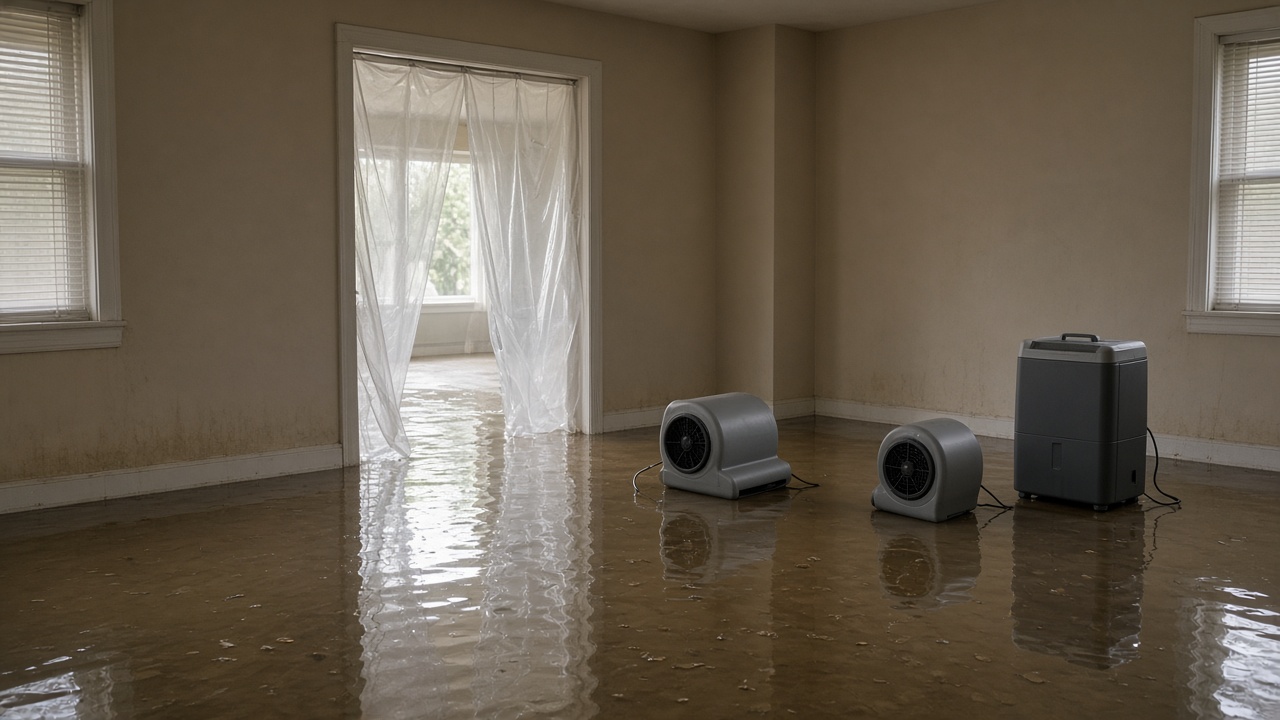
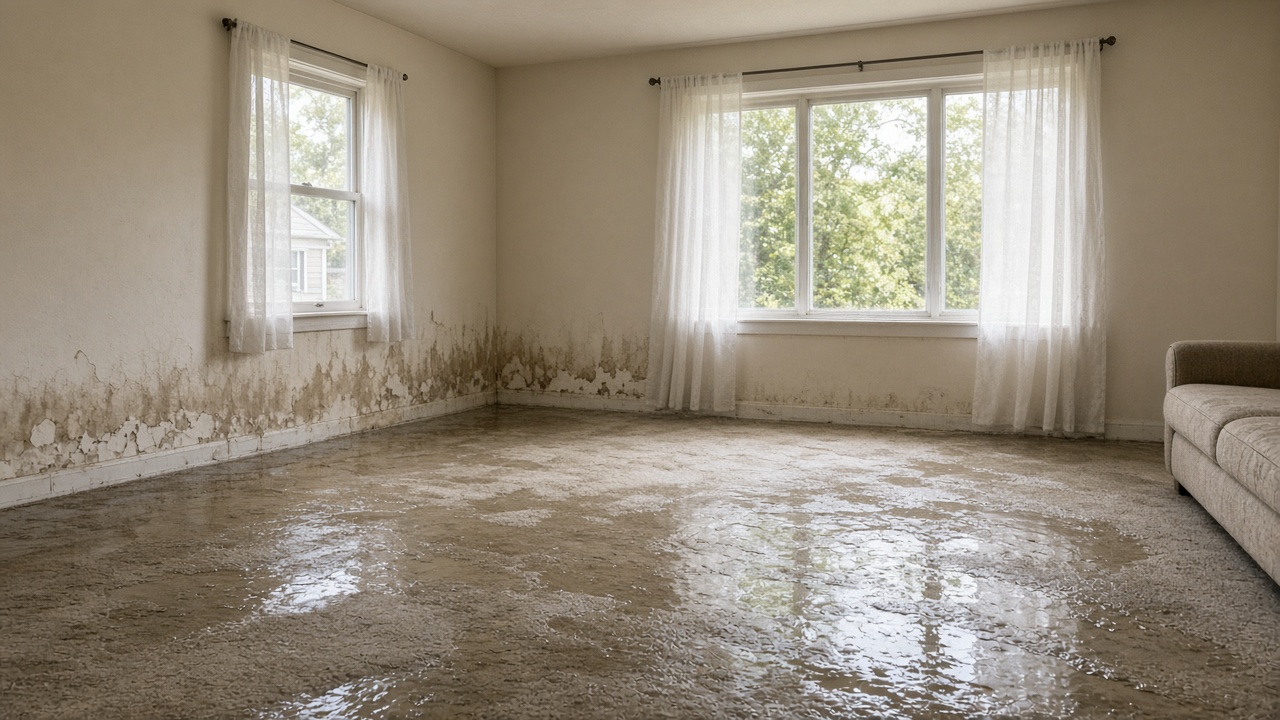
A water-damage website should explain the emergency dry-out and the later rebuild as two requests before the phone rings. The emergency page should ask whether water is still spreading, what kind of property it is, and how to reach someone on site. The rebuild page should ask about the scope after the dry-out, not pretend the loss is still spreading. Mixing them sends a rebuild estimator to an active loss, or an emergency crew to a job that is already dry.
Takeaways
- Ask the emergency page whether water is still spreading, what kind of property it is, and who is on site.
- Ask the rebuild page about scope after the dry-out, and do not describe that job as an active loss.
- Keep the two forms from sharing a queue, so the wrong person does not roll.
- Say what your crew does on a dry-out, and do not promise a mold outcome or a coverage decision.
- Point the homepage at the two doors instead of hosting one request for every wet building.
What the Emergency Dry-Out Page Has to Explain
The emergency page has to explain that this door is for water that may still be moving, and it has to collect the facts a crew needs before they roll. Whether water is still spreading. What kind of property it is: a house, a unit in a larger building, a shop. How to reach someone who is actually on site, not a desk that opens in the morning. Those three are the difference between a truck that arrives useful and a truck that arrives to a locked door and a story.
Explain the condition in choices. Still spreading. Stopped, but materials are wet. Not sure. Not sure is allowed. A blank is not. Add where in the building, clean water or sewage if the caller can tell, and the address with any unit or gate. You are not asking them to start drying, to move furniture in a sequence, or to judge what can be saved. You are asking what the crew will walk into. A page of scary paragraphs about what water does, with a short form that asks only for a name, explains nothing the coordinator can use.
Say what this visit is. An emergency dry-out response when water is an active problem. Say what it is not. It is not the rebuild, it is not a promise about mold, and it is not a promise about what any carrier will pay. If you do not haul, do not rebuild, or do not take sewage, say the limit in the same screen. A caller who needs a different company should learn that before you roll the wrong crew.
The Water & Mold Restoration page sells the work. This article teaches what to explain before the call. The selling page can offer help. The emergency page has to ask if the water is still spreading. Other trades sit on the Home Services page. A plumber may stop the supply line, and a roofer may cover an opening. Those are not the dry-out, and this form should not pretend to be them.
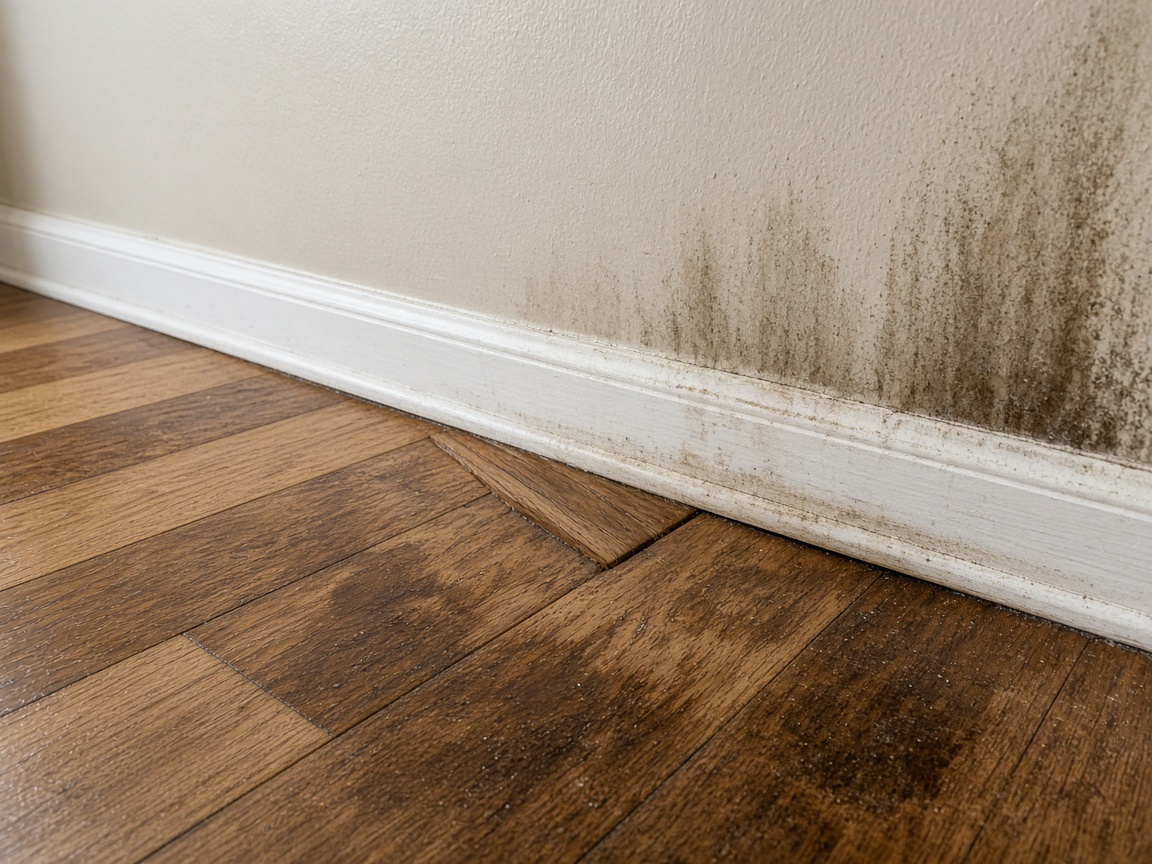
A hardwood board has lifted beside a baseboard where a dark water stain climbs the wall.
Buckled flooring and a rising stain, the damage a water-loss page should help a homeowner recognize before they pick up the phone.
What the Rebuild Page Is For
The rebuild page is for the work after the structure is dry, or for a scope conversation once the emergency is no longer spreading. It should ask what was affected, what the household wants put back, and the timing they can live with. It should not open with language about water racing through the building. That language pulls a dry job into the emergency queue, and it pulls an active loss into a calm estimate.
Ask whether water is still spreading, and send a yes to the emergency page before you collect finish choices. People start rebuild thoughts while the carpet is still wet because they are frightened about the mess. The escape hatch respects that fear and puts them on the crew that should see wet materials, not on the estimator who should see a dry room.
Keep mold talk inside what you actually do, and keep it off any promise. If you test, dry, or remove affected materials, you can say those visits in plain words. You should not say the building will be safe, the air will be fine, or a carrier will approve a scope. Those sentences are not the form. They are claims. The rebuild page can ask whether a dry-out is finished, who did it if it was not you, and what rooms are involved. That is scope. Scope is enough.
Photos help this page when they show rooms that are already dry and need put-back. Photos of standing water belong on the emergency page, labeled as such. One upload box on a shared form will mix a soaked hallway with a kitchen the owner wants rebuilt next month. Label the door above the upload, or skip uploads until the door is chosen.
How to Split the Request Before the Phone Rings
Split the request before the phone rings so the person who answers is not the first sorter. The ring should confirm a door, not discover it. Discovery on the phone is how an emergency crew gets a dry job and an estimator gets a house that is still taking on water.
Do the split in this order.
- List recent jobs as active dry-out or later rebuild, using what the crew found, not what the caller hoped.
- Build the emergency form around still spreading, property type, who is on site, where the water is, callback, and address.
- Build the rebuild form around rooms, scope, timing, and whether water is still spreading, with a yes that leaves the form.
- Deliver emergency notes to the coordinator on call and rebuild notes to the estimator, including after the office closes for the first queue only.
- Submit both tests at an hour the office is empty, and confirm the on-call person sees only the emergency test.
Step two's property type matters because a house, a unit, and a shop change access and who can let you in. Ask it as a choice, not as a paragraph. Step five is the proof that the phone is not the intake. If the on-call person must call the office to learn which test was which, the forms still share a pile. Fix the destination before you add more explanation to the homepage.
The voicemail should speak the same fork. Water still spreading, or a rebuild after things are dry. A greeting that says leave a message and we will help will erase the split for everyone who calls instead of typing. Change the greeting the day you change the forms.
How an Active Loss Differs From a Job That Is Already Dry
An active loss and a job that is already dry can involve the same address a week apart. They are not the same request, and the website has to admit the calendar.
| Fact | Emergency dry-out | Rebuild after dry-out | Shared request |
|---|---|---|---|
| Water still spreading | The reason to roll | A reason to leave this form | Often unasked |
| Who is on site | Required, with a live callback | Helpful, not the night question | A single phone field |
| Property type | House, unit, or shop, plus access | The same building, now as scope | A name only |
| What you ask next | Where it is wet, clean water or sewage | Rooms to put back, timing | Tell us what happened |
| Who should go | Emergency crew | Estimator | Whoever is scheduled next |
Use the table on the last ten jobs if you have them, without worshipping the count. You are looking for rows that were staffed from the wrong column. An estimator who arrived to standing water, or a dry-out crew who arrived to a house that had been dry for days, is the shared request in real life. The fix is the form, not a speech at the next meeting.
Sewage and clean water change the emergency column, not the rebuild column. Ask on the emergency page if the caller can tell. If they cannot, the crew still rolls prepared to find out, which is a fair use of not sure. Do not make the rebuild page ask sewage questions of someone choosing flooring. That is how the pages start to pretend they are the same visit.
Who Should Get Which Request
The coordinator on call should get water that is still spreading, the property type, and a person on site. The estimator should get scope after the dry-out. If you are a small company and those are the same human, they should still be different subjects on the phone. A subject that says active loss is a different next hour from a subject that says rebuild scope. The human can wear both hats without pretending the jobs are one.
Check a week of calls against the forms. Any emergency note missing the on-site person is a form that let the field stay optional. Make it required. Any rebuild note that reads like a flood in progress missed the escape hatch. Tighten the yes. The homepage and the footer must not keep a third form, or both jobs will use it the night you need the split most.
You will know the water-loss page explained enough when the crew can say, before they leave, whether water is spreading and who will open the door. You will know the rebuild page is doing its job when it never sends that crew to a building that is already dry, and never invites a soaked building to pick finishes first. The phone call then confirms. It does not discover.
Questions
What Should the Emergency Page Ask Before Anyone Rolls?
Whether water is still spreading, what kind of property it is, and how to reach someone on site. Add where it is wet and the address. A page that only says you handle water damage does not give the crew those facts.
What Is the Rebuild Page Allowed to Assume?
That the dry-out is the context, not that water is still racing through the building. Ask scope, rooms, and timing. If water is still spreading, move the person to the emergency page before finish choices.
Why Does Mixing the Forms Send the Wrong Person?
An estimator arrives at an active loss, or an emergency crew arrives at a job that is already dry. The form picked the visit by refusing to ask. Two destinations keep the hats on the right heads, even if one person wears both.
Should the Page Promise a Mold Result or a Payment Decision?
No. Say the visits you actually perform. Do not promise that a building will be fine, or that a carrier will approve a scope. Those are not questions for the form, and they are not promises to publish.
What Should the Homepage Do With These Two Jobs?
Point to the emergency door and the rebuild door. It should not host a single request that both jobs share. A shared footer form will undo the split on the busiest night.
Conclusion
The emergency page should ask whether water is still spreading, what kind of property it is, and how to reach someone on site. The rebuild page should ask about scope after the dry-out, not pretend the loss is still spreading. Mixing them sends the wrong person. You now know what the water-loss page must explain, and what the rebuild page is for instead.
When you are ready to separate the emergency dry-out from the later rebuild before the phone rings, Speak With Us.