An orthodontic site should help a parent decide which consult they are asking for before anyone is on the book. A parent booking for a child and an adult asking about aligners need different pages. The child page asks the child's age and who will attend. The adult page asks what they want to change and whether they have had orthodontic treatment before. One form makes the consult start with that sort.
Takeaways
- Give a child's braces consult and an adult aligner question different pages and different questions.
- On the child page, ask the child's age and who will attend. Do not ask the child to behave like an adult lead.
- On the adult page, ask what they want to change and whether they have had orthodontic treatment before.
- Keep the request from promising a treatment time, a result, or a look.
- Use one form only if you want the consult to open with a sort the page should have finished.
What a Parent Is Trying to Decide
A parent on your site is trying to decide whether this is the right conversation to request, and for whom. They are often booking for a child, not for themselves. They need to know the next step is a consult, who should come, and what you will ask before a time is offered. They do not need a page that treats every set of teeth as the same appointment. If the only action is one form labeled braces, you have postponed their decision until the call, and you have postponed your own.
Say what the child consult is for, in scheduling words. It is a conversation about a child who may need braces, with a parent or guardian who will attend. It is a request, not a reserved series of visits, and it does not state how long treatment would take. Age and who will be in the room are the facts that let you put the right block on the book. Clinical judgments happen in the consult. The page's job is to make sure the consult is the child's consult.
Say, just as clearly, that an adult with a question about aligners is a different request. That person is booking for themselves. They need a page that asks what they want to change and whether they have had orthodontic treatment before. Sending them through the parent form makes them invent a child's age or skip the question, and the consult starts by untangling the form. Parents who land on the adult page have the mirror problem. Split the doors so each person sees the questions that match the visit.
The Orthodontics page sells the consult. This article teaches what the site should help a parent decide before that consult is requested. A first exam, a same-day pain visit, and a procedure consult that is not orthodontic belong on the Dental page, not on either of these forms.

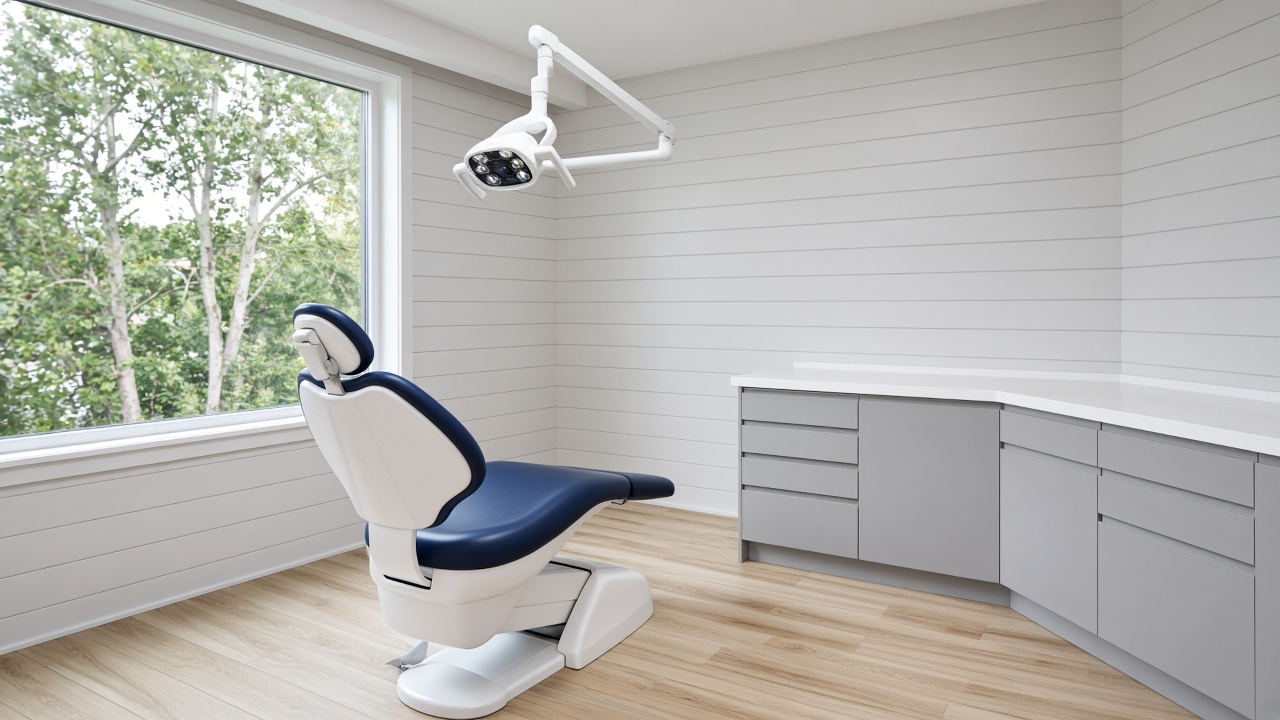
A blue visitor chair faces the arm of a treatment chair, with the operating light above.
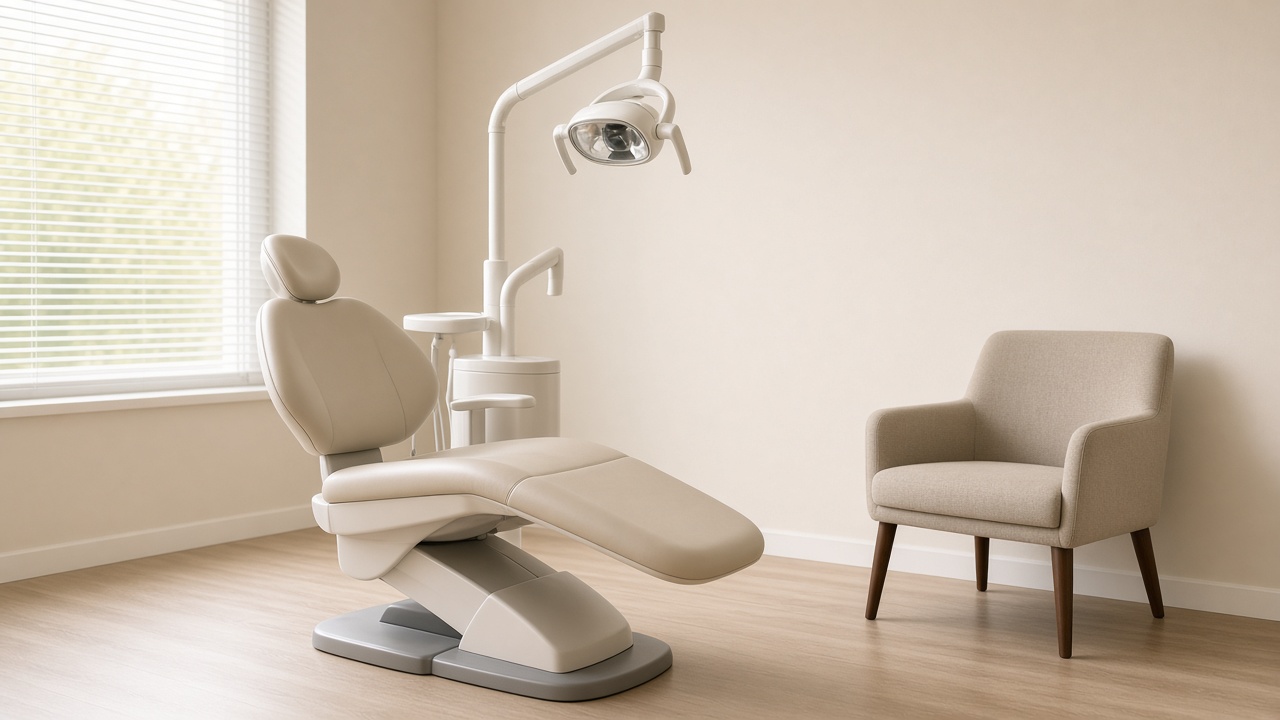
The parent seat next to the orthodontic chair, both empty, light still in the frame.
How the Child Consult Differs From the Adult Question
The child consult is a family appointment. Someone else is requesting it. The useful questions are the child's age and who will attend. Age is a scheduling fact here, not a treatment recommendation the website is making. It tells you whether this block matches how you actually see children, and it stops an adult question from sitting in a pediatric chair. Who will attend tells the desk how many people the room and the time need to hold. A form that asks neither will learn both on the phone, while the parent thinks they already booked.
The adult aligner question is a consult about a change the adult wants. Ask what they want to change, in their words, and whether they have had orthodontic treatment before. Do not answer with how their smile will look or how many months it would take. Those are promises the page cannot keep and decisions the consult has not had. A previous treatment note helps the dentist walk in prepared. It does not belong as a buried comment under a child's age field.
Length and who the visit is for should show in the request the desk sees. Child consult, age, adult attending. Or adult aligner question, what they want to change, prior treatment yes or no. If both notes look like orthodontic consult, interested, the pages have not diverged. The schedule will then give them the same block, and one of them will be the wrong conversation. A parent feels the visit started on the wrong person. An adult feels the visit assumed a child was the patient.
Keep emergency pain and a general first exam off both pages. A parent whose child is hurting needs the dental emergency path, not a braces consult form that asks about school schedules. An adult who wants a cleaning is not asking for aligners. Point those needs away before either orthodontic form submits. The orthodontic site should not become the front door for every dental request.
How to Ask the Questions Each Visit Needs
Ask the questions that tell the two consults apart, and stop before the page starts practicing dentistry.
- Build a child page that says the request is a braces consult for a child, asks age, and asks who will attend.
- Build an adult page that says the request is an aligner question, asks what they want to change, and asks about prior orthodontic treatment.
- State on both pages that this is a request, that the desk offers a time the book holds, and that treatment time is not set on the website.
- Point pain, a first exam, and non-orthodontic consults to their own doors before these forms can be used for them.
- Submit one test as a parent and one as an adult. The notes should be readable as different visits in the first line.
Step one should use age as a field the parent can answer, not as a lecture about the right time to start. You are not telling them what treatment a child of that age should have. You are learning whom the consult is for. If your book only sees children above a certain point, say that as an office rule in plain words, and say what the parent should do instead of submitting. Do not hide the rule and then decline them after they thought they were scheduled.
Step two has the same discipline about appearance. What they want to change is the topic. How it will look is not the page's answer. Leave prior treatment as yes, no, or not sure. A long dental history can wait for the consult. The form is there so the visit starts on the right person.
Step five is the proof. A coworker should be able to say child or adult before they finish the note. If they have to open a comment to learn which, the pages still share a form. Fix the fields. Do not add a longer instructions paragraph above a single set of questions and call it two visits.
Which Fields Belong on Which Page
Put each field on the page that can use it. A field on the wrong page creates a blank, a guess, or a conversation that starts with sorry, this form was not for you.
| Field | Child braces consult | Adult aligner question | Why it is split |
|---|---|---|---|
| Child's age | Ask it | Do not ask it | The patient is the child, or the patient is not |
| Who will attend | Ask it | Not the parent question | A child consult needs the adult in the room named |
| What they want to change | Only if a parent can say it briefly | Ask it | The adult visit is about their own request |
| Prior orthodontic treatment | Ask about the child, simply | Ask about the adult | History follows the person who would be seen |
| Treatment length or a finished look | Do not state either | Do not state either | The page requests a consult. It does not predict |
Read the table against your current form. Every field you ask of everyone is a field one of these people should not have to answer. Every field you ask of no one is a fact the consult will open by collecting. Move them. The last row is not optional. Owners add an estimated time to sound helpful. Helpful, on this site, is an honest request. A time estimate is a promise about treatment, and it will be quoted back when the consult says something more careful.
Show the table to the person who schedules orthodontic consults. Ask which column they wish the notes already used. Build that column. If they say they can tell from the comment, they are describing the sort you are trying to retire. Comments are where age and prior treatment go to hide.
What a Shared Form Does to the Consult
A shared form makes the consult start with sorting. The dentist or the coordinator spends the first minutes learning whether this is a child, who came with them, or whether the adult has had treatment before. That is intake the page had time to do. The room is the expensive place to do it, and it makes the parent feel the practice did not read the request. Often the request never asked.
It also books the wrong length and the wrong room. A child consult that needs a parent in the conversation is a different block from an adult who wants to ask about aligners. One form gives you one block. You then either overrun with the family or rush the adult. Both feel like a scheduling error because they are. The website caused it before the day started.
Watch the replies. If both pages, or the one shared page, thank the person for booking braces, some adults think treatment is chosen and some parents think a time is held. Change the reply per page. Child: we have a request for a consult and will offer a time. Please include who will attend. Adult: we have a request to discuss aligners and will offer a time. Nothing on either reply should state a treatment length or describe a result.
After the split, sit in on the start of a child consult and an adult one. The page is working when the first question is not which kind of visit is this. The parent already knows who the consult is for, who should come, and that the website did not set a treatment time. The adult already said what they want to change and whether they have a history. The consult can start on the conversation. That is what the site was supposed to help them decide.
Questions
What Should a Parent Be Able to Tell From the Site?
Which consult they are requesting, a child's braces consult or an adult aligner question, and that the form is a request. They should see what you will ask, who should attend for a child, and that treatment time and appearance are not decided on the website.
What Belongs on the Child's Page?
The child's age and who will attend, plus a clear line that this is a braces consult request. Age is there so the book matches the visit you offer, not so the page can recommend treatment. Do not make a parent use an adult form and skip the family questions.
What Belongs on the Adult Aligner Page?
What they want to change, and whether they have had orthodontic treatment before. Do not ask for a child's age. Do not answer with how the smile will look or how long treatment would take. The consult is where those topics can be discussed with the person.
Why Is One Orthodontic Form a Problem?
It makes the consult start by sorting child from adult. The notes look the same, the blocks get scheduled the same, and someone spends the opening minutes repairing the form. The page had the chance to ask. The room should not be the backup form.
Should the Reply Say How Long Treatment Takes?
No. The reply should say a consult was requested and that the desk will offer a time the book holds. Treatment length is not a website fact. Putting a number or a vague soon in the reply is a promise the consult then has to walk back.
Conclusion
An orthodontic site should help a parent decide which consult they are requesting before the visit starts. A child's braces consult asks age and who will attend. An adult aligner question asks what they want to change and whether they have had treatment before. One form makes the consult start with that sort. You will know the pages work when the first minute in the room is the conversation, not the intake the site skipped.
When you are ready to separate a child's braces consult from an adult aligner question, Speak With Us.