
An orthodontist should buy leads only after a consult page can tell a parent which visit this is. A lead does not say whether this is a child or an adult, or which consult you actually offer. A page can. Buying names before that split exists fills the consult book with the wrong conversation.
Takeaways
- Expect an orthodontic lead to name a person and skip child versus adult.
- Publish a child consult page and an adult page before you compare the lead to your book.
- A parent needs age and who will attend. An adult needs the change they want and any prior treatment.
- Do not buy names that will be scheduled as one consult when you run two.
- Judge the lead by whether the note can be placed without a discovery call.
What an Orthodontic Lead Does Not Say
An orthodontic lead usually says someone is interested in braces or aligners, plus a way to reach them. It rarely says whether the patient would be a child or an adult. It rarely says which consult you actually offer. A parent and an adult can tap the same vendor button. You pay for both, then your coordinator asks the question the form skipped, if the person answers.
The label is the vendor's, not yours. Braces on a lead might be a parent, an adult who wants aligners, or someone who is not sure and picked the first word. Aligner on a lead might be a teenager's parent who did not see a child option. You cannot staff a room from that label. You also cannot tell whether they think a time is held or a treatment length was promised. Those misunderstandings arrive free with the name.
Open a recent batch and try to mark each lead child consult or adult question. Mark unknown when you would have to call. If unknown is the pile, the lead is not a consult request. It is a prompt. Your page, if it still uses one form, produces the same prompt for free. Paying to add more prompts does not create the split. It increases the number of consults that start with who is this for.
Ask what the person was shown before they became a lead. If the vendor page predicts a look or a treatment time, you inherited that sentence. Your own site may be saying it too. Fix the sentence you control before you renew the one you do not. A lead is a poor place to discover that your offer and the vendor's offer disagree.
Also notice what the lead never asks a parent. It does not ask who will attend, and it does not ask the child's age as a scheduling fact. Those gaps are not small. A consult held without them is a room and a block guessed in advance. Your page can collect both before the hold exists. The lead leaves them for the callback, which is the same delay you already have when one form serves every consult.

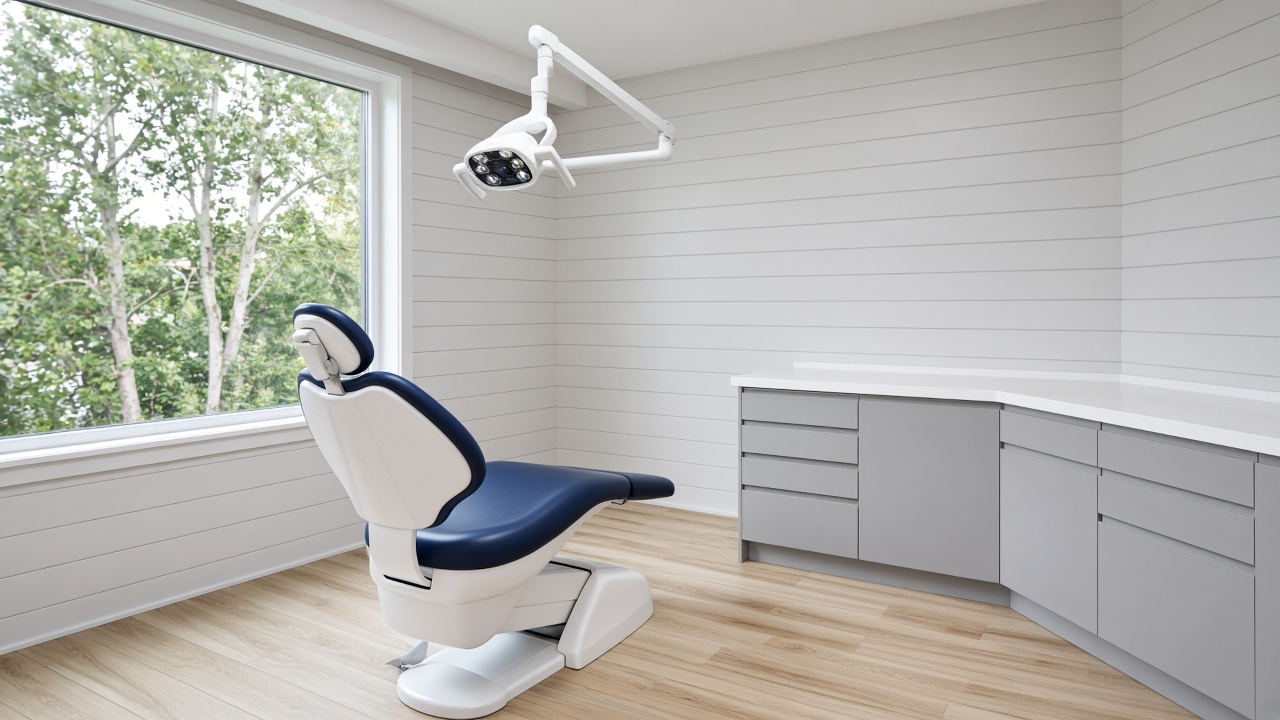
A gray treatment-chair headrest sits under a round operating light.
A close crop of the orthodontic chair and light, with no display models in the frame.
What a Parent Can Use on the Page
A parent can use a page that assumes they are booking for a child and says so. The next step is a consult request. You will ask the child's age and who will attend. You will not set a treatment time on the website, and you will not describe how a smile will look. The desk will offer a time the book holds. That is a page a parent can finish without pretending to be the patient.
An adult needs a sibling page, not a footnote on the parent's. It asks what they want to change and whether they have had orthodontic treatment before. It uses the same restraint about time and appearance. If you only build the parent page, adult leads have nowhere honest to land, and they will use the child form. If you only build the adult page, parents will skip age and attendance. Build both, or be explicit about which consult you do not offer and where that person should go instead.
The Orthodontics page sells the consult. This article teaches how to judge a lead against a page a parent can use. Pain, a general first visit, and other procedure consults belong on the Dental page. A lead labeled dental should not be poured into the orthodontic book just because the word braces appeared once.
Give the parent page and the adult page different replies. Both say request. Neither says the braces are chosen or the aligners are approved. A parent who can repeat who will attend, and an adult who can repeat that prior treatment was asked, have used the page. A lead cannot hand you that. It can only hand you a reason to call.
How to Place a Lead on the Right Visit
Place the lead on a visit before you celebrate the name. If it will not sit on a row, the page you wish you had is the thing to build, not another invoice.
| What you need before the consult | What the lead usually has | What the parent page asks | What the adult page asks |
|---|---|---|---|
| Child or adult | Often unclear | A child, by design | An adult, by design |
| Age and who attends | Blank | Age and who will attend | Not a parent field |
| The change they want | A vendor category | A short note from the parent | What they want to change |
| Prior orthodontic treatment | Rarely | Simple, about the child | Yes, no, or not sure |
| A held time or a treatment length | Sometimes implied by the vendor | Request only, no treatment time | Request only, no treatment time |
Use the table on five leads and five of your own submissions. If both columns of asks are empty on your site, you are comparing a lead with a page that does not yet exist. Publish the pages, then look again. A lead that still cannot be placed is a lead. A page submission that cannot be placed is your form, and buying names will not repair it.
The dangerous lead is the one marked urgent or ready to start. Ready to start is not a child consult and not an adult question. It is a person who may think treatment was selected online. Your reply has to be a request for a conversation. If you schedule them into a records visit because the lead sounded finished, you skipped the consult your page should have defined. Do that often enough and the book is full of the wrong conversation.
How to Decide Before You Buy Names
Decide from the notes, not from a quiet week.
- Sort recent orthodontic leads into child consult, adult question, or unknown.
- Sort your own consult requests the same way. Unknown means the form is still shared.
- Count how many leads would have been booked into the wrong room if you trusted the label.
- Publish or fix the two pages until a parent can finish one and an adult can finish the other without guessing.
- Buy names only if those pages exist and the lead brings a person the pages are not built to hear.
Step three is the book test. A braces label on an adult, or an aligner label on a parent, is a wrong room if you schedule from the label. Stop scheduling from the label before you buy more labels. Step four is the gate. Owners reverse it: they buy first and promise to fix the page when there is time. The leads arrive, the page stays shared, and there is less time because the callbacks grew.
Step five is narrow. Write the person the page will not see. A school coordinator who will only use a vendor portal, for example, if that is truly how those requests arrive. Do not write the schedule looks thin. Thin is what a confusing form produces, and also what a full wrong-conversation book feels like from the other side. Add names only to a split you already run.
If the vendor will not let you send parents to your child page and adults to your adult page, you will re-sort every lead by phone. That is the cost to compare with the page, which sorts before the call. Most of the time the page is the better intake. The lead is a callback with a fee attached.
Why the Wrong Conversation Fills the Book
The wrong conversation fills the book because a single consult block is easy to duplicate and hard to unwind. Each unnamed lead becomes a hold. The hold looks like a full orthodontic schedule. In the room you discover a parent who needed a child visit, or an adult who wanted a short question, or someone who thought treatment time was already chosen. The chair was occupied. The consult you meant to have was not.
Parents leave those visits frustrated that nobody asked who would attend until they arrived. Adults leave having answered questions written for a child. You cannot see that frustration on a lead report. You see it in the second call, the no-show, or the consult that ran long because it began as intake. Those are scheduling failures with a marketing costume. The costume is the undifferentiated lead.
Your page prevents the costume only if it is the thing people hit. Sending leads to a homepage form that still says orthodontic consult puts the paid names into the same blender as everyone else. Point child interest at the child page and adult interest at the adult page, and if you cannot tell interest apart, do not buy the name. Call it unknown and let it stay unknown until a form can ask.
When the split is real, a lead is easy to judge. It either tells you child or adult, or it does not. If it does not, your pages would have. Buying it fills the book with a conversation you will spend the first minutes identifying. That is the wrong conversation, however full the column looks.
Questions
What Does an Orthodontic Lead Usually Leave Out?
Whether this is a child or an adult, and which consult you offer. Age, who will attend, what an adult wants to change, and prior treatment are usually blank. The label may say braces or aligners anyway. The desk learns the visit on the callback.
What Can a Parent Actually Complete on Your Site?
A child consult request that asks the child's age and who will attend, and that does not set a treatment time or predict a look. An adult should not be forced through that page. They need their own questions. A parent should not be forced through the adult page either.
When Does a Lead Fill the Book With the Wrong Conversation?
When you schedule from a vague label before the page splits child and adult. The column looks full. The room starts by sorting. A parent, an adult, and someone who thinks treatment was already chosen are not the same consult.
Should You Buy Leads While the Form Is Still Shared?
No. A shared form and a shared lead create the same unknown. Fix the two pages first. Buy a name only when the pages already separate the visits and the lead brings someone those pages are not built to hear.
How Should a Purchased Name Be Answered?
As a request for the matching consult, child or adult, with no treatment time and no predicted look. If you cannot tell which consult it is, ask that before you hold a block. Do not let a vendor's ready to start become a records visit you never defined.
Conclusion
An orthodontic lead does not say whether this is a child or an adult, or which consult you offer. A page a parent can use will ask age and who will attend, and an adult page will ask something else. Buying names before that split exists fills the consult book with the wrong conversation. You can judge the lead by whether the visit is known before the chair is held.
When you are ready to choose between bought leads and a consult page a parent can use, Speak With Us.